Steve Vernon and Naomi Karp: Proactively Addressing Cognitive Decline
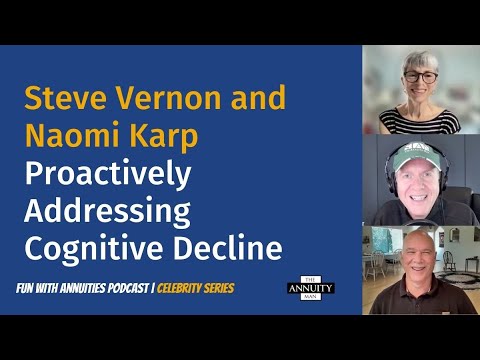
IN THIS EPISODE, THE ANNUITY MAN, STEVE VERNON AND NAOMI KARP DISCUSS:
- Safeguarding from financial exploitation
- The Money Path: six steps to protect yourself
- Things to consider when getting multiple advocates
- Easing someone else into planning for cognitive decline
KEY TAKEAWAYS:
- Financial exploitation is something you need to safeguard your future self against because as you age, it’s only natural that you’d be more vulnerable to making mistakes. Keep in mind that 5% of financial exploitation is done by someone a person knows and trusts.
- First, choose a trusted financial advocate. Second, organize your financial information. Third, start a conversation with your advocate. Fourth, explain your situation, goals, values and expectations. Fifth, officially appoint your advocate under a power of attorney. Sixth, acknowledge the signs in advance.
- When choosing multiple advocates for your finances, set it up so that decisions won’t require the sign-off of multiple people. You can also set up an accountability system to make sure your advocates are doing it right. There needs to be communication in order to avoid conflict.
- Getting your parents to agree to planning for cognitive decline might require that you give them a gentle nudge through asking questions. Remember that asking questions is far more engaging than direct statements.
"You get to your late 70’s - 90’s, let’s just be frank, you’re quite not as sharp as you used to be. It is the case that you are more vulnerable to making mistakes or being exploited by unscrupulous relatives or friends. The best time to plan for that is when you still have all your wits intact and to put safeguards in place later to be triggered when you might need them." — Steve Vernon
"You wanna be proactive now because if you get to a point where you are - already having cognitive challenges whether it be mild cognitive impairment or dementia, not only won’t you really be able to think through these things in the best possible way but legally you won’t even be able to put someone in place. You can’t make a power of attorney if you don’t have full capacity to understand what it means to make a power of attorney." — Naomi Karp
CONNECT WITH STEVE VERNON:
Website: https://restoflife.com/
LinkedIn: https://www.linkedin.com/in/svernon/
Twitter: https://twitter.com/stevevernon1
Books: https://www.amazon.com/Steve-Vernon/e/B000APH5FS%3F
CONNECT WITH NAOMI KARP:
Website: https://thinkingaheadroadmap.org/
LinkedIn: https://www.linkedin.com/in/naomi-karp-728355b/
LISTEN ON ALL YOUR FAVORITE PODCAST PLATFORMS:
Libsyn: https://directory.libsyn.com/shows/view/id/theannuityman
Stitcher: https://www.stitcher.com/podcast/niceguysonbusiness/the-annuity-man-podcast#/
Apple: https://podcasts.apple.com/us/podcast/fun-with-annuities-the-annuity-man-podcast/id1482993601
Google: https://podcasts.google.com/feed/aHR0cHM6Ly90aGVhbm51aXR5bWFuLmxpYnN5bi5jb20vcnNz?sa=X&ved=0CAMQ27cFahcKEwjgu6j7suzrAhUAAAAAHQAAAAAQAQ Amazon: https://music.amazon.com/podcasts/11fec7ab-59ab-402f-94c7-93860e1694ae/Fun-with-Annuities-The-Annuity-Man-Podcast
Spotify: https://open.spotify.com/show/26y3c7vXgnhfmErLRP3zuM
CONNECT WITH STAN
Call Stan The Annuity Man: 800-509-6473
Website: http://theannuityman.com/
Email: [email protected]
Facebook: https://www.facebook.com/stantheannuityman/
Twitter: https://twitter.com/StanAnnuityMan
TikTok: https://www.tiktok.com/@theannuityman
Instagram: https://www.instagram.com/theannuityman/
Use the Calculators - https://www.stantheannuityman.com/annuity-calculator/
Get The Annuity Man's Books - https://www.stantheannuityman.com/how-do-annuities-work
Schedule a time to talk to Stan - https://www.stantheannuityman.com/book-a-call/
FUN WITH ANNUITIES (r)
0:03
welcome to fun with annuities with your
0:06
host me Stan the annuity man America's
0:10
annuity agent can annuities be fun can
0:12
contractual guarantees be fun absolutely
0:15
they can find out the brutal facts about
0:18
annuities with no sales pitches or high
0:21
pressure nonsense just the brutal and
0:24
factual annuity truth which is all you
0:26
need to hear let's have some fun with
0:29
annuities and let's have that fun start
0:31
right now
0:33
[Music]
0:39
welcome to fun with annuities I'm your
0:41
host Stan the annuity man America's
0:43
annuity agent licensed in all 50 states
0:45
really excited about today's program we
0:48
have multiple guests on typically it's
0:49
just one guest now we have two which is
0:52
fantastic there's so much IQ in the room
0:54
I need to just leave because there's a
0:56
lot of smart people here uh one of the
0:58
guests has been on before his name is
1:00
Steve Vernon he um we're going to have
1:03
links to a site
1:04
restoflifecommunications.com rest of
1:06
Life communications.com all one word
1:09
um he's a consultant he's an expert he's
1:11
an academian he's just an all-around
1:15
good guy but very very smart but today's
1:17
topic is going to be a great one because
1:19
he's brought a guest on as well her name
1:21
is Naomi carp and she is an elder law
1:23
attorney and she also is a consultant
1:26
Nationwide on Aging law and policy which
1:30
is very interesting with my group that
1:32
follows me in my client base Etc they're
1:35
mostly Baby Boomers and baby boomers are
1:37
kind of rolling into that chapter two of
1:41
their lives and I think this is a very
1:45
very good topic because we're talking
1:47
about
1:48
cognitive loss potential cognitive loss
1:51
and ways to go about
1:55
combating that from a standpoint of risk
1:57
of financial loss so I'm going to have
2:00
their site they have a great site that
2:02
I'm going to point you to called
2:03
thinking ahead
2:06
roadmap.org thinking ahead roadmap.org
2:09
I'm going to put that link on our site
2:11
as well but let's just jump in with a
2:14
question Naomi I'm gonna I'm gonna ask
2:16
you first about just how how your path
2:21
has led you to this very interesting
2:25
specialty and in a world of demographic
2:28
title ways where 10 000 baby boomers are
2:30
hitting age 65 every single day actually
2:32
more than that
2:33
tell tell us kind of your background as
2:37
being an elder law attorney and how that
2:39
has transformed itself to being a
2:41
consultant on aging and the policy that
2:44
affects that can you give us a little
2:45
background there sure and I'll try to
2:48
make it short
2:49
but since I'm a baby boomer I have many
2:52
years of experience so I'm I'm right
2:56
there with the population we're talking
2:58
about
2:59
um so many many years ago I went to law
3:02
school because I wanted to be a public
3:04
interest lawyer I wanted to do use the
3:07
law and policy to do good in the world
3:08
and for the first 10 years of my career
3:11
I was a legal services lawyer which
3:14
means I represented low income and older
3:17
people who couldn't afford lawyers in a
3:19
variety of civil matters not not
3:21
criminal and during that time I kind of
3:25
became specialized in issues of older
3:29
adults and there are a whole spectrum of
3:31
issues you know some are the same as
3:34
younger adults you know maybe they're
3:36
getting evicted or maybe they need some
3:38
kind of public benefits but you know
3:41
they also get involved in advanced
3:44
planning for the possibility that they
3:47
might become disabled or incapacitated
3:49
in some way which is going to lead to
3:51
where we're going today
3:54
um you know lots of issues that
3:56
particularly impact older adults at some
4:01
point in my career I moved to Washington
4:03
DC which is kind of the heart of policy
4:06
and policy making and advocacy and
4:08
research so I switched from representing
4:11
older adults directly and worked more on
4:15
a kind of system level on issues
4:18
everywhere from Social Security and and
4:23
Medicaid and end-of-life decision making
4:26
to
4:28
elder abuse and financial exploitation
4:31
and scams and all of that stuff and so
4:33
in my career in Washington I worked for
4:36
two non-profits including AARP the Big
4:40
Kahuna
4:42
um and then the very last part of my
4:46
full-time work career I worked for a new
4:49
federal agency that was just opening its
4:51
doors called the Consumer Financial
4:53
Protection Bureau which
4:55
some people know of it as uh it kind of
4:59
came out of an idea that Elizabeth
5:00
Warren once had but then Congress passed
5:03
the Dodd-Frank Act and the agency
5:06
came into being and it was specifically
5:09
mandated by Congress to have an office
5:11
looking out for the financial protection
5:13
of older Americans so I spent eight
5:16
years there it was fantastic setting up
5:19
the office and putting out tools and
5:22
Publications and you know things for
5:25
older people and for all the people who
5:27
interact with them everything from Banks
5:29
to
5:30
law enforcement Etc so now the past
5:34
um almost three years I've been a
5:36
consultant and I do work for non-profits
5:40
and government entities and private
5:43
entities and so forth and here I am a
5:46
couple years ago was able to meet Steve
5:48
and then a third partner of ours Marty
5:51
delima we all had a connection at that
5:53
point with the Stanford center on
5:55
longevity and
5:57
then we got to this project and I'll
5:59
I'll let it go there that was probably
6:01
more than you needed that's that's
6:03
that's wonderful and I'm glad you you
6:05
gave us that background because uh in
6:07
the past I had done some work with
6:09
Elizabeth Warren's office they contacted
6:11
me about an article I wrote a long time
6:12
ago and we were trying to eliminate the
6:15
incentive trips and things like that
6:16
within the annuity industry
6:18
um and she wrote a very good I helped uh
6:20
with the writing a very good report and
6:22
and obviously it got kind of stalled a
6:25
little bit because the insurance
6:25
industry is Pretty Tough from a lobbying
6:27
standpoint but but have been in those
6:29
trenches with you and trying to protect
6:31
seniors out here because it is uh
6:33
there's it's like Chum in the water and
6:34
and blood in the water I mean they're
6:36
circling and it is bad Steve I want to
6:38
jump in with you because
6:40
um there are risks of financial losses
6:43
due due to cognitive decline what have
6:46
you and your Associates found and what's
6:48
what's glaring to you that's happening
6:50
right now
6:52
well it's pretty clear uh both
6:55
professionally and personally because
6:57
I've gone through this with my parents
6:58
as has Naomi so we've seen it firsthand
7:01
with our relatives but also seeing it uh
7:06
out in the world you know you get into
7:08
your 70s late 70s 80s 90s and
7:14
um
7:14
let's just be frank you're just quite
7:16
not as sharp as you used to be sure and
7:21
of course the age varies according to
7:23
each person but it really is the case
7:26
that you're more vulnerable to Simply
7:29
making mistakes or
7:32
uh being exploited by unscrupulous
7:36
relatives or friends it may not be
7:38
illegal but it might not be the best in
7:41
your interest or even outright fraud
7:44
and so uh we really see the need for
7:48
preparing for this
7:50
inevitability for a lot of people and
7:53
it's real natural I'm I'm in my late 60s
7:55
it's like oh that's gonna happen that'll
7:57
never happen or that'll happen sometime
7:59
in the future right the best time to
8:01
plan for that is when you still have all
8:04
your your wits intact and put safeguards
8:07
in place later to be triggered when you
8:11
might need them
8:12
because what will happen we I've seen
8:15
this all too often
8:16
instead of this preparing for it
8:20
some event happens where the senior you
8:23
know gets defrauded or makes a mistake
8:25
or has a big loss and then their adult
8:28
children swoop in and clean things up
8:31
and not only is that a big mess and
8:33
their losses have already occurred but
8:35
when the kids are making decisions for
8:37
you they may not have your best
8:38
interests at heart not that they're
8:40
trying to mess you up they just can't
8:42
get in your head and know what you're
8:44
doing correct and so I'm we're saying
8:46
have the senior take charge of the plan
8:50
and develop the plan now
8:52
to be triggered when you need it down
8:54
the road
8:57
Naomi how prevalent
9:00
is this type of risk and um
9:02
I know this is kind of a broad question
9:04
but how much can seniors lose um I don't
9:07
know if that's answerable but I'd rather
9:09
you address the prevalency of the risk
9:12
um and the other thing that I'd like you
9:14
to talk about is we all have egos and we
9:17
all have um you know there's some
9:19
embarrassment issues when you do make
9:21
mistakes or you have been taken
9:23
how are you looking at that and how do
9:27
you talk to seniors or have seniors
9:30
address the fact that they're not firing
9:32
on all cylinders
9:33
you know at the end of life or as they
9:35
as they go through chapter two that
9:38
seems to be the toughest thing because
9:39
when I have that conversation with my
9:41
clients I'm like listen you're you're an
9:43
A personality and you're you're kicking
9:45
it right now but there will be a time
9:47
that you will not be so we might want to
9:49
plan on turning uh some of the
9:51
investments into TurnKey type
9:52
Investments how prevalent is this risk
9:55
for seniors
9:57
okay so we're really talking about a few
10:00
different kinds of risk here so I don't
10:03
think I can give you one number for any
10:05
of these but let me just sort of throw
10:07
out a few things that I think all feed
10:09
into it so so Steve talked about the
10:12
different kinds of risks that we're
10:14
trying to protect against so it could be
10:16
mistakes that just happen because you
10:19
are starting to have some kind of
10:21
cognitive decline or it could be the
10:24
outright
10:25
um fraud or financial exploitation
10:27
so when it comes to financial
10:29
exploitation
10:31
um there have been some really good
10:33
studies that have shown that the you
10:36
know the prevalence of financial
10:38
exploitation even let's just talk about
10:40
financial exploitation by a family
10:43
member or someone you know and trust you
10:46
know is probably around five percent
10:49
that's great
10:51
and then you add in all the strangers
10:54
frauds and scams you know that could be
10:57
someone in another country it could be
10:59
someone who you think is romantically
11:02
involved in you who you met online who
11:04
is actually not even a real person
11:06
they're just such a broad array of kinds
11:09
of financial exploitation and fraud so
11:13
you know then we could be getting up to
11:15
you know one in ten people or even more
11:17
the studies are not that
11:20
um
11:21
necessarily that reliable it's a really
11:23
hard to drill down on that and you
11:25
mentioned the issue of embarrassment
11:27
that makes it even harder correct so you
11:29
might you know a great academician might
11:31
do a study and someone might be too
11:34
embarrassed to admit that this actually
11:35
happened to me or
11:38
um you're doing a survey and you're not
11:40
necessarily even getting at the people
11:41
who already have the cognitive decline
11:44
if someone has Alzheimer's you know
11:46
they're probably not going to be
11:47
answering a a survey so it's hard to get
11:52
your hands around a number but we know
11:54
the numbers are big and then you asked
11:57
about you know how much can people lose
11:59
people can really lose a lot yeah
12:03
um you know it could be somebody losing
12:05
50 bucks in some little online scam or
12:09
it could be someone losing all of their
12:12
life savings I mean we have horrible
12:15
stories of
12:16
um I mean I'll just give you one example
12:19
from like a million different types
12:21
um
12:22
let's say someone convinces a relative
12:26
or a friend or someone in their
12:27
Community to name them as an agent on
12:31
your power of attorney giving them a
12:34
whole lot of authority
12:35
or to put them on a joint bank account
12:37
let's say oh it'll be so much more
12:39
convenient for you that person then has
12:42
the means and the Privacy to go in and
12:46
just wipe out those accounts so we have
12:50
people losing millions of dollars we
12:52
have people losing hundreds of dollars
12:55
depends how much you have it might be
12:57
your whole life savings and we always
12:59
say one of the real dangers here is that
13:02
when people are up into their later
13:04
years and especially 80s and 90s when
13:07
these things are probably even more
13:09
common
13:10
um or even 70s you're not in a position
13:12
to earn it back you can't replenish that
13:15
nest egg that you had so that's another
13:18
reason why it's so dangerous
13:22
um I think you asked me more but it was
13:24
a lot of questions I appreciate you I
13:26
know I I'm I'm fascinated by this topic
13:28
and see before I've got a question for
13:30
you before I I I go further on that I
13:33
wanted to just read something from their
13:35
site which is think thinking ahead
13:39
roadmap.roadmap.org I'll have that link
13:40
but it says one in five people aged 75
13:43
to 79 have mild cognitive impairment or
13:46
dementia and this risk increases to one
13:50
in two
13:51
for people in their 80s now at that site
13:54
they actually have something fantastic
13:56
which is a road map that you can either
13:58
download it or you can order a print
14:00
copy there's all kinds of news there's a
14:03
Blog there's
14:04
they do a great job and this is a site
14:07
that you want to put as one of your
14:08
favorites because what you're doing is
14:10
you're piggybacking off off of these
14:13
Decades of experience with Steve and
14:15
Naomi and just their passion for trying
14:18
to help and prevent seniors from from
14:21
losing money Steve what should seniors
14:23
do to protect themselves and and their
14:26
families and the money they work so hard
14:28
to accumulate because we all know that
14:31
senior citizens
14:33
however you want to Define that they
14:36
control the majority of the wealth in
14:38
this country that's just the that's the
14:40
bottom line so what does that mean
14:41
anyone in the financial services
14:43
business
14:44
targets them Target might be a good or a
14:48
bad word in this case we're talking
14:49
about it from a bad word how do people
14:51
protect themselves
14:54
well Stan uh that's the heart of our
14:56
thinking head road map and so on the
14:59
website we have something called money
15:00
path and it's a six step plan that
15:04
seniors can follow to prepare in advance
15:07
for the situation and always we're
15:09
trying to prepare in advance
15:12
um and so let me just quickly read the
15:13
six steps um one is choose a trusted
15:18
Financial Advocate and that's find
15:20
someone in your life who can help you
15:23
manage your finances when you need that
15:25
help and it can for a lot of people it
15:28
might be their spouse but if they pick
15:30
their spouse recognize that their spouse
15:31
could be the same age and correct so if
15:33
you pick your spouse it should be a
15:35
backup you're like an adult child or
15:37
someone else you trust and uh however
15:40
for lots of people they don't have that
15:42
so you might have to get a professional
15:44
lots to talk about in each of these
15:45
steps
15:47
um but that's step one uh step two is
15:49
organize your financial information take
15:51
an inventory write it down give people a
15:53
road map to your finances
15:55
because you can imagine uh just imagine
15:57
if you're in a car crash
15:59
and you couldn't talk but someone had to
16:01
take over your finances what do they
16:03
need to know
16:05
um and I think that also includes let me
16:06
interject her that also includes sign-on
16:09
information log on information
16:12
um digital information digital
16:13
intellectual property as they say
16:16
um don't forget that you need to you
16:18
need to have that stored away in a safe
16:21
place and also with your financial
16:22
Advocate having access to that as well
16:25
so number three right right and I'm
16:28
going through these quickly our website
16:30
has all these things uh third is start a
16:34
conversation with the financial Advocate
16:36
you picked because either the senior
16:40
might be resistant The Advocate might be
16:42
resistant commonly oh Dad or Mom you're
16:44
fine right you know busy
16:47
so you got to start the conversation and
16:49
then step four once you've gotten
16:51
through that initial conversation is
16:53
then just explain your situation what
16:56
you expect from them what your goals are
16:58
what your values are
17:00
you know we see examples of of seniors
17:03
who supported certain Charities but once
17:06
their kids took over but
17:08
that charity gets cut off and you know
17:11
again it's just what are your priorities
17:13
that you want
17:15
now the most important one and here's
17:17
where you want to talk to Naomi is
17:18
officially appointing your Advocate
17:20
under a power of attorney and making
17:22
sure you do that in a legal way and
17:24
that's one of Naomi's many Specialties
17:26
so I'll let her talk about that sure and
17:29
then the sixth one is to acknowledge in
17:32
advance what the signs might be
17:34
that it's time to shift and the signs
17:38
can either be subtle or they can be just
17:41
wacky in the head you know like you had
17:43
a heart attack or something like that
17:44
but whatever it is have a plan in place
17:47
because it's so easy for people to get
17:50
to that age in life and still think
17:52
they're doing fine
17:54
in fact there's a graph in one of our
17:56
reports that shows
17:58
participants the seniors confidence and
18:01
their ability to manage by age and it's
18:04
a flat line they never lose confidence
18:06
in their ability to manage their
18:08
finances but then there's the actual
18:10
ability based on cognitive abilities of
18:12
people that age and it's a steady
18:13
decline sure so it's real common for
18:15
people to just think they're doing fine
18:17
I think if you commit in advance to say
18:20
oh you know when when my driver's
18:22
license gets taken away
18:24
um that's fine that there's some Frailty
18:26
involved and feeblemis involved and
18:28
there are many signs but just know I'm
18:30
in advance and say to your
18:33
your friends and family hey when you see
18:35
me doing this or that uh bring that to
18:39
my attention on a side note I recently
18:41
my mom lives in St Augustine Florida
18:43
she's getting ready to turn 84. and we
18:45
made the decision that she doesn't
18:47
really need to drive she doesn't see as
18:49
well and we set her up on an Uber so
18:52
that anytime she wants to go anywhere it
18:54
goes on my credit card she can she's got
18:56
I thought you now have a personal driver
18:58
and so she's really enjoying the freedom
19:01
of of going when she wants to go and we
19:04
found out that she was not going out at
19:07
night because she didn't like driving at
19:08
night now she's going out with her
19:10
friends at night because of this Uber
19:12
that we've set in place for so those are
19:14
some signs that we saw and obviously you
19:17
know um in the financial business so
19:19
I've seen the other as well and and
19:21
protecting her Naomi I wanted to Pivot
19:24
and all of this comes down to most
19:27
everything in life is communication
19:29
right and good communication proactively
19:31
but I also want you to weigh in from a
19:34
legal standpoint this isn't some
19:36
do-it-yourself situation you really need
19:39
to have a partnership with a very good
19:42
um you know elder law attorney do you
19:44
agree with me on that
19:46
I actually do agree with you that on
19:49
that we had a lot of conversation when
19:52
we were developing the road map
19:54
um and and I will mention that a lot of
19:57
research went into this so before we
20:00
actually even though we were all experts
20:02
in one way or another before we actually
20:04
sat down and created the road map we did
20:07
a bunch of expert interviews with
20:10
professionals as well as older adults
20:12
and caregivers with focus groups with
20:15
different segments of older people at
20:17
different ages
20:18
we did something called an online
20:21
community Forum we were where we
20:23
actually had 120 older people for a
20:26
two-week period and came online every
20:29
day and we gave them we threw out
20:31
questions and exercises and it was like
20:33
a brilliant chat room and we got just
20:36
all kinds of help from them about you
20:38
know what their thinking was how we
20:42
should message it what words resonated
20:44
for them what words were I turn off so
20:46
there's a lot behind this but getting
20:50
back to your question about the elder
20:52
law attorney we did struggle with the
20:56
issue of you know we didn't want our
20:58
tool to be sort of the Full Employment
21:01
for lawyers act for a lot of people out
21:04
there who think oh getting a lawyer it's
21:07
really expensive that's so complicated I
21:11
don't know who to go to
21:13
um
21:14
and in some cases those things might be
21:17
true in many cases they're not true but
21:22
over all of my years working on these
21:25
issues and especially working on things
21:27
like Powers of Attorney and Trust other
21:30
kinds of legal Arrangements that people
21:32
put in place sure I've really learned
21:35
that you have to do it right and if you
21:39
download a form from the Internet or you
21:42
know you use some free whatever that
21:46
somebody's out there to kind of hook you
21:48
into your services or whatever you may
21:52
not be doing yourself a favor because a
21:55
these things are governed by state law
21:57
so we want to make sure the document
21:59
that you create is valid under your
22:01
state law and that could even be simple
22:03
things like your state might require two
22:05
witnesses or they may not required to be
22:07
notarized you need to know that but your
22:10
state law let's say on power of attorney
22:13
is going to have other Provisions about
22:15
what kind of clause should or shouldn't
22:17
be in there also it really needs to be
22:20
tailored to you everyone a different
22:23
situation sure some people think oh I
22:26
hardly have any money you know if
22:29
anything I have a little money in the
22:30
bank I have my social security
22:33
um income and I have debt so why would I
22:38
need a lawyer you know I don't have
22:39
anything well it's just not true
22:41
everyone's situation is different you're
22:44
right you might you know so many older
22:46
people own a house or some real estate
22:48
so they might be house rich and cash
22:50
poor they're just a lot of nuances here
22:52
everyone's family situation is different
22:55
so yes I generally do recommend that
22:59
it's advisable for people to see a
23:02
lawyer when it comes to something like
23:04
making a power of attorney making sure
23:06
the power of attorney is the right
23:07
document for them if they have
23:10
complicated finances maybe they have
23:12
property in other states they own a
23:15
business whatever it could be that a
23:17
trust may be something they need and you
23:20
can't we can't answer those questions
23:22
generically those are the kinds of you
23:25
need some individual advice
23:27
um you know so we do recommend you know
23:29
shop around get recommendations you can
23:32
call several lawyers you can find out
23:33
what they would charge to do something
23:35
simple maybe you're eligible for
23:39
um some free legal services in your
23:41
community so lots of ways to go
23:44
well and it's just like medical advice
23:46
you don't do it yourself with medical
23:48
advice it's the same thing and this is
23:50
as important and what I found in my 30
23:53
plus years in the business is lawyers
23:55
that choose the elder law
23:58
track are different people
24:00
they are they they use their mouth and
24:03
their ears in proportion they listen and
24:06
this is a customizable situation Steve
24:10
what are the roadblocks I mean this
24:12
could be a roadblock the finding the
24:14
lawyer and maybe that's a it shouldn't
24:16
be a stopper for people but what are the
24:18
other roadblocks and challenges that
24:22
seniors face looking at this it's a
24:25
tough issue for people to look at in the
24:27
mirror and think about it but it's one
24:28
of those things where we need to what
24:30
are they facing there what are those
24:31
roadblocks
24:33
well uh let me start with I'd say the
24:36
emotional and psychological roadblocks
24:38
is that people are busy and yeah this is
24:41
a risk that might not happen for many
24:44
years it's like okay I've got other
24:46
things that are more important right now
24:48
and so to me the biggest risk is just
24:52
ignoring it being complacent assuming
24:55
that it won't happen I agree so I like
24:58
to say
24:59
um there are a series of critical
25:01
decisions as you transition into
25:03
retirement
25:04
and this is one of them that you need to
25:06
pay attention to as part of that
25:08
transition
25:10
and think of it uh so somewhere in you
25:14
know your mid 60s uh late 60s early 70s
25:18
at the latest that's kind of a Zone in
25:20
which you should focus on it
25:22
um so anyway that's that's one risk that
25:25
I think is probably the biggest one is
25:26
this complacency I'll do it tomorrow
25:29
but then once again beyond that other
25:32
risks are
25:34
uh yourself thinking it's not necessary
25:37
like we've talked about I or another one
25:40
is finding a financial Advocate um for
25:42
some people it's a natural they've got
25:44
an adult child or a spouse or somebody
25:47
but others don't and so it might take
25:50
some searching
25:51
to find someone uh another family member
25:55
or if you have to pay someone that you
25:58
know that's that's another risk that
26:00
people face is just getting the right
26:02
person in place could there be a
26:04
situation and I I asked this more from a
26:07
corporate setting I mean you have you
26:09
receive your extension extensive
26:11
background in the corporate world this
26:12
should be I I'm dying to hear your take
26:15
on it
26:16
since if there's not one person could
26:18
there be a board
26:20
of directors of your cognitive State I
26:24
mean could you have three could you have
26:25
two in other words instead of trusting
26:28
one maybe if you say listen
26:31
you're the people that I trust and love
26:33
it can't be all family members by the
26:35
way and you bring in you know a board of
26:38
directors to oversee and have these
26:39
conversations with and maybe it's your
26:42
lawyer have you seen that happen because
26:44
I know they have a board of directors
26:45
for my company
26:47
um and it does work because you have
26:49
some objective viewpoints coming from
26:51
different
26:52
um expertise levels what do you think
26:55
about that well I appreciate that and
26:57
yeah working the corporate world I can
26:58
relate to corporate border collectors
27:00
but the phrase I like more is developing
27:03
a convoy of support
27:04
is a more friend I like that
27:08
and so um yeah you might have one or two
27:12
people who are handling your finances
27:14
but then if you if you're really lucky
27:17
maybe you have some adult children who
27:19
check in on you
27:21
um
27:22
and are they're seeing you to make sure
27:25
that you're doing okay so it's not just
27:28
the finances that's a critical part
27:31
that's true just be uh logistical
27:34
support
27:36
um and then maybe it's involving your
27:37
neighbor across the street and say hey
27:39
neighbor would have you ever see me you
27:41
know fall down in the street or
27:42
something like that you know pick me up
27:43
right well pick me up and then call who
27:46
do you call exactly yeah
27:49
um and so it can just be building out
27:51
that Convoy of support and I it so and
27:54
again it's much more than just the
27:55
finances but definitely want to have the
27:57
finances in there in that Convoy yeah
27:59
you definitely you need a team go ahead
28:01
name it yes yeah just to jump in
28:04
um you know we have talked a lot about
28:06
you know whether should it be One
28:08
Financial Advocate or should it be
28:10
political and then you know especially
28:12
when you're coming down to how you make
28:14
it official with the power of attorney
28:17
um you know people certainly can have
28:19
more than one person they can have
28:21
co-agents
28:23
um they just need to be aware they
28:25
probably want to set it up so that
28:29
um whatever decision is made doesn't
28:31
require the sign off of two or three
28:34
people because that I'm very cumbersome
28:36
maybe this maybe you have three adult
28:39
children and you love them all and you
28:41
trust them all but they're in three
28:43
different states one lives around the
28:45
corner from you but the other to live
28:46
somewhere else and I know we're now
28:48
living in a virtual world but still you
28:51
know it's cumbersome so when it comes to
28:54
someone who might eventually be doing
28:56
all of your finances for you paying your
28:59
bills um
29:00
potentially collecting rent applying for
29:03
benefits all of these things maybe
29:06
making transactions on the market things
29:09
might have to happen quickly you don't
29:11
want to create roadblocks that didn't
29:13
have to be there so you could have
29:15
people in an alternate position another
29:18
thing you can do in something like a
29:20
power of attorney is let's say you want
29:22
to select one of your adult children
29:25
but you want everyone to feel included
29:28
and you also want to make sure that that
29:30
person you trust them but you kind of
29:33
want to verify that they're doing it
29:36
right you could actually write into a
29:38
document like a power of attorney that
29:41
that main person you have should give an
29:43
accounting let's say every six months to
29:46
your other adult child or your cousin or
29:49
your neighbor or whatever so they're
29:51
sort of accountable to someone sure that
29:53
really helps them keep good records and
29:56
then communicate about it and
29:57
communication is as We Know
30:00
you know ultimately so important we want
30:03
to avoid family conflict so those can be
30:06
good techniques as well
30:08
we're talking to Naomi carp and Steve
30:11
Vernon and they have a site they have
30:14
extensive background we could keep going
30:16
on that all day but they have a site
30:17
called thinking ahead roadmap.org
30:20
thinking ahead
30:22
roadmap.org all one word
30:24
and we're going to have that link on our
30:26
site but I was I was looking just at the
30:28
downloads you have free downloads and I
30:30
was just looking at some of the
30:32
downloads you have an example of a power
30:35
of attorney or tips to protect
30:37
retirement Investments and income and
30:41
like a financial spreadsheet that you
30:43
have you've laid it out so that people
30:46
don't have to create the wheel here
30:47
you've already done this and it's and
30:50
it's free you can download it you can
30:52
order the book I mean if you're if
30:53
you're not a a techie person they've set
30:56
it up for you to do either or so you
30:59
know of all the sites that I've seen in
31:01
a long long time and I'm always
31:02
searching for things that my clients can
31:04
use as as something positive in their
31:07
life
31:08
this is one of the best ones I've seen
31:11
and I know this is a hard conversation
31:13
for a lot of people to Stan are you
31:15
really talking about cognitive issues
31:16
yes I am
31:18
you know as a good friend of mine in the
31:20
Life Insurance business says one out of
31:21
one of us is going to die okay which is
31:24
not a good motivational speech but true
31:26
but I just read you the stats you know
31:29
about cognitive cognitive issues if you
31:32
make it into your 80s one out of two
31:35
so this is something that I know you
31:37
don't want to think about listeners and
31:39
viewers but I need you to I need you to
31:42
lean in right here
31:43
and connect with these two listen to
31:46
these two experts because they know what
31:48
they're talking about and it's time for
31:51
you to even though you you will say to
31:53
me hey Stan I don't need this I'm
31:55
hitting it on all cylinders I'm I'm
31:57
never gonna yes you are gonna lose it
31:58
you need to
32:00
you need to address this
32:03
um
32:04
we talk about some of the signs that it
32:06
might be time to transfer some of this
32:08
you know responsibility
32:11
but um
32:13
can you go into that a little bit more
32:15
Naomi about just kind of the signs and
32:19
what people should be aware of I don't
32:20
want them to become obsessive compulsive
32:23
about their cognitive abilities if they
32:26
lose their keys I don't want them to
32:27
fall off the cliff here because we all
32:29
do that but what do you what would you
32:31
give somebody from a pragmatic
32:32
standpoint on how to start thinking like
32:35
this or even not to wait until that
32:38
happens and to be proactive now
32:41
well first of all you hit the nail on
32:43
the head with that last thing you do
32:45
want to be proactive now because as
32:48
Steve mentioned earlier
32:50
um if you get to a point where you are
32:53
already making mistakes and you already
32:55
having cognitive challenges whether it
32:57
be mild cognitive impairment or dementia
33:00
full-blown dementia
33:02
not only won't you really be able to
33:05
think through these things in the best
33:07
possible way but legally you won't even
33:10
be able to put someone in place you
33:12
can't make a power of attorney if you
33:14
don't have full capacity to understand
33:16
what it means to make a power of
33:18
attorney and how to choose someone and
33:21
what kinds of things they can do so you
33:24
have to do it when you're still
33:26
have capacity so yeah doing it now is
33:30
the thing
33:31
um when you're talking about red flags
33:34
or warning signs that maybe that is
33:37
starting to happen you know particularly
33:39
in relationship to finances you know and
33:42
we're not here to replace the you know
33:46
psychologists and geriatricians and all
33:49
the people who actually do these
33:50
capacity assessments we're just talking
33:52
more generally about you know what do
33:54
people need to know
33:56
so you know things like you're starting
33:59
to make a lot of mistakes they could be
34:01
Financial mistakes they could be things
34:03
as simple and and we see this all the
34:06
time uh people forgetting to pay a bill
34:10
um let's say you don't have your your
34:12
utilities or whatever your monthly
34:14
payments are on auto pay and you just
34:17
start forgetting to make those payments
34:19
or sometimes people are paying it twice
34:22
or three times
34:24
you know maybe they're still writing a
34:26
check they send a check and then a
34:28
couple days later they send a check
34:30
again so memory issues for getting to do
34:34
things like that
34:36
um and it could be things that aren't
34:39
Financial you know you're forgetting
34:42
doctor's appointments you're forgetting
34:44
I mean my mother who has advanced
34:46
dementia now she's 97 when she first
34:49
started declining
34:51
there were two ways that I and I was
34:54
living 200 miles away from her two
34:57
things kind of set off my alarm Bell
34:59
that said
35:01
mom needs to live closer to me and we
35:04
need to have more systems in place one
35:07
was she was starting to forget she would
35:09
make a date with my cousin and then she
35:11
would not show up and that my cousin
35:14
would call her and she'd say oh Judy's
35:17
so nice to hear from you like no clue
35:19
that she was Judy was standing on the
35:21
corner waiting for her to go to the
35:22
movies
35:23
um the other thing is she was starting
35:25
to put things on the stove and then go
35:27
in the back room and do something and
35:29
the next thing she knew she smelled the
35:31
pot burning so
35:34
little things like that that can be kind
35:37
of disastrous
35:38
[Music]
35:39
um
35:40
you know it's things like that
35:42
um maybe you're making some bad choices
35:45
with your Investments your
35:48
um you're falling for a scam I mean
35:50
people when they start losing the
35:52
capacity to handle finances yeah you
35:55
start losing the judgment about what is
35:58
legitimate and what isn't and that's
36:01
that's been documented with studies and
36:04
by the way the capacity to handle
36:06
finances is one of the first kinds of
36:09
capacity to go when you start having
36:11
cognitive impairment you know probably
36:15
earlier than a lot of other things like
36:17
making how to make Health Care decisions
36:19
and other personal care things it's the
36:22
finances that often will go first
36:24
and I know that AARP who you used to
36:27
work with and for Naomi they've done a
36:30
great job and they they continue to
36:31
address this issue proactively Steve I
36:34
want to Pivot and ask you a question
36:36
about we've been talking about people
36:38
that are Baby Boomers and just things to
36:40
be aware of but there's a lot of people
36:41
that are listening and viewing this
36:43
podcast that are the children uh 40s and
36:46
50s I don't know what A's are and
36:48
they're thinking wait a minute I need to
36:49
start thinking about this with my mom or
36:51
my dad or my uncle or my grandmother or
36:54
whoever and they're the ones to start
36:56
that conversation they're the ones to
36:58
proactively
37:00
make their senior loved ones aware of
37:03
the risk and the challenges and and
37:05
start showing them the tools that you
37:07
have provided on your site
37:11
coach them through that a little bit
37:13
because that's a tough one like if I
37:15
walked up to my mom and go you know what
37:16
Mom kind of lose it a little bit that's
37:18
not the way to do it right I mean she's
37:20
got she's a southerner and she's like
37:22
get out of my face Sonny you know who do
37:24
you think you are how do you how do you
37:27
gently go into that conversation even if
37:31
that person is not you don't even think
37:34
they're losing uh cognitive ability
37:36
you're just trying to be proactive as a
37:38
loved one
37:40
well thanks Stan for posing that
37:43
question and I've got some ideas but let
37:46
me just start with if you're listening
37:47
and you're in your 40s and 50s
37:50
um this could plop in your lap if your
37:53
parents don't be proactive about it yeah
37:56
and it might pop in your lap when you're
37:58
still in your career and busy or with
38:00
your family so that's kind of the
38:02
motivation is that what we found is that
38:05
people want to be independent in their
38:08
lives and they don't want to depend on
38:10
others but
38:12
most of the time Family jumps in when
38:15
there's a problem
38:16
and the family is the insurance company
38:19
here you know
38:21
so that's the motivation is that it
38:23
could happen at your busiest time so if
38:26
you can motivate your parents
38:28
or your uncles or aunts uh people in
38:31
your lives that you know you would step
38:32
in for if the chips were down then start
38:34
helping them be proactive
38:36
so back to your question how can you
38:39
kind of gently
38:40
get people to think about it
38:43
um maybe there's somebody in your family
38:45
who's much older and they're starting to
38:48
lose it and it's pretty obvious so you
38:49
know that Uncle Harry say to your
38:51
parents your Uncle Harry he's not doing
38:53
that well and oh yeah and you start
38:55
sympathizing and talking about it and I
38:57
sure hope he's done something to protect
38:58
his finances you know it's less
39:01
threatening if you talk about somebody
39:03
else good point mom you're losing it
39:05
good idea
39:06
so that's that's one suggestion
39:09
um and then but then to get start
39:12
drilling down
39:13
well um instead of saying hey Mom you're
39:16
losing it it could be you know I've
39:17
heard I heard an interesting show stand
39:19
the annuity man had a great show about
39:21
this and uh and said how important it is
39:24
to protect your finances you get older
39:26
and have you thought about that you know
39:30
we found in our research that
39:32
um asking questions is far more engaging
39:36
than directive statements
39:39
so asking a question have you thought
39:41
about how you might protect yourself
39:42
when you get older
39:45
um
39:46
then it doesn't put them on the
39:47
defensive it makes them have I thought
39:49
about that
39:50
you know so at least those are I'd say
39:52
stories and questions are the two types
39:55
of things that are really engaging to
39:57
people and I think what Naomi said
39:59
earlier which which kind of popped out
40:01
at me there has to be and this might be
40:03
the lawyer in you but there has to be
40:06
protocols in place and what whether
40:08
they're subtle planned
40:12
um and ongoing there has to be protocols
40:14
in place for you to be kind of checking
40:16
off the boxes if you're the if you're
40:18
the caregiver loved one son daughter
40:20
granddaughter whatever because I think
40:23
this podcast can be for the person
40:25
that's listening that's going yeah I am
40:27
a senior I really don't have a lot of
40:28
people around me and I probably need to
40:31
be proactive with that but I think
40:32
bigger than that are people like myself
40:36
um that have my mom and I'm trying and
40:38
my wife's mom and we're trying to be
40:40
proactive I'm not going to tell you
40:42
which one's more cantankerous uh when we
40:45
approach them about that but one of them
40:47
is not buying it they don't want to uh
40:51
believe that they're going to be needing
40:53
that kind of help and a lot of it maybe
40:55
I was gonna name I was gonna ask you
40:57
this for the for the person out there
40:59
the senior citizen that needs to address
41:01
this and the third parties coming in
41:03
with the son or daughter there's a
41:06
secretive issue there's a lot of people
41:08
that don't want to reveal what they have
41:10
even to their family
41:12
what do you do there because the you
41:14
know if you're trying to be their
41:16
Advocate and they're only telling you
41:18
about 25 of what they have and they got
41:20
a bunch of bearer bonds stuck in the
41:21
Bible on the Shelf how do you address
41:24
that because that's got to be an issue
41:25
as well
41:27
yeah so a couple of things and that
41:29
again is something we talked about a lot
41:32
you know what if what if you are ready
41:35
to talk to someone about the fact that
41:37
you might need their help later but
41:40
you're not ready to open the books right
41:42
yes and we think that's okay
41:47
um
41:48
it's okay to say I'm not going to share
41:51
all my finances with you now I'm still
41:54
fine I'm handling it
41:57
but you got to give them something so
41:59
you have to say
42:01
I've gotten it organized and I've got
42:05
this locked drawer or you know I've got
42:09
a password keeper online that'll you
42:12
know get you you have to give them a key
42:16
to something a lock box a location of a
42:19
drawer hopefully not you know the
42:22
Bible's on the third shelf a little bit
42:25
less so you know
42:27
mysterious and hard to find than that
42:30
but you got to give them just enough so
42:33
that later when they really need the
42:36
details they'll know where to find them
42:38
but it's a hard it's a hard balance
42:40
because we are part of our message is
42:44
that we're trying to protect your
42:46
Independence and your autonomy as long
42:48
as possible sure and actually the more
42:51
you plan
42:52
the more you are keeping control because
42:56
you're picking the person who's going to
42:58
step in you're telling them how you want
43:01
them to do it when the time comes you're
43:04
telling them how you want your money
43:06
spent and all of that but um you have to
43:10
at least open the door and let them in
43:12
part way
43:13
but I think people can do that
43:15
successfully I think that's a good way
43:17
to put it Steve this is this is this
43:19
dovetails into what we all describe as
43:22
end of life planning
43:24
but it's for whatever reason it's
43:26
something that
43:28
um
43:29
just is Hard One to bring up
43:32
um but I think that you know we talked
43:34
about the privacy issues and the ego
43:36
issues and the embarrassment issues but
43:39
what I want my listeners and viewers to
43:40
realize is there's eventuality issues as
43:43
well this will eventually
43:46
visit you or your family and I just
43:49
Naomi just keeps saying proactive please
43:52
be proactive put the protocols in place
43:54
and Steve can you address the
43:56
possibility of just the patience factor
43:59
of addressing a loved one and just
44:02
taking it and baby steps over time
44:04
because I'm assuming you have seen that
44:06
as well
44:07
right and
44:09
um and I actually had something I had
44:11
the Naomi's last yeah please do yeah
44:13
please do
44:14
here I worked on this with Naomi and
44:16
Marty and uh I couldn't
44:19
tell my son who's the financial Advocate
44:21
our account amounts
44:24
just like that it was just something
44:26
made me want to be private I couldn't
44:28
give up but I did give them a list I we
44:31
have accounts here here and here here
44:33
are the phone numbers here are the
44:35
account numbers I just didn't put the
44:36
amounts in there you know so that and I
44:40
said if you need it you know you can
44:41
call them they'll tell you the amounts
44:42
you know so I'm just giving that as one
44:45
way to give them the information they
44:47
need without having to reveal how much
44:50
money you have in there and that can go
44:52
a couple different ways some people are
44:53
ashamed at how little they have agreed
44:56
are kind of private they don't want to
44:58
show how much they have you know go
44:59
either way
45:00
so I just wanted to share that you can
45:02
you're beautiful that's interesting um
45:04
and I think I think uh Naomi had a good
45:08
idea I was talking about
45:10
um just putting some protocols in place
45:12
like for instance my mom when my when my
45:15
dad passed away five years ago we she
45:18
had really never been involved in the
45:19
Bills or the finances she was the mom
45:21
she grew up in the South North Carolina
45:23
nothing wrong with that but uh she just
45:26
didn't have any um experience so we put
45:28
all of the bills that we could on
45:30
autopay
45:31
[Music]
45:32
now what happened which is interesting
45:34
you're probably familiar with this
45:36
because you've done the research there
45:38
are companies out there in nefarious
45:39
companies that will send multiple bills
45:42
to seniors for them to pay
45:44
they'll send cards or you know uh
45:47
postcards that say have you paid your
45:49
bill yet and my mom will call me I said
45:51
it's on autopay Mom okay tear that up
45:54
and tell me who that company is so we
45:56
can report them
45:59
um
46:00
she she kind of bristled a little bit
46:02
when we did the auto pay because I think
46:04
she felt like we thought she was pitiful
46:07
but now she's embraced it because she's
46:09
like well I don't have to worry about
46:10
that because it's taken care of
46:13
um
46:14
do you have any other anecdotes to
46:15
stories that maybe can help the people
46:17
out here that are listening to it relate
46:19
to what you guys are trying to do
46:22
well and Stan you just hit on a good
46:25
solution
46:26
um to help convince people is it'll be
46:28
easier for you yes
46:30
um now you still have to pay attention
46:32
and autopay is one of the worst things
46:34
that when someone passes away
46:38
that's true that is true but um I think
46:43
here's another subtle warning sign is
46:46
that do you ever get frustrated talking
46:49
on the phone
46:50
with uh people at the bank or your
46:53
insurance company or having to deal with
46:55
it online
46:56
right now at this age you know we deal
46:58
with we we put up with it but later some
47:01
people just go ah buoy and they hang up
47:03
that's a sign but also it's that's a
47:06
sign that might be time to start
47:07
thinking about transitioning or a plan
47:09
for it but also it's a sign of how you
47:11
can get them to buy in you know oh if
47:14
you don't wanna
47:15
have that frustration of dealing with
47:18
these folks set up the plan now put it
47:20
on auto pay
47:22
um and it's not just the bills that can
47:24
go on auto pay
47:26
um I we talk about protecting your
47:28
savings yes and if you you can do a
47:31
couple things to put your cash flow on
47:33
autopay like an automatic withdrawal
47:36
from your
47:38
investments into your checking account
47:40
almost like paycheck you're paying
47:42
yourself correct buying annuity which
47:44
you might know something about yeah we
47:45
do have we do have some you know I'll
47:47
have some proactive spouses that'll say
47:49
both female and males say you know what
47:52
I'm just going to go ahead and buy this
47:53
annuity joint life just in case down the
47:55
road we're not hitting on all cylinders
47:58
this money is going to be hitting the
47:59
bank account we're going to be okay
48:01
Etc obviously I want to them to get
48:03
their loved ones involved but yes there
48:05
are some Investments on just annuities
48:06
that that can be TurnKey uh in nature I
48:10
think what's interesting about both of
48:12
you and I wish I hope to have you on
48:13
again with Marty uh Marty could be with
48:15
us today but um it's just
48:19
the philanthropic feeling of what you
48:21
guys are doing you've you've established
48:23
these things to really really help you
48:26
both have successful careers this is
48:28
something that obviously is a passion
48:29
for you
48:31
um where do you see this headed what's
48:33
the plan for thinking ahead roadmap
48:36
what's the plan for this because it it
48:39
needs I'm gonna blast it out as best I
48:41
can
48:42
but where is it headed from here Naomi
48:44
can you address that
48:46
yeah
48:47
um
48:48
and that is something that we've
48:50
grappled with and I I've you know for my
48:54
many years in kind of Public Service
48:56
career
48:58
you think of a project you do the
49:00
research you create the tool you print
49:03
it you got that nice design cover you've
49:05
got a great website whatever and you're
49:07
like you're done well no you're not done
49:10
that's actually just
49:13
you know the first step because if you
49:15
don't get it out there and people don't
49:16
use it sure worthless so we've been
49:20
giving a lot of thought to you know how
49:22
do we really get this out there once
49:25
people get their hands on it oh yeah and
49:27
understand it
49:29
I think we're most of the way there
49:33
because hopefully we have created in a
49:36
way that it's understandable we answer a
49:38
lot of questions and a lot of things
49:39
that people can do independently yes but
49:42
it's getting people getting it into
49:45
people's hands so one thing that we're
49:48
working on right now is we want to make
49:51
it easy for people in different
49:53
businesses and professions and Service
49:55
careers to present workshops or or
49:59
classes on the thinking ahead roadmap to
50:03
get from an audience in their Community
50:05
you know it could be
50:08
um
50:09
it could be HR in a company or an
50:12
employee assistance program saying this
50:14
is a great tool for our employees to use
50:17
for themselves and their parents so
50:20
let's do a workshop on it it could be a
50:22
senior center or some other local place
50:25
it could be a faith-based organization
50:28
it could be an elder law attorney's
50:30
practice there's just so many potential
50:32
people who could deliver this so we are
50:35
actually in the process of creating some
50:38
facilitator materials good creating a
50:41
PowerPoint
50:43
um it's got the basics of the road map
50:45
it's got little
50:47
participatory exercises where people can
50:50
go into Pairs and talk about these
50:52
things group discussions icons
50:55
[Music]
50:56
um just lots of things to make it simple
50:58
so we're trying to make it Plug and Play
51:00
so people like you people out there in
51:05
their communities can say hey I've got a
51:07
ready-made program yep I can deliver in
51:10
three hours or if I don't have three
51:12
hours there's the one hour version and I
51:15
have little handouts for people so
51:18
that's what we're working on a way to
51:20
get it more broadly disseminated but we
51:23
certainly do appreciate you and anyone
51:25
else
51:26
uh who does podcasts who are media who
51:29
can tell people about it too so we're
51:31
really thrilled that you have something
51:33
it's been a pleasure and we look forward
51:35
to having you on again I'd like to dig
51:37
even deeper this is more of an
51:39
introductory thing for us to to
51:41
introduce you to our
51:43
um our growing podcast listenership and
51:46
it's Nationwide and so we're reaching
51:47
everybody out there in this Evergreen
51:49
content which means they get to view it
51:51
over and over and over and it's going to
51:53
be on my side in perpetuity so you know
51:55
we're very very happy because we to have
51:57
you on because this is a big issue and
52:00
it's an issue that I I'm kind of a as
52:03
you can tell I'm just kind of brutal
52:05
with my Approach I just ask people hey
52:07
are you planning for cognitive decline I
52:09
mean I I'm pretty brutal with people
52:12
um and if they say no I'm like well you
52:14
need to player because it's going to
52:16
happen to you you need we need to talk
52:17
about it
52:19
um I know that's not the right approach
52:20
for everyone but um it was important for
52:23
me so when Steve reached out and said I
52:24
said the the topic I'm like abs
52:26
absolutely do want to talk about that
52:28
we've kind of Hit the the end of the
52:30
program but what I do every single time
52:31
Steve's uh used to this I'm going to
52:34
throw it to him Naomi you get it the
52:36
next time but what I do is the mic drop
52:38
moment and the mic drop moment at the
52:39
end is I throw the mic to Steve he's
52:42
going to be speaking for both of you on
52:43
this on on behalf of both of you and the
52:46
mic drop moment is just kind of words of
52:48
wisdom you know a 30 second a minute
52:50
words of wisdom to people to to tell
52:53
them you know why this is important and
52:55
just to tie this thing up and I'll close
52:56
this out so go ahead Steve
52:58
well uh thank you Stan and thanks for
53:01
having us shout out I'd say reflect
53:04
um almost everybody our age has stories
53:06
of older friends or family parents
53:10
where something has happened like this
53:13
and so reflect on that and what how did
53:15
that make you feel
53:17
and
53:19
um use that because I put a lot of
53:21
people it generates some kind of fear or
53:23
anxiety don't be paralyzed use that fear
53:27
and anxiety to motivate yourself I'm
53:29
gonna do something for me that not only
53:31
is going to be good for me but it'll
53:33
give my family peace of mind
53:36
and so peace of mind I think is an
53:39
important topic give yourself peace of
53:40
mind give your adult kids grandkids your
53:44
neighbors peace of mind that you are in
53:46
charge and you're smart and you're
53:48
taking care of this you're proactive
53:49
you're a smart thinker
53:52
um that's the message is be smart be
53:55
proactive proactive I think is the
53:57
takeaway word from this
53:59
um that I that I'm taking away but I
54:01
want to thank Naomi just fantastic to
54:04
meet you
54:05
um I'm smarter just being in the same
54:07
podcast room with you Steve the same
54:09
with you you know you guys are really
54:11
really smart I really appreciate you
54:12
being on the fun with annuities podcast
54:15
the one of the fastest growing podcasts
54:17
in the country for this reason we have
54:19
real people on that are really smart and
54:21
trying to help so I appreciate everyone
54:23
joining us and I will see you next week
54:29
thanks for listening to fun with
54:32
annuities please hit the Subscribe
54:34
button and make sure to go to my site at
54:36
the annuityman.com where you can run
54:39
your own speed idea and culac quotes and
54:42
see a live feed of the best Miga fix
54:44
rates in the country and even get
54:46
indexed and income Rider quotes as well
54:48
you can also sign up for my six annuity
54:52
owners manual books and I'll ship them
54:54
for free and under no obligation I also
54:57
encourage you to schedule a one-on-one
54:59
call with me Stan the annuity man so we
55:02
can have a full discussion of your
55:04
specific situation it will be the best
55:07
brutally factual and truthful advice you
55:10
will ever get and that's one guarantee
55:12
you should definitely take advantage of
55:14
so join me next time for the number one
55:16
annuity podcast on the planet fun with
55:20
annuities
55:23
[Music]

Talk to Stan The Annuity Man® himself
Get Stan for 30 minutes. No cost for his 3 decades of experience. Prepare yourself for the brutal annuity truth.