Moshe Milevsky: Learning from History with Annuities (TAM Classic)

In case you missed it, I have decided to circle back to one of my Fun With Annuities episodes that just cannot be missed. This one has annuity gold, and it is definitely a must-listen.
IN THIS EPISODE, THE ANNUITY MAN AND MOSHE MILEVSKY DISCUSS:
- The problem with annuities
- What’s a tontine?
- How income increases with tontines
- The gap between healthspan and lifespan
KEY TAKEAWAYS:
- The point of annuities is to generate predictable income even when you can no longer make decisions yourself due to cognitive decline. That’s why agents have to make sure the clients understand and continue to understand what they are buying and what contractual guarantees they have in place.
- A tontine is one of the many strategies people use to finance themselves in retirement in which the longest-living people get the most income while the people who didn’t live a long time get a smaller amount of income.
- Tontines increase the income for all living people involved as time passes because the same income amount is being split within a group that gets smaller as members pass away. The mortality rate becomes a real interest rate - this is most interesting in the current inflationary times.
- Money alone doesn’t solve your problems; just throwing money at a problem won’t make it go away. You need to do something with it to solve your problems, and one of the biggest problems in aging is the gap between health span and lifespan.
"When you have a product that is meant to help people that are eventually going to cognitively decline, there's a higher burden of care there because you got to make sure that they understand what they're buying and they continue to understand what they're buying. " — Moshe Milevsky.
Connect with Moshe Milevsky:
Website: https://moshemilevsky.com/
Twitter: https://twitter.com/RetirementQuant
LISTEN ON ALL YOUR FAVORITE PODCAST PLATFORMS:
Libsyn: https://directory.libsyn.com/shows/view/id/theannuityman
Stitcher: https://www.stitcher.com/podcast/niceguysonbusiness/the-annuity-man-podcast#/
Apple: https://podcasts.apple.com/us/podcast/fun-with-annuities-the-annuity-man-podcast/id1482993601
Google: https://podcasts.google.com/feed/aHR0cHM6Ly90aGVhbm51aXR5bWFuLmxpYnN5bi5jb20vcnNz?sa=X&ved=0CAMQ27cFahcKEwjgu6j7suzrAhUAAAAAHQAAAAAQAQ Amazon: https://music.amazon.com/podcasts/11fec7ab-59ab-402f-94c7-93860e1694ae/Fun-with-Annuities-The-Annuity-Man-Podcast
Spotify: https://open.spotify.com/show/26y3c7vXgnhfmErLRP3zuM
CONNECT WITH STAN
Call Stan The Annuity Man: 800-509-6473
Website: http://theannuityman.com/
Email: [email protected]
Facebook: https://www.facebook.com/stantheannuityman/
Twitter: https://twitter.com/StanAnnuityMan
TikTok: https://www.tiktok.com/@theannuityman
Instagram: https://www.instagram.com/theannuityman/
Use the Calculators - https://www.stantheannuityman.com/annuity-calculator/
Get The Annuity Man's Books - https://www.stantheannuityman.com/how-do-annuities-work
Schedule a time to talk to Stan - https://www.stantheannuityman.com/book-a-call/
FUN WITH ANNUITIES (r)
- 0:00 Intro
- 0:29 About Moshe Milevsky
- 6:56 How has the annuity industry done
- 15:23 The word scheme
- 19:24 Moshes books
- 22:53 Increasing income
- 31:33 Archives
- 33:48 US Government
- 36:13 Finding the Next Blue Water
- 39:38 Long Term Care Annuities
- 45:48 Underwritten Annuities
- 50:18 What would you change
- 52:18 Mic Drop Moment
0:00
[Music]
0:04
welcome to fund with annuities where
0:06
every single week I welcome a celebrity
0:08
guest expert that can help you maximize
0:10
chapter 2 of your life listen learn
0:14
laugh and love every minute of the most
0:17
unique Financial podcast on the planet
0:21
let's get to
0:23
[Music]
0:28
it welcome to fun with annuities my name
0:30
is Stan the annuity man America's
0:33
annuity agent yes I am licensed in all
0:34
50 states I'm so glad you joined me
0:37
today on all major podcast platforms and
0:40
also we have a fun with anui YouTube
0:41
channel if you want to see me and the
0:42
guests interact and see our facial
0:45
expressions when one of us says
0:46
something that's funny or crazy or
0:48
something like that but I'm goingon to
0:49
tell you something today is a special
0:51
day for me um this is almost I'm almost
0:55
a fanboy at this point in time and what
0:57
that means is I really look up to my
0:59
guest he is a he is a person that I
1:01
follow I read pretty much everything
1:04
that he writes um if there was ever an
1:07
icon in the financial business and the
1:09
annuity business it's our it's our guest
1:11
today his name is mosha meski and let me
1:13
tell you a little bit about him he's a
1:15
tenured professor of business finance
1:18
he's a published author and a well-known
1:20
consultant he's based in Toronto Canada
1:22
he has an Ma and he got that in 1992 in
1:26
mathematical statistics he has a PHD got
1:28
that in 1996
1:30
in financial economics um he is a 2002
1:34
fellow of the fields Institute for
1:36
research and mathematical science
1:39
Sciences now now we get to the the fun
1:41
part and this is where I start following
1:43
him because that other stuff's way above
1:45
my head he's published 16 books
1:47
translated into six languages and has
1:50
authored over 70 peer-reviewed scholarly
1:53
arttic articles I need you to hang in
1:54
there with me put your seat belt on this
1:56
is important one of his books called
1:58
King Williams time which we're going to
2:00
talk about is about why the retirement
2:03
annuity of the future should resemble
2:05
its past and it's very very interesting
2:07
as a new book coming out uh this month
2:10
and at the time of this taping is June
2:12
of 2022 and it's called how to build a
2:15
modern T tontine scripts tips and
2:18
algorithms he is also a fintech
2:20
entrepreneur yes he is very busy with a
2:23
number of us patents and and
2:25
computational Innovations in 2014 he
2:28
sold a startup company
2:30
to a company that we use called canx
2:32
that provides the fees to our
2:34
calculators um he was named by
2:36
investment advisor magazine as one of
2:37
the 35 most influential people in the US
2:41
Financial advisory business over the
2:43
last 35 years he's delivered over
2:46
1500 presentations and keynote lectures
2:49
around the world including academic
2:52
seminars at Stanford Colombia and MIT
2:56
etc etc his current research is
3:00
fascinating because his interest
3:02
revolves around the history of how aging
3:06
consumers financed and paid for the last
3:08
few Decades of their life but he's
3:10
researching that on how that happened
3:12
over the last few centuries it is my
3:16
absolute honor to have mosha meski on
3:20
fun with annuities thank you so much for
3:22
being
3:22
here and you're very kind with your
3:25
introduction and your praise and uh as
3:27
you know uh you're quite the legend
3:30
yourself so I appreciate being here and
3:33
uh hopefully I can ask you just a couple
3:35
of questions when you're asking me
3:37
questions so that we get a bit of a
3:38
dialogue going absolutely obviously I
3:40
went through your background and and and
3:42
your education which is unmatched um how
3:46
did you land in the annuity space I mean
3:48
I mean you have a you know an a masters
3:51
in mathematical Sciences a PhD and
3:53
financial economics how do you get to
3:56
annuities how did that
3:58
happen so as as I'm sure you know
4:01
annuities are sort of a small part of
4:03
what I do my day is teaching
4:05
undergraduate and graduate students uh
4:07
my 22-year-old undergraduates don't
4:09
really care very much for annuities
4:11
sadly they're 22 years old they have
4:13
student loan debt they're trying to
4:14
figure out what to do with their lives
4:16
you know if you talk about student loans
4:18
they'll be interested if you talk about
4:19
mortgages housing you know health
4:21
insurance so there's this enormous group
4:24
of financial products out there that
4:26
consumers have to be aware of and as you
4:28
get older and as you get closer to
4:30
retirement obviously annuities are a
4:31
very very important component so uh you
4:34
know I I often tell people that when we
4:37
have a uh session for parents who want
4:40
to send their students or their kids to
4:43
uh University they come to our you know
4:45
gymnasium and they walk around and they
4:46
see the different areas that are
4:48
available and students come with their
4:49
parents you know these are high school
4:50
kids and they stop at my desk uh where
4:53
I'm selling the uh you know Business
4:55
course and the students say so what do
4:56
you teach and I say well I teach
4:57
retirement income planning and then they
4:59
move right along you know 10 seconds
5:01
later the Parents Day the Parents
5:05
Day the parents day so you know clearly
5:08
this is something that is age specific
5:11
so let me respond to your question how I
5:12
got into annuities sure uh I got into
5:14
annuities because uh I came face Toof
5:18
face with longevity risk at a very young
5:21
age longevity risk as you know is this
5:22
uncertainty about how long you're going
5:24
to live so my dad passed away to a very
5:26
young age he developed colon cancer and
5:29
passed away in his uh late 40s so you
5:32
know that's one side of longevity risk
5:34
uh my grandfather on the other hand just
5:36
passed away recently he lived to his
5:38
late 90s so look at that Divergence
5:41
there so to me what interested we sort
5:44
of I looked at that and said okay so you
5:46
know there's got to be some way to
5:47
manage your financial affairs with that
5:48
sort of uncertainty how do you manage
5:50
your financial affairs when you know it
5:52
may last as long short as 45 years it
5:54
can go as long as 95 years so that sort
5:57
of led me to the insurance as a solution
5:59
and Insurance's risk management uh that
6:02
that's sort of the short response to how
6:04
I got into it uh and you know I'd be
6:06
delighted to dig a little bit deeper but
6:08
uh you know coming face to face with
6:10
longevity risk is something that alerted
6:12
me to the fact that there's a need for
6:14
uh the annuities solution I also worked
6:17
as an intern for a while at a very large
6:20
uh insurance company in New York called
6:21
Tia C you know this is back in the 1980s
6:24
and of course they're very very big in
6:26
the in in the annuity space obviously or
6:29
qualified 401K 403b plans 401a plans so
6:33
I learned a little bit about the
6:34
industry there as an Actuarial trainee
6:36
many many years ago when I was trying to
6:38
figure out what I want to do with myself
6:40
uh so you know there are a lot of paths
6:42
that lead to it and recently it's been
6:43
an interest in history and the fact that
6:46
as I'm sure you know annuities predate
6:47
stocks and bonds so you know you think
6:49
mutual funds have been around forever no
6:52
actually annuities have been and and
6:53
that's the way people Finance their
6:55
retirement then my question to you being
6:59
just actually the thought leader in our
7:02
space is how has the annuity industry
7:05
done such a poor job in your opinion on
7:08
messaging the fact that we have the
7:10
Monopoly that everybody wants the
7:12
product which is Lifetime income how
7:14
have we how have we messed that up as an
7:15
industry because that just confounds me
7:17
every single day especially when people
7:19
say well I hate all annuities and I'm
7:21
like well that's stupid that's like
7:22
saying you hate all restaurants um makes
7:25
no
7:25
sense what has happened how is the how
7:28
have we gotten here to where annuity is
7:30
actually a curse word in a lot of the
7:33
consumer circles and also un uneducated
7:36
Financial
7:38
circles right so you know Stan with
7:40
every question that you ask me you have
7:41
to tell me whether you want the
7:42
10-second response the 10-minute
7:44
response or the 10-hour lecture series
7:46
response so I I want the consumer
7:48
response so dig in as long as you want
7:50
to dig in look so let me try to put this
7:53
in bite-sized pieces I think there's a
7:55
lot of confusion over what an annuity
7:57
really is the word annuity today is as
7:59
meaningless as fund you called it
8:01
restaurants I say funds you know when a
8:03
reporter calls me up and says what do
8:05
you think about annuities I say what do
8:06
you think about funds you know private
8:09
Equity Funds Venture Capital funds
8:10
mutual funds bond funds stock it's a
8:12
meaningless word you can attach it to
8:13
almost anything and uh legally what an
8:16
annuity is it's very different to what
8:17
an economist would call an annuity it's
8:19
certainly different from what uh you
8:21
know a media writer would call an
8:23
annuity it's just there's this vagueness
8:25
what is it uh and if you go back a few
8:27
hundred years the annuity meant
8:28
something very very specific very
8:30
wellknown very defined and then for some
8:32
reason you know 300 years later it means
8:34
almost anything to anyone so number one
8:36
is confusion about what this thing means
8:38
uh is number number two I think that uh
8:41
there was a period in the late 80s
8:43
possibly early 90s where the commissions
8:45
the fees that people were paying uh for
8:48
these either as a you know commissions
8:50
that were explicit where you know really
8:52
only 80% of your money goes to work or
8:54
commissions that were hidden and paid
8:57
because you couldn't surrender for 20
8:58
years were very very high atrociously
9:01
high unconscionably high and they gave
9:02
these instruments a very bad name now
9:05
those were very specific types of
9:06
annuities and they you know certainly
9:08
weren't all annuities so that that was
9:10
part of it uh I think that another
9:13
problem with annuities you know this
9:15
will be my last point before I you know
9:16
sort of turn it back to you is annuities
9:18
are sold annuities are sold to a group
9:20
of people that are vulnerable you
9:22
they're sold to older people you know
9:23
we're not selling it to 23 year olds
9:25
we're selling it to people that are
9:26
older and in some sense you know point
9:29
of this product is to generate some sort
9:31
of predictable income when you're no
9:33
longer able to make decisions yourself a
9:36
cognitive decline so when you have a
9:38
product that really is meant to help
9:40
people that are eventually going to
9:42
cognitively decline and help them deal
9:44
with the finances you know there's a
9:45
higher burden of care there because you
9:47
got to make sure that they understand
9:48
what they're buying they continue to
9:50
understand what they're buying sure and
9:51
in many cases annuities are quite
9:52
complicated so you have something very
9:54
complicated going to someone whose
9:56
ability to make those decisions decline
9:57
over time and that's a re for disaster
10:00
so in some sense there's a whole bunch
10:01
of reasons but I do agree with your
10:03
premise there's a lot of confusion
10:05
there's a lot of fear uh and there's
10:07
certainly a lot of backlash against it
10:09
hopefully that helps put this in context
10:11
and it does and I've and I've said to
10:14
Industry leaders and and and CEOs of
10:17
carriers to say just just let's just get
10:19
it down to a couple of words I'm you I'm
10:21
a marketer I understand how to Brand
10:23
things obviously and I think it really
10:25
comes down to um I I I go back to the
10:28
got milk ad where it just said got milk
10:31
I think we should have one that says got
10:32
guarantees or got lifetime income I
10:35
really believe we can frame the value
10:37
proposition of what we're doing and what
10:40
we're offering which you know with
10:42
10,000 Baby Boomers hitting the age 65
10:44
they're not looking for the next Tesla
10:47
or the next Microsoft or the next growth
10:49
stock they're looking for guarantees and
10:51
they're looking for Lifestyles which
10:53
leads me to my next question and I have
10:55
this vision of you mosha in the in the
10:59
bowels of some library in Europe reading
11:02
about tontines and doing your research
11:05
on where annuities first started but the
11:08
reason I bring that up is I want you to
11:11
correlate that to to the products that
11:14
are out there now and your hope to where
11:17
things are going to go and maybe you can
11:19
just give a brief um history of of
11:23
tontines because when you Google it it's
11:26
amazing what comes up one of the
11:27
questions that people have is are are
11:29
tontines illegal that's one of the main
11:31
questions that pop up so give us the the
11:34
dumb down version of what that is and
11:36
why you're attracted to that so you know
11:39
as usual Stan your questions could come
11:41
could take me you know five hours to
11:43
answer so I I I'm going to selectively
11:46
pick certain pieces of it sure because
11:48
for many of your viewers this may be the
11:49
first time in their life they've heard
11:51
the word tantine they don't know how to
11:52
spell it yet and and maybe they're
11:54
Googling it right now so you know
11:55
there's a lot going on so let me explain
11:57
a little bit of historical background
11:58
and hopefully this partially answers the
12:00
many questions you've just asked what
12:02
interests me why I'm fascinated with
12:04
history is because the narrative right
12:06
now in the financial industry is that
12:08
pensions are going away pensions are
12:10
going away defined benefit pensions are
12:12
no longer the norm for employees uh
12:15
Social Security the trust fund in the US
12:17
is you know on its way down so there's
12:20
questions about
12:21
sustainability and uh employers don't
12:23
really care about their employees once
12:25
they retire so you're on your own buddy
12:27
Argo we must all move into the annuity
12:30
space what interests me is what in the
12:32
world did people do prior to Define
12:35
benefit pensions not what are get they
12:37
going to do in the demise and decline of
12:38
defined benefit what did they do before
12:41
and uh you know if you take a look at
12:42
when Define benefit pension started you
12:44
know we're talking about the beginning
12:45
of the 20th century Social Security FDR
12:47
the 1930s uh if you're really familiar
12:50
with pension history then you'll know
12:51
the name bismar you know the German
12:53
Chancellor he starts pensions in 1880
12:56
and you know everybody's entitled when
12:57
they get old to get a pension what did
13:00
old people do before these State
13:03
programs now the the ignorant response
13:05
is that there were no old people prior
13:08
to 1880 and that bismar somehow
13:10
discovered that there's old people and
13:12
we need to give them pensions that is
13:13
simply not true life expectancy at Birth
13:16
might have been very low there were many
13:18
old people in fact if you go back to the
13:20
archives there are people that made it
13:22
into their 80s and 90s and I could spend
13:24
an entire hour going through all the
13:26
famous philosophers and Statesmen and
13:28
you know US presidents from the
13:30
revolution onward that lived far beyond
13:33
life expectancy what did they do how did
13:37
they get to retirement stop being able
13:39
to work and how did they get an income
13:41
and the next response TS to be well
13:43
their F family supported them they lived
13:45
at home and they didn't e it that's also
13:47
not true because of the fact that not
13:49
all of them had families and and many of
13:51
the families had moved away so once you
13:53
sort of eliminate all the nonsense
13:54
you're left with to how did they finance
13:56
their retirement and the answer is they
13:58
went out and they bought annuities they
14:01
went to the state they went to the
14:03
government they went to early insurance
14:05
companies they went to their local
14:06
church they let went to their parish and
14:08
they entered into a scheme where they
14:10
would be receiving an income for the
14:11
rest of their life guaranteed a word
14:13
that you like as long as they live in
14:15
exchange for a lumpsum right now uh in
14:18
fact the earliest nursing homes were uh
14:20
monasteries where people would go in
14:22
they were called corrodes where you go
14:24
into the monastery and say look I got a
14:25
bunch of money this is my Nest EG you
14:27
take it take care of me for the rest to
14:28
my life and they would in a sense issue
14:30
an annuity and the annuity would be paid
14:33
not just in in In Living somewhere uh
14:35
they'd be paid in beer and bread and
14:38
wine and you know a shirt once a year
14:41
and and that would be your annuity you
14:42
would be paid in goods and services part
14:45
of the products that people bought
14:47
hundreds of years ago to maintain
14:49
themselves in retirement was a name a
14:51
word that you just mentioned called a
14:53
tantine a tantine was one of the many
14:56
schemes that people used to finance
14:57
themselves in retirement
14:59
it was a scheme in which the longest
15:00
living people got the most amount of
15:02
income the people that didn't live a
15:04
long time got a smaller amount of income
15:06
it was a type of an annuity and I think
15:08
that you know with that background we we
15:10
understand that there are many different
15:11
ways to finance retirement in the Middle
15:14
Ages and and that was one of them and I
15:16
find the tontine an interesting scheme
15:17
and I think that there's more discussion
15:19
about bringing it back that's sort of
15:21
the three minute summary no I I got you
15:24
one of the words that popped out when
15:25
you use is the word scheme and in the
15:28
United States scheme is a bad word
15:31
scheme means we're taking advantage of
15:33
you scheme means you're um you there's
15:36
something we're not telling you and I
15:38
think that that word attached to
15:41
annuity um even though you know and I
15:45
know that's not the intended use people
15:48
go yeah see it's a scheme it's not a
15:49
scheme what he's saying is this was the
15:52
strategy that people were using at that
15:55
point in time um but even when you
15:58
Google tontine it says a scheme used you
16:01
know hundreds of years ago Etc um that's
16:05
an interesting word but don't you agree
16:07
that that word has some connotation
16:09
that's negative that people that aren't
16:12
up to speed on the history they say well
16:16
you know scheme means scheme's bad right
16:19
yeah so I'm a mathematical Economist so
16:21
I can use the word scheme because you
16:23
know I don't answer to that I don't
16:25
answer to that crowd I'm not a
16:27
politician running for office trying to
16:29
figure out you know let's test 10
16:30
different words and see which one the
16:33
public likes and I'm describing it the
16:35
way you know is described historically
16:37
you go back to the documents that was
16:39
the one but I I certainly agree with you
16:41
is that if I'm a marketing department in
16:43
a modern insurance company right I I
16:45
will stress test every word I use with
16:48
focus groups and you know I'm not even
16:50
sure I'd use the word tontine and Stan
16:52
since you brought this up many of the
16:53
tontines that are emerging around the
16:56
world and they are emerging there are
16:58
many examples of it if I were to take a
17:00
look at the common denominator of all of
17:02
them uh there is certainly a very
17:04
successful one that was just launched in
17:05
Australia uh there was one in South
17:07
Africa I was involved with there's some
17:09
in Canada all of them all of them the
17:12
common theme is they don't use the word
17:15
tantin and they certainly don't use the
17:17
word scheme they use the thinking behind
17:20
it they use the pooling and the risk
17:22
sharing uh but they don't use the word
17:23
because they feel that like you you know
17:25
people Google it and then they hear that
17:27
you know Homer Simpson in an episode of
17:29
The Simpsons lost money on a tontine so
17:32
hey Homer Simpson law I don't want Marge
17:34
yelling at me if I you know or or they
17:37
hear that it's illegal because the state
17:38
of New York in 1906 banned taunting
17:41
insurance so I agree with you that words
17:43
matter and we don't want to use scheme
17:45
and maybe not even use tantine but the
17:47
thinking behind it namely that people
17:50
that live a long time are subsidized by
17:52
people who don't and as you live longer
17:54
your income goes up uh that's something
17:57
that uh that makes sense you know to get
17:59
to a point that you made earlier we all
18:01
like the word guaranteed it's it's an
18:02
important word you know that's a word we
18:04
use scheme we don't use guarantee we use
18:07
sure but the problem is is that what's
18:08
guaranteed in today's lexicon what's
18:11
guaranteed is a nominal cash flow
18:14
nominal nominal means I have no idea
18:16
what this is going to buy me in real
18:18
terms nominal usually means it's not
18:21
adjusted for inflation nominal means we
18:23
have no idea what goods and services I'm
18:25
going to be able to buy with it I mean
18:27
honestly if I get guantee you $1,000 a
18:30
week for the rest of your life do you
18:32
really know 20 years from now what
18:33
you'll be able to do with
18:35
$1,000 I mean we really don't so we use
18:38
the word guaranteed but in some sense
18:40
it's a guarantee of a something but
18:42
anything that I want to buy with that is
18:43
not guaranteed so one of the reasons
18:46
that the tantine concept whatever you
18:49
call it is gaining Credence is the idea
18:50
is hey the longer I live I want those
18:52
payments to go up I'm not interested in
18:55
guarantees but I want something that
18:56
keeps up with the cost of living roughly
18:58
speaking and I think that's one of the
19:00
appeals but to sort of wrap this up and
19:02
to answer your question I think there
19:03
are lessons to be learned from how
19:05
people finan themselves in their older
19:08
age hundreds of years ago there are
19:10
lessons to be learned for today I may
19:12
not design an iPad or an iPhone the way
19:14
it was designed 300 years ago they
19:16
didn't exist but when it comes to
19:18
financing retirement there's something
19:20
about the way we did it in the past that
19:22
might resonate with the future and hold
19:25
that thought for a second we're talking
19:26
to mha meski just an icon in our
19:28
business now he's written some fantastic
19:30
books and we're going to have those
19:31
links on our site he's going to have his
19:33
own page like like all of our celebrity
19:35
guests do but some of the books that I
19:37
would tell you to to look at is one of
19:39
them that I love the seven most
19:40
important equations for your retirement
19:42
was fantastic obviously I've talked
19:44
about King Williams tontine which is one
19:46
of his books recent books which I've
19:48
read a couple of times he also has one
19:50
called pensize Your Nest EG which I
19:53
think is very good and then one that I
19:54
really like called Longevity insurance
19:56
for a biological age so he he brings it
20:00
down to your level he can do that but
20:02
you can tell by just him talking that
20:03
he's at another level I think if there's
20:05
ever an annuity Odd Couple that gets
20:08
along and and is on the same page it's
20:11
us you know because for me I consider
20:14
myself the annuity Whisperer that's
20:16
that's trying to dumb it down to a level
20:19
that I always tell people if you can't
20:21
explain it to a nine-year-old don't buy
20:23
it no offense to
20:24
nine-year-olds um and I think the great
20:27
part of
20:28
mosha is he he can change gears and
20:31
bring it down to a consumer level and
20:33
those books that I just mentioned are
20:35
are some of the ones that I'm going to
20:37
point you to and have links to where you
20:39
can go get them on Amazon let's go back
20:42
to the ton te mosha I um I'm fascinated
20:45
with this and I'm always thinking okay
20:46
where's the puck going to be I'm giveing
20:48
some hockey analogies since you're a
20:51
Canadian um instead of skating after it
20:53
where's it going to be do you ever see
20:57
tonen entering this country in a fashion
21:00
that it's the consumers can get it
21:03
understand it and then eagerly buy it so
21:07
you know it depends on who the audience
21:09
is that's listening to my response um
21:12
you know if if this is consumers it I
21:15
don't really if I don't really see the
21:17
word tanting catching on uh and and
21:21
becoming an alternative to an annuity
21:23
because of some of the historical issues
21:25
there um but I do think that here here's
21:29
the the business challenge asset
21:31
managers large asset managers are
21:34
realizing that their inability to offer
21:37
guarantees might hinder their asset
21:41
Gathering and certainly assets under
21:43
management uh model so people are moving
21:46
into retirement and they're saying all
21:47
right these mutual funds these ETFs were
21:50
great to help me accumulate wealth but
21:52
now I need a stable predictable I like
21:55
that better than guaranteed stable and
21:57
predictable income for the rest of my
21:58
life and I just can't get that from this
22:00
very volatile ETF for mutual fund and
22:03
the asset managers are going to see some
22:05
of that money perhaps a lot of that
22:06
money leak and leave towards the type of
22:09
solutions that you've been discussing
22:11
whether it's the annuities or the migas
22:12
or the qac or the DS and so on so there
22:15
are two ways that a from a business
22:17
point of view asset managers can deal
22:19
with that they can say well we're going
22:21
to partner with insurance companies and
22:23
we're going to somehow try to share
22:24
revenue or we're going to try to you
22:26
know keep some of the ass assets and and
22:29
and partner with insurance companies
22:30
because people like the predictability
22:32
and stability or they might say you know
22:34
what maybe we can enter into this
22:36
business without offering those
22:37
guarantees and the only way to do that
22:39
would be taunting like structures so the
22:42
short answer to your question is I think
22:44
that within five years you're going to
22:45
see asset managers offering things that
22:48
you and I would call a tontine whether
22:50
or not they use that word as
22:53
separate fascinating I think when PE
22:56
when you were initially describing ding
22:58
tones I think people stopped the car and
23:01
jumped off the treadmill when you said
23:03
the word increasing income because
23:05
that's the biggest question I get in
23:08
this inflationary world that we're
23:10
living in is you know how do we how do
23:13
how do we adjust for inflation how do we
23:16
address inflation and as you well know
23:18
mosha and I'm just telling this for the
23:19
consumers that are listening to this
23:21
when you attach an increase to a current
23:23
commercial annuity it's called a cost of
23:25
living adjustment in the past there was
23:27
CPI
23:28
Consumer Price Index increases but
23:30
annuity companies have the big buildings
23:31
for a reason as I always say they don't
23:33
give that away they just simply lower
23:35
the initial payment to make up for that
23:37
but when you start talking about tontin
23:39
adjusting and increasing can you go into
23:43
that for the consumer on what that might
23:45
look like from a 30,000 foot view yeah
23:49
so you understand that when I sit here
23:51
and we're having a conversation I have
23:53
four hands tied behind my back I don't
23:55
have a Blackboard I don't have my slides
23:57
I don't have the the graphics I
23:59
certainly can't do equations you'd
24:00
probably shut me down so there's a li
24:03
there's a limit as to how much this can
24:04
be explained to the point where the
24:06
consumer says Ah I get it you I'm sorry
24:09
we need to explain things you know using
24:10
certain but the idea here is is that if
24:13
you enter into an arrangement where
24:16
people that live a long time get to
24:18
share uh the benefits from something
24:21
since there are less people living a
24:22
long time they're going to share more
24:24
benefits so let let me try to put this
24:26
without any algebra imagine that you and
24:29
me and a group of our neighbors decided
24:32
to buy a 30-year treasury bond from the
24:35
US Treasury and it was a unique type of
24:38
bond that we all bought together us all
24:41
our buddies we bought it it's a bond
24:43
that pays coupons for 30 years but it
24:46
never pays back the principle at the end
24:48
never pays back the principle at the end
24:50
and you're saying MOS why would I buy
24:51
something that never pays back my
24:53
principal at the end and the answer is
24:54
because instead they'll give you higher
24:55
coupons so you know right now the
24:57
30-year rate would be 3% but you're
24:59
getting your principal back at the end
25:01
they'll give you seven or 6% and then
25:04
you don't get the principal back at the
25:05
end which is kind of an evening out of
25:07
your coupons we all all of us in the
25:09
neighborhood decide to buy one of these
25:11
bonds that are paying you know let's say
25:13
six% a year right and here's what we do
25:15
we've bought this Bond and we enter into
25:17
an agreement you and me and many others
25:19
look whoever is alive gets to share
25:22
those coupons we at the end of every
25:25
year are going to go to the local golf
25:27
club or the local bar and we're going to
25:29
all toast whoever's alive and we get to
25:31
split those coupons but if you're not
25:33
around you can't split the coupons so
25:35
let's imagine what happens when all of
25:37
us have bought this bond that after one
25:39
year we're all healthy we're good we all
25:41
get six% we're getting the $6,000 a year
25:44
on our $100,000 and then in a year from
25:47
now we come back to celebrate are we
25:49
alive and yeah we're all alive so we're
25:51
getting 6,000 but then at the end of the
25:53
third year God forbid one of us has a
25:55
heart attack or one of us has a stroke
25:57
or one of us is in a car accident we're
25:59
not there to toast our longevity and
26:02
suddenly there are less of us there's
26:04
less of us but we still have that $6,000
26:07
coupon we're sharing it over a smaller
26:09
group at the end of the year we have
26:12
that 6,000 coupon that's being paid but
26:14
it's being split with a smaller group
26:16
how does this work we have the same
26:17
amount of cash in the numerator to use a
26:20
mathematical term but the denominator is
26:22
shrinking there are less of us and then
26:24
10 years later you know say half of us
26:26
are still there other half have not made
26:28
well the numerator is still exactly the
26:30
same the denominator is shrinking each
26:33
one of us is getting a bigger and bigger
26:34
payment whoever's around 30 years from
26:37
now whoever's around 30 years from now
26:38
they're still giving out the 6,000 but
26:41
we're splitting it over a very very
26:43
small group we're getting a really big
26:45
coupon which is a naturally increasing
26:48
hedge in some sense against inflation
26:50
even though none of us bought an
26:52
inflation link Bond
26:54
mortality becomes a real interest rate
26:57
mortality mortality rate without having
27:00
to worry about buying inflation link
27:02
bonds and tips and ibonds and and
27:04
reserves so that is incredibly
27:07
uninteresting when inflation's at 2% or
27:10
less and nobody knows what inflation is
27:13
but suddenly in the last year or two
27:16
inflation is a very hot topic on Google
27:19
you Google it and you get you know the
27:20
engram that's a that's a word that's
27:22
coming up a lot president himself is
27:24
using that word maybe people start to
27:27
geted Ed in a scheme where there's this
27:30
natural increase so that's one of the
27:31
reasons you're seeing more hopefully
27:32
I've explained why this is increasing
27:34
over time but that's one of the reasons
27:36
you're seeing more of an interest in
27:37
this and I'm I guess in a glass half
27:41
full
27:42
scenario this Rising inflation is is
27:46
pushing people
27:48
to talk to you listen to you read you
27:51
and say okay let's let's look deeper in
27:54
this I was writing down as my marketing
27:56
brain was rolling on what could you call
27:59
this and what could you stamp this at
28:02
and just the acronym T RI came out which
28:05
is transfer of risk income which is
28:07
that's what it is you're transferring
28:09
the risk and you're you're or you're
28:11
sharing the risk um for income and you
28:15
can add another ey on top of that which
28:17
is increasing income which I think I
28:19
think that's the part that people will
28:21
listen to because in essence it sounds
28:23
like to me it's a lifeon annuity that
28:26
you're as long as you're living your um
28:28
people that that that have followed my
28:30
work you know what a lifeon annuity is I
28:32
always tell people when your Lear jet
28:34
hits the mountain money goes poof now
28:36
mosha gave it a much better um example
28:40
of that but it's a
28:42
lifeon taunting shared pulled risk of
28:46
which income increases for the people
28:48
that um are still breathing and I think
28:52
if it could be explained like that I
28:54
don't think people in this country would
28:56
have a problem with doing a product like
28:58
that um or at least a portion of their
29:01
what I call their income floor which is
29:03
social security dividends annuities
29:07
commercial and these type of new
29:08
annuities the interesting part is going
29:10
to be how they're
29:12
distributed within the industry and I
29:15
think that's going to be the challenge
29:16
obviously you're you know that everyone
29:18
else looking at it knows that but I
29:20
think we need as an industry to hey
29:22
forget the distribution let's put it out
29:24
there let's get it out there to where
29:25
it's you know and show people that that
29:27
it works and I think it would help the
29:30
annuity industry as a whole because
29:31
people would understand you're
29:33
transferring risk for Lifetime income I
29:34
always tell people I don't know the ROI
29:36
until you
29:37
die you know up until that point it is a
29:40
it's a transfer risk now you find
29:42
yourself over in Europe a lot in in in
29:46
libraries am I correct I'm envisioning
29:48
you over there all the time um actually
29:50
you're you're you're catching me when I
29:52
just came back two days ago from the
29:54
archives in Edinburgh in Scotland uh I I
29:59
don't want to bore your audience to
30:01
death but the Church of Scotland uh
30:03
introduced one of the first funded
30:05
annuities in the early 18th century when
30:07
you take a look at annuities it's one
30:09
thing for me to guarantee you a payment
30:10
for the rest of your life but if you're
30:12
smart you're going to say to me mosa how
30:14
are you going to make sure that that
30:15
payment is actually going to stay there
30:16
for the rest of my life it's one thing
30:18
for the king to promise payments but I
30:20
want the king to set aside some money to
30:23
make sure that those payments are going
30:24
to be made that's called a funded
30:26
annuity you can go back to Biblical
30:28
times kings were promising annuities
30:30
from Biblical times and then they
30:32
defaulted on them because they never set
30:33
aside any money for it the first entity
30:36
the first entity to actually set aside
30:39
money and say all right we've just
30:41
promised annuities to minister is we
30:43
better make sure we manage this money to
30:44
pay those annuities and we have to have
30:46
a large pool the first entity that did
30:48
that was the Church of Scotland in the
30:49
early 18th century it's the first funded
30:52
annuity period so I went and I was able
30:55
to gain access to their doc doents in
30:57
their archives to see how they designed
30:59
it it's the subject of my next book and
31:01
I don't want to give away too much but I
31:02
found it fascinating how they set that
31:05
scheme up and it was because ministers
31:07
and eventually University professors
31:09
said hey man I want an annuity when I
31:11
retire I want an annuity for my spouse I
31:14
want an annuity for my kids I don't want
31:16
to give them money they're gonna
31:17
squander it somebody will steal it from
31:19
them they don't know how to manage money
31:21
give them an annuity so that that was to
31:23
me quite interesting and I spent a
31:26
couple of weeks there they were very
31:27
kind and they gave me access to it so uh
31:30
the short answer is yes I do spend a lot
31:31
of time in archives and libraries when
31:34
you don't give away the farm because I
31:35
want people to buy the book because I'm
31:37
going to buy it as well but were you
31:39
surprised with some of the things you
31:41
found did you have any oh oh my goodness
31:44
moments hitting your forehead when you
31:46
found stuff or was it predictable what
31:49
you found in the archives you know to be
31:51
honest I thought I was going there to
31:52
cross the teas and Dot the eyes cuz like
31:54
I know what I'm going to find it's going
31:56
to be these documents but you know you
31:57
got to go through you got to do it right
31:58
you just got to make the pilgrimage you
32:00
got to touch the documents and come home
32:01
no there's a lot of very shocking very
32:03
interesting things in terms of how they
32:04
did things uh some of the participants
32:06
in these annuities I found interesting
32:08
the management of it uh some of the
32:10
concerns around fraud some of the
32:12
choices that people had there was a
32:14
parallel to some of the things that we
32:15
see today in Define contribution plans
32:17
there were defaults I one of the issues
32:19
that they had to contend with is you
32:20
know this is in Scotland they are
32:22
presbyteries uh spread across the
32:24
country you know how do you do you force
32:26
people into the plan or do you just you
32:29
know tell them if you want you can join
32:31
the annuity fund which is very similar
32:33
to defaults now in 401ks and DC plans
32:36
and what they said was well you had a
32:37
year to to to default to say I'm not
32:40
interested so they gave you a year
32:41
unless you in the north of Scotland then
32:43
they gave you two years because you know
32:44
it's a long time to get your notice back
32:46
there but if we didn't hear from you we
32:48
would default you into the annuity and
32:51
this is e echoing some of the discussion
32:53
now with secure 2.0 about what should
32:56
happen to a plan as they approach
32:57
retirement should we default people into
32:59
an annuity and they struggled with the
33:02
same thing 280 years ago I mean you know
33:04
we're forcing them into an annuity it's
33:06
a lifetime income product are they gonna
33:08
are the ministers going to complain how
33:09
do we default them so what I found
33:11
interesting was a lot of the parallels
33:13
with some of the things we deal with
33:14
today uh they they dealt with at that
33:16
time and uh it was uh you know that was
33:19
interesting to me some of the
33:20
administrative aspects of managing this
33:22
you know the Actuarial theory is 3% the
33:25
administration is 97 % how do you get
33:28
the lists of who's alive and who's not
33:30
alive and who's contributed and at what
33:32
rate did they contribute how big did
33:34
their pool have to be you there weren't
33:35
enough ministers in parishes so they
33:37
asked University professors to join
33:39
because they got a couple hundred more
33:41
people and now they can use the law of
33:42
large numbers anyway this is things that
33:45
interest me I'm a professor I can afford
33:47
to have that habit that is fantastic no
33:50
I'm I'm not a professor and and you're
33:52
sitting there and I'm like you know
33:53
listening intently to every word because
33:55
it just sounds fascinating because my
33:58
and I can't read wait to read the book
34:00
because I want to hear how they dealt
34:01
with these things how they dealt with
34:03
the problems that are similar in fashion
34:06
to what we're going to do now please
34:08
tell me mosha that our government the
34:10
United States government is hiring you
34:12
to help with these types of
34:16
ideas look I I've helped uh and I've
34:19
have one foot in the US one foot in
34:20
Canada so I I spend time teaching here
34:22
but I have a place in Florida so I've
34:24
done a lot of Consulting work for the
34:26
state of Florida the Florida State Board
34:27
of administration so I spent quite a bit
34:29
of time in Tallahassee many years ago
34:32
and uh that was about them converting
34:34
their defined benefit plan to Define
34:35
contribution because you know at the
34:37
time the governor Jeb Bush you may
34:39
recall uh one of his ideas was you know
34:41
we've got to give people choices and not
34:43
everybody wants a DB plan especially if
34:45
they're younger but the key was we
34:47
wanted to ensure the designers of the
34:49
fund wanted to ensure that uh people had
34:51
access to annuities at retirement when
34:53
you take away someone's defined benefit
34:55
pension and you say to them no you're
34:57
you're not going to get a guaranteed
34:58
income for life you have to give them
34:59
something similar which is an annuity so
35:01
I was there to help vet what companies
35:04
and what products would be allowed into
35:06
the plan put it on the shelf so to speak
35:09
uh that people would be able to select
35:10
as they moved into retirement and you'll
35:12
appreciate this the uh sponsors and
35:15
certainly the politicians didn't want
35:17
complicated annuities in there they
35:18
didn't want the the the security type
35:21
they wanted simple dasas and spas and
35:24
and and cacs and the question was you
35:26
know do you with the highest payout well
35:28
that's not necessarily safe because
35:30
sometimes the highest payout isn't
35:31
necessarily from a credit quality that
35:33
you want do you go with the highest
35:35
credit quality well the payout won't be
35:36
high what sort of options do you give
35:38
people so the short answer to your
35:40
question is I have been involved a
35:42
little bit in some localized projects
35:45
State projects but there are many
35:46
Brilliant Minds in the US in this space
35:49
and I know that many of them are helping
35:51
uh whether it's the treasury or the or
35:54
the fed or certainly the IRS in terms of
35:56
the tax treatment of these things so the
35:58
short answer is I am one of many
36:00
researchers that are interested in these
36:02
things and yes they are being tapped as
36:04
a group to help governments although you
36:06
know sometimes there's a communication
36:07
gap there it sounds too academic too
36:09
theoretical politicians may not like
36:12
it yeah it's it all comes down to
36:14
messaging when you're talking to the
36:15
consumer the consumer is the The
36:17
Listener to this podcast and and I think
36:19
that's one of the reasons this is one of
36:20
the fastest growing podcast in the
36:22
financial sector is because we're having
36:24
people on like you that's making people
36:26
think in they're hearing what you're
36:28
doing I guarantee they don't know what a
36:30
ton tontine is by the way it's spelled t
36:32
o n TI NE if you're Googling it um but
36:36
we'll have that link on on the site for
36:39
mosha as well um
36:42
so for you you're always it seems like
36:45
you're always digging in and trying to
36:47
find the next Blue Water as I call it
36:50
you know things that other people aren't
36:51
thinking about what hit me when you said
36:54
you know I'm not I'm not looking about
36:56
what people are going to do I wanted to
36:57
see what they were doing back then
36:59
that's a contrarian thought that's not
37:02
an a natural thought maybe it is for an
37:04
AC academian like you but not for the
37:07
normal person out here what's the next
37:11
Mountain you're looking to climb is
37:13
there something that's piqued your
37:14
interest that has caught your eye and
37:16
attention that you really want to dig
37:17
into because you've I know you can keep
37:19
digging into tontines and and that but
37:22
is there anything in the annuity space
37:24
that you're looking at that is new
37:27
so so look s you know how it is when we
37:29
academ it's like watching a star that
37:31
exploded the light that you're seeing
37:33
today was generated millions of light
37:35
years ago even the light that comes from
37:37
the sun came seven or eight minutes ago
37:39
so you know the tontine stuff that's
37:40
coming out now I worked on that 10 years
37:42
ago I'm not saying I'm bored by it I'm
37:44
not saying I'm not interested in it but
37:46
you know that that's been done you can't
37:47
sit you know your entire life at the
37:49
same well what interests me now once I
37:52
get this uh annuity fund out of the way
37:54
what interests me now is long-term care
37:57
namely that as people age as people age
38:00
it's not just that they want predictable
38:02
income for the rest of their life which
38:04
is great or guaranteed income they need
38:06
to know what will their expenditures be
38:09
and what will their health expenditures
38:11
be and how do they manage hedge and
38:13
ensure that so I have become interested
38:15
in the gap between lifespan and health
38:18
span lifespan is how long you live we've
38:21
talked about that longevity risk Health
38:23
span is how long do you live healthy and
38:26
the gap between Health span and lifespan
38:29
can be you know zero you got hit by a
38:31
bus sadly and the gap between lifespan
38:34
and health span can be 20 years you know
38:37
you get hit with something you're just
38:38
not in very good health anymore and now
38:40
you got to manage for the next 20 years
38:42
I think long-term care products
38:44
annuities that are linked to long-term
38:46
care long-term Hedges long I think
38:49
that's something that that needs to get
38:50
more uh investigation it needs to get
38:53
more attention uh money doesn't solve
38:55
your problems and I know that sounds
38:57
cliche you you need to do something with
38:59
it to solve your problems how many times
39:01
do you throw money at a problem and it
39:03
didn't solve it what do you mean I fixed
39:05
that Bloody air conditioner last year
39:07
Why didn't it get fixed and we got to
39:08
throw another how do we throw money at
39:10
things efficiently when it comes to
39:12
Health Care is something that interests
39:13
me because as you age that's going to be
39:15
a big deal it's not the money how do I
39:16
get better how do I you know deal with
39:18
arthritis forget about the annuity check
39:21
that's great thank you Stan for the
39:22
annuity check I need to deal with my
39:24
arthritis can you give me some
39:25
suggestions now that's not my bailey
39:27
Wick I don't deal with it well maybe you
39:28
should maybe you should get an annuity
39:30
that pays in arthritis medication and
39:32
and I mean that just sort of half as a
39:34
joke but that's something that interests
39:35
me now how do we deal with the long-term
39:37
care
39:38
challenge boy that's a big one I wasn't
39:41
expecting that from you but I'm glad I
39:43
asked because I'm now feel comfortable
39:45
with you going at it and figuring it out
39:48
obviously the long-term care space is a
39:49
different space because it's a health
39:52
insurance product not a life insurance
39:54
product a life insurance products um
39:56
life insurance companies issue annuities
39:57
for the people listening out there and
39:59
there are some annuity types that have
40:01
what's called confinement care or
40:03
enhanced benefit type um guaranteed
40:07
issue U products out there and we
40:09
certainly can show you those but that's
40:11
not what he's talking about he's talking
40:13
about
40:14
literally solving for specific things
40:17
now are you thinking and I'm I'm I'm off
40:20
base tell me are you thinking that in
40:23
the future there will be annuity type
40:25
products that are addressing not only
40:28
income but specific issues of health and
40:31
long-term care I do and I I I think that
40:35
you know when you think of activities of
40:36
daily living that trigger a long-term
40:38
care policy why can't I why can't I buy
40:41
a spia that uh as soon as you're
40:43
diagnosed with uh you know let's say you
40:46
can't do three of five activities of
40:48
daily living you can't bathe you can't
40:50
clo clothe your so you can't walk to the
40:52
bathroom I just you know the payment
40:54
triples why would I want the payment to
40:55
Triple well because now you're going to
40:57
have to hire someone to help you with
40:58
that I mean so because I it's not so
41:01
much the income that I want it's the
41:03
services that I'm going to get I I
41:04
really need the income income is just
41:06
part of it I need the income to get
41:08
goods and services you've solved part of
41:10
my problem Stan you're getting me the
41:12
income for the rest of my life I need to
41:14
get services and I need to get goods are
41:16
you helping me with that and some people
41:18
might say that's not my problem you know
41:20
go talk to a medical professional go
41:22
talk to a social worker what I'm trying
41:24
to say is no I think this is going to be
41:25
part of the finance because if you give
41:27
me a sum of money that doesn't quite
41:29
cover the services and the goods that I
41:31
need what's what's the point of that sum
41:32
of money especially if it's depreciating
41:34
over time so the answer to your question
41:36
is yes I see annuities having long-term
41:38
care Riders just like a lot of the life
41:40
insurance policies you can buy a life
41:42
insurance policy that is going to pay
41:44
out $100,000 as a death benefit but if
41:46
you need long-term care they'll multiply
41:48
it by five let me say that again you
41:51
have life insurance if you die the
41:53
beneficiary gets 100,000 but if you're
41:55
still alive and you need long-term care
41:57
you can draw down like a bathtub
41:59
$500,000 worth of long-term care over
42:02
time and and I can see a lot of people
42:04
saying yeah I want that I want that I
42:06
need to deal with aging I need to deal
42:08
with aging I've seen it with my parents
42:10
I need to deal with myself so this is
42:11
something that interest me you ask me
42:12
what's where's the puck going right I'm
42:14
a Canadian think where's the puck going
42:16
no I I love it I think the um I think
42:18
the issue and I'm always thinking from
42:20
the consumer standpoint how to get the
42:22
policy approved and to the consumer and
42:25
the benefits and place so when I'm
42:27
thinking that I I'm thinking okay
42:30
underwriting issues if if there are any
42:33
uh pricing issues from the carrier
42:35
that's issuing the policy but my hope is
42:38
that with this type of thought people
42:42
that have diabetes or that have pre
42:45
pre-existing conditions it would be
42:48
really nice if they could buy a
42:49
guaranteed issue product that addressed
42:52
that specific thing without having to go
42:56
and get underwritten whether it's
42:58
simplified issue or full underwriting
43:00
because as I always say annuity or or
43:04
long-term care companies they want to
43:05
they want to ensure young healthy people
43:08
um I think with 10,000 baby members
43:09
hitting 65 every single day most of us
43:13
and I'm in I'm not that there yet but
43:15
I'm I'm I'm not gonna tell everybody my
43:18
age because I look so vibrant and young
43:19
right most um but but I I would want to
43:23
buy something for pre-diabetic which is
43:25
who I am you know can I buy an annuity
43:27
that addresses that boy you talk about
43:31
opportunity and a niche market because
43:33
it sounds like to me that you're
43:36
thinking from the life insurance
43:38
standpoint that you can buy if you're a
43:39
smoker you can buy life insurance
43:41
because you're a smoker you know it
43:43
might cost you a little bit more but
43:45
it's never been addressed from the
43:46
standpoint of health issues from an
43:48
annuity standpoint and that's what
43:49
you're talking about that is
43:51
absolutely fascinating which means my my
43:54
spia calculator would be spia calculator
43:57
healthy spia calculator pre-diabetic
44:00
spia calculator cancer spia calculator
44:04
whatever you know St one of the things
44:06
that I've been sort of puzzled by is why
44:09
people don't ask for underwritten
44:11
annuities uh more meaning look I want an
44:15
annuity but I'm not in good health pay
44:16
me more I'm not going to cost you as
44:18
much uh in the UK in uh England Scotland
44:22
there's something called impaired
44:23
annuities where you say look I want an
44:25
annuity so I I I could certainly see
44:27
that uh if we can dig just a little bit
44:29
more into the Actuarial without turning
44:31
off your audience when you buy an
44:34
annuity from an insurance company
44:35
they're worried you're going to live a
44:36
very very long time that's their fear
44:38
they got to set aside capital and
44:40
reserves for that but if at the same
44:42
time you add to it something that pays
44:44
out in the event of a long-term care
44:46
need then there's an internal hedge in
44:49
there because the actuaries are saying
44:50
look both aren't going to happen this
44:52
person isn't moving into a nursing home
44:54
tomorrow and living 40 years so they can
44:56
suddenly be a little bit better in
44:58
pricing what I mean is usually you buy a
45:01
toaster and you buy a fax machine you
45:03
know using the historical analogy you
45:05
never think of combining a toaster and a
45:07
fax machine like what but what if I told
45:10
you get a really really cheap because
45:12
the underlying mechanism for the toaster
45:14
and the fax machine are exactly the same
45:15
we can combine it we can make it cheaper
45:17
I think when it comes to long-term care
45:18
you might be able to get a better spia
45:20
payout a better pay your calculator will
45:23
show a higher payout if not necessarily
45:25
they come in and they say I've got
45:27
pre-diabetes I say I also want to buy a
45:29
long-term care Rider attached to it
45:31
it'll be cheaper than combining them
45:33
together I I I do think that if you're
45:34
in the annuity industry you have to have
45:36
some conversations around this you have
45:37
to be aware of it it's going on in the
45:39
background you need to understand it's
45:42
not the money that people want it's the
45:44
stuff they're going to do with it I
45:46
think that's the key message here and I
45:49
think the future of the annuity industry
45:51
is solving is right now the annuity
45:53
industry says we can solve the income
45:55
stream here here's the income stream
45:56
then go solve whatever you got to solve
45:59
and I think the future is like you're
46:01
saying here's the annuity income stream
46:04
that will also solve and and Target what
46:07
you're worried about instead of just
46:09
throwing it at you and say go get it I
46:11
think that's um that's fascinating now
46:14
to answer your question about why don't
46:16
people do um underwritten speeds there's
46:19
just not many I mean it's not
46:20
competitive and the great part about the
46:22
annuity industry in my opinion for most
46:25
products BSD QX MOS index anties
46:27
whatever these are commodity products
46:29
there's there's there's Bunches of them
46:31
and you shop them for the highest
46:32
contractual guarantee I always tell
46:33
people to do that you want annuity for
46:34
what it will do not what it might do but
46:36
if you're doing an underwritten spia and
46:38
for the consumer out there what you're
46:40
saying to the annuity company is you're
46:42
proving to them that your life
46:43
expectancy is actually less which means
46:46
that the payments will be fewer which
46:47
means that the payments will be higher
46:49
that's what that means that's what mosha
46:51
is talking about the problem now is
46:53
there's maybe one or two maybe maybe
46:56
three tops companies that are doing
46:59
underwritten immediate annuities at this
47:00
time in the United States that is a
47:03
problem big time so I would love that
47:05
but I for whatever reason companies have
47:08
shied away from that yeah so Stan you
47:10
know it's a chicken and egg issue you
47:11
know what comes first I mean nobody's
47:13
interested in it so companies don't find
47:15
the need to maintain an active line
47:17
marketing keeping your registrations you
47:19
know satisfying it's not worth it uh but
47:22
then if the demand comes there then the
47:24
the company see opportunity so you know
47:27
the question is what's going to happen
47:28
first is somebody going to get up and
47:29
say we're starting to offer impaired
47:30
annuities and just let's give it a try
47:32
or will advisers uh people such as
47:35
yourself influencers you know with a
47:37
very wide audience and readership say
47:39
Hey you know it's time to bring these
47:40
things in we might increase the size of
47:43
the annuity message from people who say
47:45
look I'm not in great health I would
47:47
like to get one of them well and what we
47:49
have to do when we we go through that
47:51
process as someone says I want to
47:52
underwrite a spia to see if I can get a
47:54
better payout because I'm going to prove
47:56
that my life expectancy is less we warn
47:58
them upfront that there is a good
48:01
possibility you're going to be
48:03
denied and that's a problem as well I I
48:06
think if there would be a simplified
48:08
issue type underwritten spia consumer
48:11
friendly I think people would flock to
48:14
it just because a lot of people have
48:15
underlying conditions and would like to
48:17
get you know in essence an accelerated
48:20
payment but I I think it's fascinating
48:22
where you're headed with this I
48:23
encourage you to to dig into the long
48:25
term care side
48:27
because as you know the long-term
48:30
traditional long-term care there's not
48:31
many carriers left in the United States
48:33
for a myriad of reasons and there's
48:36
three different types of long-term care
48:38
which you know I have a long-term care
48:39
expert on and we go through those things
48:41
his name is Jack lindenberg he's
48:43
fantastic if you want me to point you to
48:45
him um but I think that's that's
48:50
interesting where you're headed what's
48:52
the difference between Canadian and US
48:55
type an new you know I get I get a lot
48:57
of calls from from people that watch my
48:59
videos and and podcasts I'm sure that
49:01
you're you being on will give those
49:03
Canadian calls in yeah what do you see
49:06
up there yeah so it's it's very
49:08
interesting that you you asked that so I
49:10
am a Canadian and US citizen right which
49:12
means that I file taxes in both
49:15
countries lucky me um I mean I don't
49:19
even want to start talking about what a
49:21
patrion huh yeah what get well there's
49:23
some tax credits that you get for one
49:25
not 100% tax credits I I I could do a
49:28
whole podcast on on tax regimes in fact
49:30
my PhD thesis was on the reconciliation
49:32
of the Canadian and US tax system But to
49:34
answer your question there are many
49:36
annuity products that are available in
49:38
the US that are simply unavailable in
49:40
Canada correct so when I purch I own
49:43
three annuities I mean we can get into
49:44
which ones but I I bought them all as an
49:46
American citizen with a residence in
49:48
Florida because you simply can't get
49:50
them here they don't exist they're not
49:52
offered and why the Innovation hasn't
49:55
hit here here may be part of the fact
49:56
that there's more defined benefit
49:58
pensions here per capita than there is
50:00
in the US but for all of you that are
50:01
listening to this all three of you that
50:03
happen to be Canadian and US citizens
50:05
who happen to have a Canadian residency
50:07
and a US residency all one all one of
50:09
you if you're buying one of these things
50:11
get it from Stan in the US even if
50:14
there's a Stan in Canada that's right
50:16
that's that well obviously we we we
50:19
appreciate that um and we do like
50:21
working with people all across the
50:22
United States and if there was a chance
50:24
for us to do Canadian we would cu we do
50:25
get a lot of those calls um if you were
50:29
annuity
50:30
Zar and you were sitting over top of
50:33
everything what would you
50:36
change I know it's loaded and Broad but
50:38
pick something yeah yeah so
50:41
unfortunately there isn't such a
50:43
position you know insurance is regulated
50:44
by the state so there are 52 or 51 let
50:47
me dream I'm dreaming okay all right um
50:51
I I think that uh if I could throw you
50:55
know a couple of hundred million dollars
50:56
at the problem which is what Zars are
50:58
allowed to do these days they can go to
51:00
Congress they put in a footnote and
51:02
before you know it 100 million dollars
51:03
has come into their budget uh a you know
51:06
a public advertising campaign to clarify
51:09
what these things are and how important
51:11
they are to reduce the financial
51:14
illiteracy around these products don't
51:17
have it run by companies or Affiliated
51:20
organizations that where you they got a
51:22
bias they're not really and I'm I'm the
51:24
last one to say let's hand it over to
51:26
government but you've just given me a
51:27
government job I got to figure out what
51:29
to do right I'm not saying let's hand it
51:31
over if you handed me a government job I
51:33
would suck out that budget and say let's
51:35
get this thing clarified here are the
51:37
different types here's what they do
51:40
these are the different vitamins A B C D
51:42
and here's what the vitamins do and we
51:44
put it on the package and and there's
51:46
Clarity around the nutritional content
51:48
of these things I go to the store I pick
51:50
up my vitamins I know am I getting zinc
51:52
in there there's no zinc my doctor said
51:54
I needed zinc let's pick up the
51:56
multivitamins with that sort of clarity
51:58
of message and Clarity of ingredients
52:01
and Clarity of what are these things is
52:04
what I would do 's let's get a messaging
52:07
campaign out there uh instead of putting
52:09
more roadblocks or barriers or
52:11
legislative uh roadblocks in front of
52:13
the or or mandating anything for that
52:15
matter and I would do the exact same
52:18
thing it would all be about messaging it
52:19
would all be simplified it would all be
52:22
repetitive and easy to understand it
52:24
would stick in the back of your head and
52:25
you'd understand when the word annuity
52:27
was used whether it was got guarantees
52:29
or transfer of risk or whatever we came
52:32
up with I think that's the biggest
52:34
problem with an industry that has a
52:37
monopoly an absolute Monopoly on
52:40
Lifetime income how that how this is in
52:42
a multi-trillion dollar market annually
52:45
I don't understand and sometimes it
52:48
feels like I'm screaming into a
52:49
hurricane with people that don't under
52:51
that the industry that doesn't seem to
52:53
care because they're making some much
52:55
money last question mtion I appreciate
52:57
once again mtion meski we're going to
52:59
have his stuff on the site but boys it
53:01
been a pleasure and I could talk to you
53:03
forever and hopefully one of these days
53:05
we our paths will cross especially in
53:08
Florida I live in Florida and Las Vegas
53:10
so maybe we'll or Florida P will cross
53:12
but this is the last question and I do
53:15
it with all my celebrity guests I don't
53:16
give my heads up on it but it's called
53:18
the mic drop moment and what I want you
53:20
to do is I'm going to hand you the mic
53:22
and you're G to say something that you
53:24
think that consumers out there that are
53:26
listening to this need to hear and walk
53:28
away with because you're motion meski so
53:31
Mike drop moment mosha
53:36
meski yeah I I think that consumers
53:39
should pay more attention to what fees
53:42
commissions and um you know Revenue
53:45
sharing agreements uh exist with all the
53:47
financial products that they buy I think
53:49
many of them are embarrassed to ask this
53:51
they have a good relationship with their
53:52
financial adviser their local insurance
53:54
agent local car insurance sales person I
53:57
think that people have to become more
53:58
accustomed to look what what's the
53:59
markup on this thing you know I'm buying
54:01
a car this is what I'm paying you know
54:03
you can easily spreadsheet and compare I
54:06
think that would also solve part of the
54:07
problem the skeptic in the consumer says
54:09
yeah you're making a big you know you're
54:11
ripping me off well if you disclose that
54:13
it wasn't that much you know maybe I'd
54:16
feel more comfortable with it it's not
54:17
just I don't understand it even if I do
54:20
understand it I'm concerned that it's
54:21
very opaque and I don't understand how
54:23
much I'm making so ask a a questions
54:26
that's the mic drop moment learn to ask
54:28
awkward questions to people you like
54:31
yeah I know I have a great relationship
54:32
with my advisor but here's an awkward
54:34
question exactly how much money are you
54:36
making from this I love that I'm I'm I'm
54:40
gonna I that might be a t-shirt mosha
54:42
that we have us ask awkward questions to
54:46
get the right answers I really
54:47
appreciate that and I really appreciate
54:48
you joining me and thank you so much for
54:50
everyone out there that's that's joined
54:52
us on all the podcast platforms then
54:54
YouTube
54:55
Channel called fun with annuities and I
54:57
will see you next
55:03
week
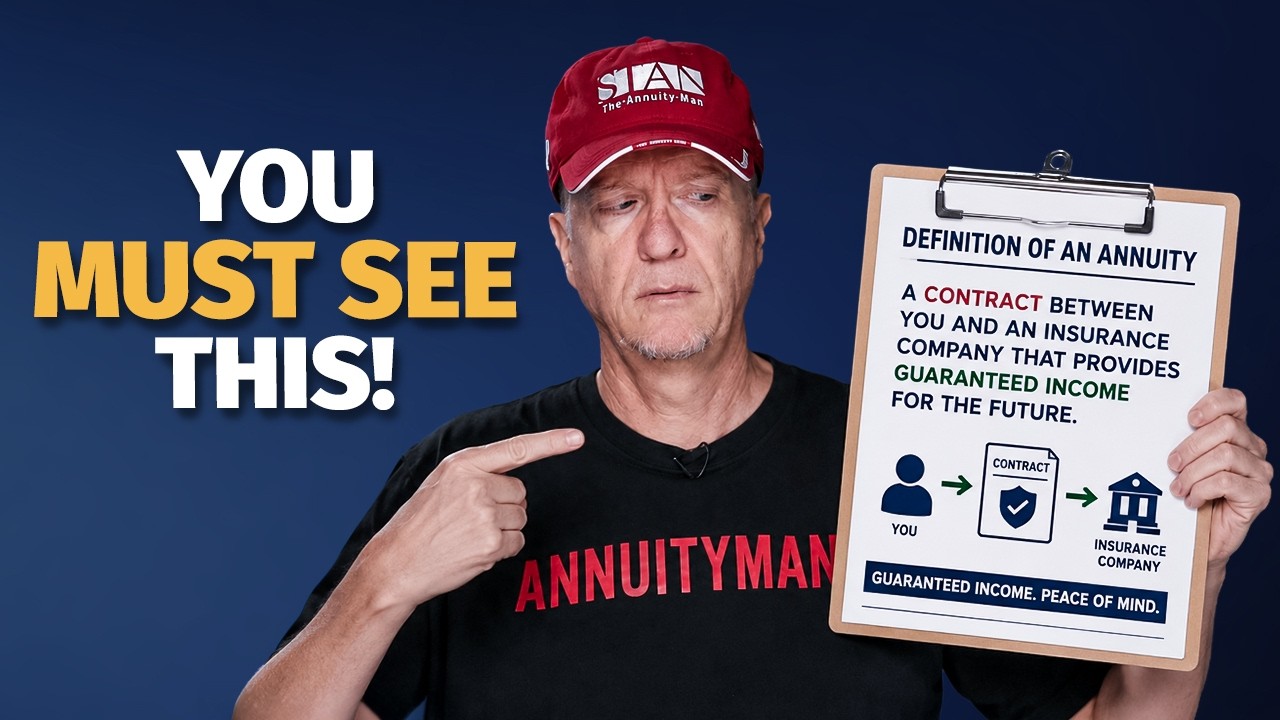

Talk to Stan The Annuity Man® himself
Get Stan for 30 minutes. No cost for his 3 decades of experience. Prepare yourself for the brutal annuity truth.