Michael Finke: Why Annuities Make Sense Right Now (From the Vault)
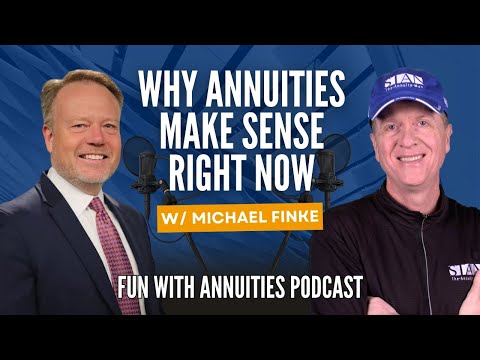
In this classic episode, Stan The Annuity Man talks with Michael Finke, a respected researcher in retirement income and behavior. Together, they unpack what it really means to protect your future lifestyle—and why annuities are more attractive than ever.
They discuss:
- Why annuities have become more appealing in today’s rate environment
- How to protect your lifestyle for the long run
- The “birthday cake” approach to spending in retirement
- Why there’s no single product that perfectly solves for inflation
Highlights:
- At the time of recording, five-year MYGAs were offering around 5.2%. Rates fluctuate, but locking in stability still matters.
- Buying an annuity is about creating a minimum standard of living you can depend on for life. You decide whether to shoulder the risk or transfer it.
- Retirement planning begins with acknowledging that life is finite—then designing income streams that match your goals and comfort level.
- Inflation doesn’t have one magic solution, but tools like Social Security and I Bonds can help maintain stability. Flexibility is key to peace of mind.
CONNECT WITH MICHAEL FINKE:
Website: http://www.michaelfinke.com/
LinkedIn: https://www.linkedin.com/in/michael-finke-8134808/
Facebook: https://www.facebook.com/mfinke
Twitter: https://twitter.com/FinkeonFinance
LISTEN ON ALL YOUR FAVORITE PODCAST PLATFORMS:
Libsyn: https://directory.libsyn.com/shows/view/id/theannuityman
Stitcher: https://www.stitcher.com/podcast/niceguysonbusiness/the-annuity-man-podcast#/
Apple: https://podcasts.apple.com/us/podcast/fun-with-annuities-the-annuity-man-podcast/id1482993601
Google: https://podcasts.google.com/feed/aHR0cHM6Ly90aGVhbm51aXR5bWFuLmxpYnN5bi5jb20vcnNz?sa=X&ved=0CAMQ27cFahcKEwjgu6j7suzrAhUAAAAAHQAAAAAQAQ Amazon: https://music.amazon.com/podcasts/11fec7ab-59ab-402f-94c7-93860e1694ae/Fun-with-Annuities-The-Annuity-Man-Podcast
Spotify: https://open.spotify.com/show/26y3c7vXgnhfmErLRP3zuM
CONNECT WITH STAN
Call Stan The Annuity Man: 800-509-6473
Website: http://theannuityman.com/
Email: [email protected]
Facebook: https://www.facebook.com/stantheannuityman/
Twitter: https://twitter.com/StanAnnuityMan
TikTok: https://www.tiktok.com/@theannuityman
Instagram: https://www.instagram.com/theannuityman/
Use the Calculators - https://www.stantheannuityman.com/annuity-calculator/
Get The Annuity Man's Books - https://www.stantheannuityman.com/how-do-annuities-work
Schedule a time to talk to Stan - https://www.stantheannuityman.com/book-a-call/
FUN WITH ANNUITIES (r)
0:04
Welcome to Fun with Annuities, where
0:06
every single week I welcome a celebrity
0:08
guest expert that can help you maximize
0:11
chapter 2 of your life. Listen, learn,
0:14
laugh, and love every minute of the most
0:17
unique financial podcast on the planet.
0:21
Let's get to it.
0:29
Welcome to Fun with Annuities. I'm your
0:30
host Stan the Annuity Man, America's
0:32
annuity agent, licensed in all 50
0:34
states. I want to welcome every single
0:36
person on all the major podcast
0:38
platforms and all of you maniacs on Fun
0:40
with Annuities YouTube channel where you
0:42
can see me wearing a customized Stan the
0:44
Annuity Man sweatshirt that's been
0:47
tie-dyed.
0:49
Just incredible the fashion statements
0:51
that I make every single day. And then
0:52
over one shoulder you see four Flying V
0:55
Gibson guitars, which is the reason is
0:57
it's it's uh it's kind of me saying
1:00
we're getting ready to rock and roll.
1:01
And when I say that, I have a rock star
1:03
on with me today, a repeat guest host. I
1:07
I mean, every time I'm looking something
1:09
up on annuities, I see an article he's
1:11
come up with. And um you know, uh as I
1:14
say, I I've got a new saying for him. If
1:17
it's time to do some annuity thinker,
1:19
let's bring in rockstar Michael Fanka.
1:23
Hey man, how are you?
1:25
I'm good. How are you?
1:27
Stan, where's my swag? I
1:29
I know.
1:30
I want a tie-dyed Stan the Annuity Man
1:31
t-shirt. [laughter]
1:33
The question is before we get started,
1:35
if I put that up on eBay, how much would
1:37
it fetch?
1:40
Uh, yeah,
1:42
I'm thinking thousands. I'm thinking
1:43
there would be an absolute bidding war.
1:46
Right. Right.
1:47
Well, there's two people that bid on it.
1:49
First, people that actually like the
1:50
brand, and those are consumers. And then
1:52
you'd have a bunch of agents that would
1:54
bid it and then burn it like have a
1:56
ceremony.
1:58
[laughter]
2:00
And that's okay. That's okay.
2:02
Good to talk to you again, Diana, as
2:03
always.
2:04
Thanks, man. Tell me what's new with
2:06
you, Michael Fininko. What are you
2:07
looking at other than the conundrum that
2:11
we're in of large debt, rising rates,
2:14
and a retirement semiric crisis?
2:17
Yeah. Well, so let's not start on that
2:19
negative foot. Let's let's move to a
2:21
more positive aspect of what's going on
2:23
in this crazy market. And that is that
2:26
near retirees can lock in 5.2%
2:31
on Miggas on fiveyear MAS for the next
2:33
five years. at the time of this taping
2:36
at the time of this taping u you know
2:39
may go up may go down now let's talk a
2:41
little bit about interest rates because
2:42
I think
2:42
yeah let's
2:43
that u if you look at what's known as
2:46
the yield curve which is the interest
2:50
rates that you get for investing in two
2:52
years and five years and 10year bonds
2:55
what you see is that the market thinks
2:57
that these high interest rates are not
2:58
going to last forever there's what's
3:00
known as an inverted yield curve on
3:03
bonds
3:03
so what that means is that once you go
3:05
10 years out, the markets actually think
3:07
that it that interest rates are going to
3:08
be lower than they are for the next two
3:10
years.
3:11
Yeah.
3:11
Um and this presents a conundrum, I
3:14
think, for a lot of investors right now,
3:15
which is it seems like we've been
3:17
waiting forever to get high rates of
3:20
return on safe investments.
3:23
And as we know, annuities are a very
3:26
efficient wrapper for safe investments
3:29
because safe investments are very tax
3:32
inefficient. So your bond, your CD
3:35
investments, they get whacked that
3:37
you're taxed at your ordinary income
3:39
rate, state plus federal. So for some
3:43
people, you know, if you live in
3:44
California, that can be 50% uh of all of
3:47
your gains you're paying in the form of
3:48
taxation.
3:50
But if you house them within an annuity,
3:52
you're not taxed on the gains every
3:54
year. Now, when annuities were maybe 2%,
3:57
that was no not a huge deal. But when
3:59
they're when they're 5% that all of a
4:02
sudden becomes a bigger deal. So if you
4:04
put in $500,000 and you're making
4:07
$26,000 of interest on it, um that's a
4:10
significant amount of tax savings that
4:12
you can get over the course of a
4:14
fiveyear time horizon. I mean that's
4:15
that's over $125 $130,000 in interest
4:18
that you can expect to earn. And then at
4:21
retirement, so this is the play that I
4:23
think a lot of people are not giving
4:25
enough thought to. If you're 62, 63,
4:29
you're the peak of the baby boom right
4:31
now, you're planning on retiring between
4:33
65 and 67, you buy one of these things,
4:37
you pull the money out after five years,
4:40
you're in a lower marginal tax bracket
4:43
uh than you were today, and you the
4:46
interest may or may not be enough to
4:48
push you up into a higher marginal tax
4:50
bracket. If that's the case, you can
4:51
roll over part of it into another type
4:53
of annuity. you can be very strategic
4:55
about your tax planning in a way that
4:57
you can't be if your savings is not
5:00
within the annuity structure. So, you
5:02
know, a lot of us are thinking also of
5:05
locking in those high rates on future
5:08
income. So, again, if you're
5:11
55, 60 years old right now, and I just
5:13
had a conversation with a friend of mine
5:15
who works for a big brokerage company,
5:18
and he gets these quotes in on annuities
5:20
every day. Um, and he's a smart guy,
5:22
like he understands the benefit of
5:24
annuities. And we're both like, you
5:27
know, he's a little bit older than I am,
5:28
and he's thinking, I need to just take
5:30
money and buy one of these things, like
5:32
a 10-year deferred so that I can get 10
5:35
years of deferral at a really shockingly
5:38
high interest rate. Correct. And that'll
5:40
buy me a very high income in the future.
5:43
So, if I can, you know, a great example
5:45
of this is like Ulax. QAX is so
5:47
interestsensitive that it used to be
5:49
that $145,000 might buy you 35 or
5:52
$40,000 of income. Now, it'll buy you
5:54
$50,000 of income at the age of 85.
5:57
That's right.
5:57
All of a sudden, it's like I can buy
6:00
future lifestyle pretty easily. And uh
6:04
it's it's we're in a situation today
6:06
where it's far more attractive than it
6:07
was a year ago. And we just don't know
6:09
where rates are going. I mean it it it's
6:12
looking like the Fed is potentially
6:15
going to increase increase rates. None
6:17
of us know exactly what's going to
6:19
happen in the future, but there is also
6:21
this possibility that we're going to
6:24
enter into some kind of a recession. The
6:27
Fed is going to very quickly start
6:28
pulling back on those rates because it's
6:30
going to it's seeing that the economy is
6:32
starting to cool significantly.
6:34
Sure. In which case, locking yourself
6:36
into today's high rates. I mean, it's
6:38
possible they could go up a little bit,
6:39
but it's also possible that they could
6:41
go down.
6:42
The bell didn't ring at the top. The
6:44
bell didn't ring at the top, man.
6:45
You know, and you know how quickly those
6:47
things get repriced.
6:48
Sure.
6:49
You know, once things start falling,
6:51
then insurance companies are very
6:53
aggressive about reigning in some of the
6:56
generosity uh if interest rates start
6:58
going down. So that's and I think that
7:01
probably right now the biggest story for
7:02
me is that tax deferral benefit that you
7:06
get from an annuity that you don't get
7:08
from CDs. And a lot of people are
7:10
feeling like I don't want to deal with
7:12
all this market volatility on safety.
7:14
But the thing that you have to remember
7:15
about safety in a high interest rate
7:17
environment is that you pay for it. You
7:19
pay for it in the form of higher income
7:21
taxes. So you've got to give some
7:23
thought to using an annuity. I think the
7:25
annuity wrapper on safe investments the
7:28
single most underused strategy in
7:31
financial planning today.
7:32
Sure. That's because people when they
7:34
they hear the word annuity, they think
7:35
it's one product. They don't know that
7:38
there's multiple products and so
7:40
they think there's high fees, you know,
7:42
and then that on a multi-year guaranteed
7:44
annuity,
7:45
it is what it is. Like you get your
7:46
5.2%. There's no extra fees on top of
7:49
that.
7:49
Right. Right. And um you know I'm a big
7:52
proponent of what I call my goodspia. I
7:54
did a video on it that kind of went
7:56
viral. That's that you know let's strip
7:59
out all the fees. You have control over
8:00
the asset. You can pivot at the end of
8:02
the duration or you can transfer it and
8:04
shop for the highest contractual
8:05
guarantees at that time with a immediate
8:07
annuity instead of buying a deferred
8:09
income annuity or an income writer. You
8:12
know a lot of people looking at that.
8:13
The other thing the other thing I would
8:14
tell always tell people you know Michael
8:16
I'm from the deep south so I think
8:18
differently. You know, if you won the
8:20
game, why are you still playing? I
8:21
always tell people, yeah, you know, if
8:23
you got a million dollars or $2 million,
8:25
whatever it is, whatever the money
8:26
amount of money is, and you multiply it
8:27
by five or four if you're going to, you
8:31
know, pepper it around with CDs and
8:32
treasuries and never touch the
8:34
principle, can you live off that
8:36
interest? It's really that simple. We're
8:37
we're at the point now where people can
8:39
actually live off the interest. Is it
8:41
Jimmy Carter years? No. But we haven't
8:44
seen this in a long long long long time,
8:47
you know? So, it's a different and I
8:50
think a lot of people are looking at at
8:52
MIGAS, multi-year guarantee annuities,
8:54
which is the annuity industry's version
8:56
of a CD, and they never ever heard about
8:59
it before, which is interesting.
9:02
It is interesting, but Stan, they've
9:03
become a lot more popular. I just looked
9:05
at the sales data in 2022 so far. Those
9:09
fixed annuities, they're dominating.
9:11
There are
9:12
half of that was me, Michael, just
9:13
letting you know.
9:15
Um,
9:16
I'm not surprised.
9:18
We ton that and we've been doing that
9:20
for a long time. Uh what people have to
9:22
know is the commissions for all annuity
9:24
types are built in. Micah commissions
9:25
are just very very very low. That's the
9:28
reason the bad chicken dinner seminar
9:30
isn't given on micas because they don't
9:33
have that. What else is you read an
9:35
article recently about wealthy people in
9:37
annuities? I forgot the title but I read
9:39
it and it was pretty interesting. What
9:41
drove you there to talk about those rich
9:43
evil people, Michael? Well, no. I what I
9:45
was actually talking about is a new
9:48
study came out from Morning Star. And
9:50
when Morning Star comes out with a new
9:52
study, a lot of people pay attention to
9:54
it. And one of the things they said was
9:56
that for
9:57
u richer people, you know, annuities
9:59
don't really provide that much value.
10:02
And
10:02
but we got to define rich. What's that
10:04
mean? Well, I mean for them it was, you
10:08
know, people whose assets are maybe 25
10:10
times what their income is, but that
10:12
includes social security more. But the
10:16
thing is the the problem that I had is
10:18
the methodology and uh you know,
10:20
I just pointed the first one out. I
10:22
mean, some people think they're rich and
10:23
they have x amount and other people
10:25
would think that's poor. You know, it
10:27
just
10:28
the customization of it all. [snorts]
10:31
And the question is u you know is what
10:34
is the welfare benefit from and it's
10:37
it's kind of a economist word like how
10:39
much happier do you does it make you
10:41
is that what welfare benefit means
10:43
because that's a horrific phrase.
10:45
It is a horrific phrase but it's used by
10:47
us economists all the time. You know we
10:48
don't
10:49
need to up your game man. Y'all need to
10:51
bring me in and and give you
10:52
southernisms like southern saints
10:54
because we would never use the word
10:56
welfare benefit. [laughter]
10:59
Hey, you're getting a welfare benefit.
11:00
And people like, I'm never going to be
11:02
on welfare ever my life, son. Let me
11:05
tell you something. I'm a working man,
11:06
son. I mean, you gota you got to rethink
11:09
this stuff.
11:11
You are absolutely correct. Our
11:12
marketing skills are not that great.
11:14
Terrific.
11:16
But the idea is that that a lot of times
11:18
in financial planning, what people use
11:19
are what's known as a failure rate
11:22
analysis. They use what a Monte Carlo.
11:24
And what a Monte Carlo does is it gives
11:27
you it spits out this number which is
11:30
the probability of success which means
11:33
it's the probability that you can
11:34
successfully from an investment
11:36
portfolio withdraw a certain amount of
11:39
income. So let's say
11:41
I like Monte Carlo has a place and as
11:43
the race that's kind of played out
11:46
though, isn't it? all these I mean
11:47
seriously
11:48
well you know that's why economists
11:50
don't use it is is that it gives you
11:52
information that is not complete so what
11:54
it tells you is let's say you've got a
11:56
million bucks and you want to pull out
11:58
what what's a spia rate right now
12:01
on
12:02
bad bad question has to do with your age
12:03
you know that that was a setup question
12:05
don't don't do that don't even try to
12:07
play me Michael you know me better than
12:09
that
12:09
well most economist started like 65 so
12:12
65y old male
12:16
I'd have to run the quote. I'd have to
12:17
run the quote. Pick a number. Pick a
12:18
pick number.
12:21
$60,000 a year from a million bucks.
12:23
Okay.
12:24
And Okay. So, let's let's compare that
12:26
to an investment portfolio with stocks
12:28
and bonds. And let's say what is the
12:30
probability that you can successfully
12:33
withdraw $60,000 from a portfolio of
12:35
stocks and bonds. Um, and then let's use
12:38
like historical
12:41
stock return data from the United States
12:43
from back during periods when stocks
12:45
really dominated bonds, which by the way
12:47
has not happened since 1990. Um, here's
12:51
a stat for you. Since 19
12:53
since 1990, a dollar in the S&P 500 has
12:58
never grown to more than $7 over 20
13:01
years. Between 1934 and 1953, a dollar
13:06
never grew to less than $7. Every single
13:10
year during that time period between
13:13
1934 and 1953, $1 never grew to less
13:17
than $7 over the next 20 years. But
13:20
since 1990, that has never happened
13:23
once. So we're using a lot of people who
13:26
use a Monte Carlo are using these data
13:27
from
13:28
nice
13:29
a period where stocks really dominated
13:32
other types of investments and then they
13:34
project the likelihood that you can
13:36
withdraw $60,000 from a million-doll
13:39
portfolio using those historical data
13:42
which are probably not relevant going
13:44
forward. Um but and then it gives you it
13:47
spits out well there's a an 80%
13:49
probability of success. What does that
13:51
mean? there's an 80% probability using
13:54
historical data that are not relevant
13:57
that you're not going to run out of
13:58
money. What that doesn't tell you is
14:00
that when you do run out of money, the
14:02
20% of the time using these simulations,
14:05
you got to live off social security.
14:07
Yeah. So they say,
14:08
you're toast.
14:09
Yeah. And that that's what economists
14:11
say is, wait a minute, let's let's look
14:13
at how bad things can get when you
14:15
actually do run out. So, you know, if if
14:18
you buy an annuity and let's say you've
14:20
got two people, you know, one of them
14:22
has $2 million of savings. They use a
14:24
million dollar to buy $60,000 of income.
14:26
The other one just has $2 million and
14:28
they try to pull out an income. And the
14:30
one with $2 million tries to match the
14:32
same income. When they run out, they got
14:34
to live off social security. The one who
14:36
used a million dollar to buy $60,000 of
14:38
an annuity, they've got $60,000 plus
14:40
$30,000 of social security. Their worst
14:43
case scenario is that they're living on
14:45
$90,000 a year, but they both they might
14:48
both have the same failure rate or the
14:49
one who bought the annuity might have a
14:51
lower failure rate depending on how you
14:52
model it out or a higher failure rate.
14:54
But even if they do, what's the
14:57
consequences? So when you buy an
14:58
annuity, especially if you take part of
15:00
a chunk of your savings and buy it,
15:02
and you're talking about when you say
15:02
annuity, you're talking about lifetime
15:04
income annuity.
15:05
A liime income. Yeah.
15:07
Okay. and and let's say you know you
15:08
take a a chunk of your savings, you use
15:10
it to buy an annuity, you're essentially
15:12
buying yourself a minimum standard of
15:15
living
15:16
forever, no matter how long you live.
15:18
And so if we model out a thousand
15:21
different potential retirements,
15:23
the ones who will have an annuity will
15:25
on average be happier, but the ones with
15:29
an investment portfolio might have a
15:31
slightly higher probability of success,
15:33
but there's no information about what
15:35
failure means. The community college
15:38
version of what he just said was you
15:39
either want to shoulder the risk or
15:41
transfer the risk. One of the two. It
15:43
really comes down to. And yes, community
15:45
colleges are great because they teach
15:46
trades, Michael. I mean, they Yes, we
15:49
need plumbers. We need plumbers and
15:51
electricians and things like that.
15:53
What's the probability, Michael, of me
15:54
having six-pack abs? My wife wants to
15:56
know.
15:58
[laughter]
15:59
Can we run a Monte Carlo on my abdomen
16:02
muscles?
16:04
It's not good. He's allergy here.
16:07
[laughter]
16:09
I have to, man. Listen, you you come on
16:11
this on the program, you know, I'm going
16:14
to push the envelope, man. And I'm
16:15
thinking to myself, can you run a Monte
16:17
Carly? There's no chance that this
16:20
person here in this nice red tie-dyed
16:25
thing isn't going to have six-pack abs.
16:27
But that's all I care about, Michael.
16:28
Can I have six pack abs? Um, that's
16:30
that's why I always when people call me
16:32
and they'll say, "Well, this guy told me
16:34
that this and do this and this and this
16:36
and this." I'm like, "Listen, you have a
16:37
better chance of having six-pack abs."
16:39
And I don't know you, but you're not
16:40
going to have. So, that's my that's my
16:44
analogy to the good, too good to be true
16:46
sales pitches that are out there. So,
16:48
um, what else is new in the annuity
16:50
industry, Mr. Fina?
16:52
Um,
16:53
what are you working on? What's the
16:55
super secret double secret probation
16:57
project you're on?
16:59
Well, gosh. So, one of the things that
17:01
we may or may not have tal talked about
17:02
in the past is um how having greater
17:06
guaranteed income actually allows you to
17:08
take more risk with the remainder of
17:10
your investment portfolio. I think
17:12
something that not a lot of people give
17:13
thought to. First of all, when you buy
17:15
an annuity, an income annuity, that's
17:18
part of the bond portion of your
17:20
portfolio. And again, I was mentioning
17:21
before that you can use an annuity as a
17:24
substitute for part of your CDs or your
17:26
bonds.
17:27
Sure. Um, and and you get that
17:29
additional tax deferral benefit. Um, but
17:32
something that that I like to think a
17:33
lot about is, okay, you're you're close
17:35
to retirement, you've got this asset
17:36
allocation, you have some of it in
17:37
qualified, some of it in non-qualified,
17:39
you start moving the chess pieces a
17:41
little bit, and how does that impact the
17:44
optimal allocation outside of those
17:46
chess pieces? So, I have $2 million of
17:49
savings. I use $500,000 to buy myself um
17:53
an income annuity. What does that entail
17:56
in terms of what the rest of my
17:57
portfolio should look like? And what it
17:59
should look like is if I'm if I got a
18:01
50-50 portfolio, then I can actually
18:05
continue to invest a million dollars of
18:07
my $2 million in stocks, I now have
18:10
$500,000 in bonds. And in fact, I might
18:12
even be able to go to $1.1 million of
18:15
stocks and $400,000 of bonds again
18:17
because my safety net that I've built is
18:19
bigger. U the the worst case scenario is
18:22
better. So, I mean, what risk in
18:24
retirement means is spending volatility.
18:27
And if you take more risk, you're going
18:29
to have more volatility of your
18:32
spending. You're going to have a higher
18:33
probability that you're going to have to
18:34
cut back. That's really what risk means.
18:36
It means that um let's talk also about
18:40
2022 because I don't think we've done
18:41
that. And if you would have started out
18:44
the beginning of the year uh with a
18:47
million dollars and you would have you
18:50
would have done the 4% rule. Say you got
18:52
two retirees. They each got a million
18:53
bucks. One follows the 4% rule. They
18:56
think they can spend $40,000 a year plus
18:58
inflation, $43,200 next year.
19:01
Um the other one decides to wait nine
19:03
months to retire and they had a million
19:06
bucks. Now they've got $800,000 and the
19:09
financial adviser tells them, "No, you
19:11
know, we're going to follow the 4% rule.
19:12
You can spend $32,000 a year plus
19:15
inflation." That doesn't make any sense.
19:17
This this guy over here started with a
19:19
million bucks. He's now down to $800,000
19:21
minus whatever he spent over the last
19:23
nine months. He's got even less money.
19:25
And you're telling him or her that she
19:27
can spend $43,200 next year. And the
19:31
other one you're telling you can spend,
19:32
you know, 32,000 plus inflation next
19:35
year. Um, you have to be willing to be
19:38
flexible when it comes to spending if
19:40
you take investment risk. And I think
19:42
oftentimes people don't really fully
19:44
understand that. And I think people are
19:46
beginning to become aware of it. In
19:47
fact, when I look on the boards of
19:49
retirees,
19:51
what I'm seeing a lot of people talking
19:52
about these days is I did not know this
19:55
could happen. I started my advisor said
19:58
I was going to be fine. I started out
20:00
with this nest egg. I reached my goal.
20:02
You know, a lot of people hit their goal
20:03
number in 2021. They decided they were
20:05
going to retire.
20:06
Sure.
20:06
Now they got a lot less money and
20:08
they're saying I got to go back to work
20:10
or my advisor's stupid. you know, they
20:12
put me in these things and they didn't
20:14
like
20:14
my I like the my advisor stupid broad
20:17
brush because that's pretty good. Of
20:20
course, that doesn't include me. Um, but
20:22
yeah, I do like that. Now, go ahead.
20:26
It's the market, right? You know, all
20:28
all everybody that was in the market
20:30
lost that money. I lost that money. You
20:32
lost some of your money. I mean, we all
20:33
lost.
20:34
I don't do markets. Come on, man. I only
20:35
do contractual guarantees. But I will
20:37
tell people that most adviserss today, I
20:39
have cowboy boots that are older than
20:41
them. They have only seen bull markets.
20:43
They have not seen people walk out in
20:44
the front yard and vomit. You know, and
20:46
I started in the securities industry in
20:48
' 87. Uh if you that that that year
20:51
rings a bell, there's a reason. Um you
20:55
know, markets don't always just
20:57
historically go up and up and up and up
20:59
quickly. Over time, they do. But I think
21:01
for the baby boomer, the conundrum, the
21:04
headscratcher is what do I do here? Do I
21:07
have enough money to win the game and
21:08
just peel off interest or create an
21:09
income floor? or do I still want to play
21:11
the game?
21:12
My opinion, Michael, is you know the the
21:15
whole people saying to everyone, well,
21:17
you got to go to college, you got to buy
21:18
a house, you got to you got to got to
21:20
get it all. You got to be in the
21:22
markets. Do you if you have enough money
21:25
and just want to peel off interest or
21:26
create a lifetime income stream, do you
21:28
really need to be there?
21:31
It's a great question and I think most
21:33
of us who have tal I have friends
21:36
obviously we're this group of retirement
21:38
dorks who talk to each other about uh
21:40
what we hope to do with our own
21:42
retirement.
21:43
Is that retirement dorks.com?
21:45
Yes. Uh
21:47
it needs to be a special club. You're
21:49
invited by the way Stan.
21:50
Are you calling me a dork? Is that Wait
21:52
a minute. Swallow ho down.
21:54
It's it's a it's a term of endearment
21:57
thing.
21:57
It's an exclusive club.
21:58
Oh thank you very much. But we all I
22:00
mean when it comes to our retirement
22:01
that's how we want to play it. Like we
22:03
we we can take risk during the
22:05
accumulation stage, but when we get
22:08
close to retirement, we I just want to
22:09
lock it in and I don't have to think
22:11
about it. I don't have to worry about
22:12
what's going on in the markets. When I'm
22:14
deciding whether or not I can go on
22:16
vacation next year, I don't have to say,
22:18
well, wait a minute. You know, the
22:19
markets are down. I'm not going to be
22:20
able to do that. I want to be able to
22:22
lock in as much as I can lock in without
22:24
the fear. And I know the older I get,
22:26
the more it's going to bother me. And
22:27
that actually shows up in the data is
22:29
that we do get
22:30
and you're like you're like 32, right,
22:32
Michael?
22:32
Absolutely. Yes. How did you know?
22:35
I know. [clears throat] I just took a
22:36
stab at it. Just your voice. No, I'm
22:38
kidding. Um, you know, I always tell
22:39
people there's no U-Hauls behind herses.
22:41
I'm trying to I'm trying to figure out
22:42
how to quantify that with a formula. Um,
22:45
but I, you know, I do think that people,
22:48
and I'm pounding the table a little bit
22:49
out here for the baby boomers to
22:51
consider and look at their situation
22:53
that you might not only want to retire
22:54
from your job, you might want to retire
22:56
from the markets.
22:59
Um, if you can, a lot of people can't,
23:02
but if you can, um, and I think that
23:05
these choppy markets and and I think
23:07
we're getting at the time of this
23:08
taping, I think people are listening to
23:10
Stan the annuity man because, you know,
23:13
it's lifestyle in chapter two of your
23:15
life. So, what are you and the dorks
23:18
doing to get this message out?
23:22
Retirement dorks. I I've got to go get
23:24
that domain. um to get the message out
23:26
in English to people, not you know, I'll
23:29
let you finish that question. Here's a
23:31
great comment. Guy was calling me the
23:33
other day and he was looking at annuity
23:35
product, a very complex one. We won't
23:37
mention it. And his comment was in
23:39
southern he goes, you know, I didn't
23:40
know mathematical formulas had letters
23:42
in it. I'm like, it does. Okay. And
23:46
that's not a good thing.
23:47
[laughter]
23:48
So, so what's the messaging
23:52
that we're trying to get across other
23:54
than just hiring me and pay me a huge
23:56
retainer to do it right? What are you
23:58
guys doing?
23:58
You know, one one of the things that I'm
24:00
a big fan of is telling people if you
24:03
try to do it yourself. First of all, you
24:05
have to pick a failure rate, a
24:08
probability that you know what's what at
24:10
what age do you want to run out? By the
24:12
way, this is all prefaced with a
24:15
discussion that begins,
24:17
you're going to die. So, I have a friend
24:20
of mine who's a researcher.
24:21
That's beautiful.
24:22
Yeah. He's a researcher who studies this
24:25
idea of people's unwillingness to accept
24:27
their own mortality. And whenever
24:29
anybody brings up anything, I mean,
24:31
there's a reason why it's called life
24:32
insurance and not death insurance. And
24:34
even though it is death insurance, uh
24:36
it's because people don't want to
24:38
acknowledge the fact that they're going
24:41
to die. But as if you're going to do
24:42
retirement planning, right? You've got
24:44
to acknowledge the fact that you're not
24:46
going to live forever. Hopefully, you're
24:47
going to live a really long time. But
24:49
none of us know. So there's only two
24:51
places your money can go. Your money can
24:53
either go to other people. You know,
24:54
when you die, your money gets all that
24:57
all that fun that you could have had
24:58
gets spent by someone else.
25:00
My daughter showing up to my funeral in
25:01
a Lamborghini. That's what's going to
25:03
happen.
25:04
It is. And it's actually the research is
25:06
so much fun because when people get
25:08
these inheritances, it's always the ones
25:11
who like having a whole lot of fun who
25:13
spend it down the fastest. And they're
25:15
the ones, you know, every generation has
25:17
those people who who didn't really
25:19
accumulate much money in their lifetime,
25:21
but when they get the money, they know
25:22
how to spend it. Like they know how to
25:24
live. Um, so either either the money
25:26
goes to that kid who is really good at
25:29
spending money or it goes to your
25:31
lifestyle. and and if it's going to go
25:33
to your lifestyle, you got two choices.
25:35
You can uh you can try to spread it out
25:37
or you can buy yourself some sort of a
25:40
guaranteed income product that allows
25:42
you to spend. We've talked about this
25:43
before, the birthday cake problem. It
25:45
allows you to spend more every year
25:47
without having to worry about
25:48
potentially running out. That's why you
25:50
do it. That's why economists say it's a
25:51
puzzle that we're not buying more of
25:52
these things. But I think the big the
25:54
big thing you have to overcome is
25:56
recognizing that you're not going to
25:58
live forever and you either have to cut
26:00
little little slices of the birthday
26:02
cake or you can spend more with less
26:04
worry. So why not just do that?
26:06
What worries you, Michael Frinka, other
26:08
than waking up in the morning and just
26:10
continuing to be vibrant and young?
26:14
what worries me, you know, frankly, uh,
26:17
uh, right now, and it's probably the
26:20
same thing that you mentioned at the
26:21
very beginning of the podcast, which is
26:23
one of the consequences of really high
26:26
interest rates, the Fed raising these
26:28
rates, is that it's crowding out
26:30
everything in the federal budget. And
26:33
absolutely,
26:34
you know, that makes me worry about
26:36
spending austerity, which is another one
26:39
of those fun love to use. Um, you know,
26:42
that sounds like an affliction. Like the
26:44
fact spending austerity means that I've
26:46
got money, but I don't know what it's
26:48
for.
26:49
That's what that means to me. I don't
26:51
need Y'all need to come up.
26:52
The federal government only has so much
26:54
money it can spend. And if it's spending
26:56
a ton of money on interest payments,
26:58
then it's not going to be able to spend
26:59
as much money on things like
27:02
generous Medicare and Social Security
27:04
benefit increases over time.
27:06
That's good. That's good. I love your
27:09
FR. You guys need to come up with these
27:10
phrases and then sell t-shirts on
27:12
retirement dorks.com. You know, spending
27:15
austerity. What was the other one?
27:16
Welfare. [clears throat]
27:19
Welfare.
27:20
I've got I've got
27:21
I mean, it's just like what in the world
27:22
are y'all talking about, man?
27:24
Economist jargon.
27:26
And then I'm over here doing all the
27:27
southernisms like, you know, squeezing
27:30
oil out of a brick. That's what we're
27:32
doing right here. We're trying to get
27:33
the highest contractual guarantee. We're
27:35
squeezing oil out of a brick. But, you
27:37
know, I think that's part of the annuity
27:39
industry's problem is we have not
27:41
messaged it right to people in their in
27:45
English that they fully understand
27:47
because the way that we talk about it
27:49
seems complex, but truly annuity types
27:53
are very simple if explained properly.
27:56
This isn't complex.
27:57
They really couldn't be any easier.
27:59
It really I mean, yeah. I mean, I always
28:00
say if you can't explain it to a
28:01
nine-year-old, don't buy it. No offense
28:03
to nine-year-olds. It really is that
28:05
simple. ing because everyone, well,
28:07
they're expensive and they're I can't
28:10
understand them, you know, and I'm like,
28:12
you know, I told a guy the other day and
28:13
I was trying to explain my go and I told
28:15
him I said, "I'm a little frustrated. I
28:17
feel like I'm showing a painting to a
28:18
blind person, you know, because they
28:20
just didn't understand the correlation
28:21
between CD and Mike." I'm like, "It's
28:23
really that simple. Don't don't make it
28:24
any more difficult than that." Right.
28:25
And and so um so that that worries you,
28:29
but what makes you get up in the
28:31
morning, put on the running shoes, you
28:33
know, you you run seven to 10 miles
28:34
every morning, as you know, after that
28:37
run. What what makes you want to just go
28:39
get it every day?
28:40
I got to keep up those six-pack abs,
28:41
stand.
28:42
Yeah, man. I mean, you know, you're
28:43
you're my Yeah, you're kind of the idol
28:45
that I'm looking for. So, what I mean,
28:47
what what motivates you? What keeps you
28:48
going, Michael? Well, I mean, first of
28:51
all, u we have this huge baby boom
28:54
cohort, and I worry about them, frankly.
28:57
I I think that it's the first generation
28:59
that's going to have to rely entirely on
29:02
savings to fund their lifestyle. I think
29:04
they had a really great time back in
29:08
2021. The markets were doing fantastic.
29:10
All of them felt really rich. Uh, but I
29:13
I was really worried then and and I'm
29:15
worried that they don't have the right
29:18
information about what they're supposed
29:20
to do with that money after they retire.
29:22
I think we've we've really dropped the
29:24
ball as a society on those retirees. We
29:27
don't have any moment where we sit down
29:30
with them and say, "All right, you got
29:31
this pot of money. What do you want to
29:33
do with it? What's your goal? U how do
29:35
you want to live? Like let's start with
29:37
the lifestyle that you want to lead and
29:38
then let's build that plan around it."
29:40
And to the extent that I can educate
29:42
people on making some of these choices,
29:46
I see it as an opportunity to help
29:48
people live better. Um, but I think they
29:51
just have no idea. They don't understand
29:52
what these trade-offs are. Again, to an
29:54
economist, it seems pretty easy. You
29:55
know, you've got these very easy to
29:57
understand trade-offs that are all about
29:59
welfare maximization. But to the average
30:02
retiree, they have no idea what it's all
30:04
about.
30:05
Welfare maximization. So, it's our job
30:08
to try to to try to use concepts to help
30:13
people put together a plan that's going
30:14
to make them happier.
30:16
I could get elected running against the
30:19
phrase welfare maximization. Just just
30:22
bringing it up and saying, "I am totally
30:23
against welfare maximization
30:27
because you're tired of giving this
30:28
stuff away." You know what I'm saying?
30:30
And then you're stepping like Stan,
30:32
that's not what I'm talking about.
30:33
That's not welfare maximization's all
30:36
about.
30:37
I am not running on the welfare
30:38
maximization platform. [laughter]
30:42
That's a loser. But you know
30:43
the kind of messaging that usually works
30:45
well.
30:45
That's pretty. But people always talk
30:47
about fake news and political fake news
30:48
and all this stuff. Financial fake news
30:50
is as bad. It's as bad because what and
30:55
I want you to think about it from a
30:56
party standpoint. You have the party
30:57
over here of contractual guarantees and
30:59
the curse word of annuities. Then you
31:02
have the party over here of market
31:03
growth and potential and it's going to
31:05
go up. And both sides hammer each other.
31:09
Both sides say things about each other
31:12
that are unfounded to get the sale from
31:15
the other guy. Similar to a politician
31:17
saying what they have to say to get the
31:19
vote.
31:20
That's the problem. The problem is is
31:23
the master of the universe, financial
31:24
architect, wealth architect, financial
31:26
advisor saying all annuities are bad.
31:28
I'm just telling you right now, son. And
31:30
that's that's stupid as if I said all
31:33
mutual funds are bad. That's stupid. Um
31:37
and I think I don't know how to cut
31:38
through that noise. But other than you
31:41
know the annuity industry is notorious
31:43
for sponsoring the Rolling Stones tour,
31:45
which is I don't understand that unless
31:47
I'm opening for them. Um we need to do a
31:50
better job of buying airtime, I would
31:53
think. You know, I see some I've s I've
31:55
seen some stabs at that. I know you sit
31:58
in the big boardrooms with big marble
32:00
stuff and they feed you all these really
32:01
nice food and stuff. Has anybody talked
32:03
about actually marketing to the boomers
32:05
other than what I'm doing?
32:08
Well, Stan, I I have to say that's why I
32:10
recently I mentioned to you u before
32:13
this interview that I actually used your
32:15
name in a very important group early on
32:17
in this week.
32:19
Just tell me the truth because I can
32:20
take it.
32:21
They were all right. They didn't they
32:22
they hadn't heard of you, Stacy.
32:23
What?
32:24
They don't know to hate you. You got to
32:26
be kidding me. But then again, I don't
32:29
market to the financial industry.
32:31
No, you don't. And so, but no, this was
32:33
this was more like policy folks from big
32:36
companies.
32:37
And I'm saying like you've got this is
32:39
how you need to present this
32:40
information. It's it's simple. It's
32:42
straightforward. I used examples of the
32:44
way you present information on the
32:45
website because that's what the consumer
32:47
needs to know is they need to know, you
32:49
know, the quality of the different
32:50
insurance companies. They need to know
32:52
the quotes that they're getting. um you
32:54
focus on very simple products that are
32:56
very easy to explain that are providing
32:58
the kind of lifetime income that people
33:00
actually want. Um that you know it's
33:02
it's u it's something that I think
33:06
others could learn from. I'll say that
33:08
that's that's a the ultimate compliment
33:10
by the way Stan that that you I think
33:11
your marketing
33:12
skills are are exceptional.
33:15
I need to go speak in front of this
33:17
group now. I would do it with a drummer
33:18
behind me, you know, doing like a
33:20
hip-hop drum beat as I'm talking and
33:23
maybe a guy on guitar. But the point is,
33:26
it would be neat for me to talk to these
33:27
I did it one time at like the
33:29
Association of Financial Planners
33:32
in Chicago and they brought me in, they
33:34
paid me and it was like thousand people
33:35
in the room. It was like a fist fight
33:37
the whole time. Of course, I won
33:39
everyone but factually, but you know, it
33:41
was it was it was bizarre. It was it was
33:44
interesting. But I think that's what
33:46
needs to happen. We need to go into the
33:48
belly of the beast, as they say, and
33:51
factually hammer them on what this is
33:53
all about and have the people step up to
33:55
the mic and and try to, you know, stump
33:58
Michael and Stan and we just go, "Uh,
34:01
sit back down, chump, because we're
34:03
getting ready to kill you right here
34:04
with facts."
34:05
You know, I actually I don't see the
34:07
same level of antagonism towards
34:10
annuities.
34:10
Come on. That's what that's what makes
34:11
it fun. Just let me go. Let me have it.
34:13
Okay, I hear you. I hear you. You know
34:15
what? I tell you why
34:17
in general and and that is great to see
34:19
because I think especially in the
34:21
investment world, people were not as
34:22
open to having these kind of
34:23
conversations maybe four or five years
34:25
ago, but there is a general
34:26
acknowledgement. Yeah, these things
34:28
actually have a place. Let's think about
34:30
how we can position them to consumers.
34:32
Well, there's a demographic title wave
34:34
and I've got a feeling that a lot of
34:36
people are walking in whether it's from
34:38
a bad chicken dinner seminar or just
34:40
life saying, "I'm really tired of the
34:41
volatility. Do you have anything else
34:43
for me?"
34:44
Yeah. Um I I think I think as like
34:47
everything that's good, the consumer
34:48
drags the industry across the finish
34:51
line.
34:52
Oh, I want to talk about one more thing,
34:53
Stan, before we stop this this. So,
34:56
first of all,
34:57
what were we indexed annuities? Um
35:01
it is but but let's think about this for
35:03
a minute, Sam. First of all,
35:04
no, I read Jason I read I read his
35:06
article.
35:07
No, no, no. the the option but first of
35:10
all the option budgets are getting
35:11
pretty generous in those things which
35:13
means that the caps are pretty high.
35:15
They're higher than they have been in
35:16
the past.
35:17
But let's also think about
35:19
you know those those guarantees the
35:21
insurance company provided that you
35:23
wouldn't lose money on your investment
35:26
as a bond substitute. So the insurance
35:29
companies
35:30
reminder about how fixed index annuities
35:32
work.
35:33
Wait, stop. I can't make I'm gonna argue
35:35
with you here. You cannot
35:38
put fixed index annuities in the same
35:40
categories as a bond. You just can't,
35:42
Michael. Come on, man.
35:43
Well, I mean, if you look at the
35:44
historical long-term performance,
35:47
they're they're pretty close to a
35:49
corporate intermediate term bond over
35:52
time, but
35:54
but you get this downside protection of
35:57
the principal. Now, the thing I want to
35:59
talk about here, Stan, is that with
36:00
those products,
36:02
the insurance company has actually lost
36:05
the money.
36:06
So, you're right. They invested in their
36:08
general account portfolio. They assumed
36:10
it was going to provide a 5% return. So,
36:14
they have, you know, they took $95 of
36:16
your money. They are going to give you a
36:19
$100 back next year. They invested the
36:21
rest in a financial option which lost
36:23
did not pay off this year.
36:24
Sure. Sure. but of your bond portfolio,
36:28
you're not going to lose any money on
36:30
that. And the assumed rate of return was
36:33
5%. The insurance company is now holding
36:36
all of these intermediate term corporate
36:38
bonds. They saw this tremendous loss in
36:42
their general account portfolio that
36:44
they cannot transfer to you. So, this is
36:47
one of those years where a product like
36:49
a fixed index annuity that provides you
36:52
with protection against loss um it's
36:56
it's become very apparent that you've
36:58
transferred a lot of risk to the
36:59
insurance company of your bond
37:01
portfolio. Um and that's that is
37:04
and I agree with you and you said
37:06
something on a previous podcast with us
37:07
that I've attributed to you since I mean
37:10
and you probably said it by mistake. It
37:11
was so good, Michael. That's what I
37:12
mean. Yeah. Is that good? And you said,
37:16
"Let the annuity companies buy the bonds
37:17
for you."
37:18
Yeah.
37:19
With these products. And I thought that
37:20
was genius. And it still is genius. And
37:22
you still get the props and you still
37:23
get the royalties because this is a
37:26
great example of they're buying the
37:27
bonds for you and you're not suffering
37:29
in the volatility of the underlying
37:31
principle of those bonds yet you got you
37:34
have the contractual guarantees in
37:36
place. So,
37:37
and I think this is something that a lot
37:38
of people had forgotten about that take
37:41
agreed,
37:41
you know, at the beginning of the year,
37:42
some people thought, well, wait a
37:44
minute, you know, interest rates are so
37:45
low, I'm going to try to get I'm going
37:47
to buy bonds that have a higher yield.
37:49
I'm going to buy bonds that are longer
37:51
term. I'm going to buy bonds that are uh
37:53
riskier, you know, lower quality bonds.
37:55
Sure. Sure.
37:55
And those people thought, well, you
37:57
know, how how risky could bonds be? And
38:01
by [laughter] the time we get to
38:03
October,
38:04
the the Vanguard long-term corporate
38:07
bond ETF is now down more than 30%.
38:11
Like, who thought that that was even
38:13
possible?
38:14
Listen, I was there in the 90s. I was at
38:15
Morgan Stanley when that happened. I was
38:18
I was a bond guy at those big firms. And
38:21
I always tell people, you know, bonds
38:23
aren't always a safe haven
38:26
at all. you know, from a standpoint of
38:28
underlying value.
38:29
We're definitely seeing that this year.
38:31
Oh my gosh. I And I think we are in a
38:33
bare market for bonds. And I hope I'm
38:34
wrong and I'm who knows. I mean, that's
38:36
from my past, but um I don't know. Tell
38:39
me about inflation, Michael. You wake up
38:41
in the morning after the workout and
38:43
then you start thinking about inflation.
38:45
What are you thinking about?
38:48
Well, okay. So, inflation has been
38:51
really spotty. So that means that, you
38:55
know, when I look at the inflation
38:56
numbers, what I see is not that
38:59
everything is going up by a lot. I'm
39:01
seeing that some things are going up by
39:03
a lot. And and
39:04
obviously the war in Ukraine has
39:07
impacted energy costs that's gone up a
39:09
lot. Uh there are supply chain issues
39:12
that are, you know, partially a
39:14
carryover from the COVID era that are
39:17
affecting prices a lot. Some things like
39:19
health care that seniors pay a lot of
39:21
money for are really have not gone up at
39:23
all over the last couple of years. So if
39:25
you can be more flexible than like which
39:28
most retirees can be more flexible then
39:31
the impact of inflation is not as big of
39:34
a deal. One of the things I worry about
39:36
with those retirees is that there is
39:39
such a thing as inflation sequence of
39:42
return risk. And what that means is that
39:44
if inflation is really high early on in
39:47
retirement, the prices of stuff you buy
39:50
throughout retirement is going to be
39:51
more expensive. So it's worse if
39:54
inflation's high early than if inflation
39:56
is high late. Because if inflation's
39:58
high early, then prices go up and they
40:00
stay up forever.
40:02
And if inflation's high late and you pay
40:04
really high prices later on, it's not a
40:05
big deal because you were able to buy
40:06
cheap stuff for the first 10 years of
40:08
retirement
40:09
and you're going to die.
40:11
Well, don't remind people because that
40:13
freaks them out.
40:14
As a good friend of mine that does life
40:16
insurance, he always says, "One out of
40:18
one of us is going to die." I'm like,
40:19
"Thanks, mathematician. Appreciate that,
40:21
Tony Robbins." Um, but it but it is
40:24
true. And in inflation, I always tell
40:27
people, if you have enough money, like
40:30
if you call me and you have multiple
40:31
millions of dollars and you ask me,
40:33
"Let's solve for inflation," I will call
40:34
you arrogant. Um, and I will start
40:37
yelling at you at the top of my lungs
40:39
because come on, man. You can you can
40:42
afford the eggs and the bread and the
40:43
gas. You know, obviously inflation hits
40:45
people at the low end. It always does.
40:48
Um, and I always tell people there's no
40:50
perfect product to solve for inflation.
40:52
You know, you already have social
40:53
security and you can buy Ibonds, but
40:56
you know, annuity companies have the big
40:57
buildings for a reason. There's no
40:59
floating product out there that
41:00
addresses this. Even though every a lot
41:03
of people will say they have it, they do
41:05
not. In your round table of retirement
41:07
dork geniuses with advanced degrees,
41:12
what are you guys talking about from the
41:13
standpoint of future products that you
41:16
see coming down the pike that should be
41:18
developed?
41:19
Well, okay. So, one company has
41:21
developed a fixed index annuity with an
41:24
income payment that is actually allowed
41:28
to float up with inflation up to 5% per
41:30
year. I understand. Don't mention the
41:32
name. Don't mention the name. Please
41:34
don't mention it. Don't mention Do not
41:35
mention it.
41:37
No, but but they they
41:39
lower the initial but they lower every
41:41
one of these firms that have that. And
41:43
there's there's actually five or six of
41:44
these products out there that they lower
41:47
the initial payment to make up for that
41:49
potential increase. So, you have to
41:51
factor in the break even point if you
41:54
bought a static payment versus the
41:56
potential hypothetical theoretical
41:58
projected unicorn situation. the
41:59
butterflies increases that's being sold
42:01
out there. It's not as pure as you're
42:04
pushing because um social security is
42:07
the best inflation annuity on the planet
42:08
because there's no actuaries involved.
42:10
There's only politicians,
42:11
Dan. And that is the bottom line is like
42:13
if you're worried about inflation, just
42:15
wait to claim until you're 70. That's
42:18
that's the best way to deal with it.
42:19
Beyond that, yeah, that the options are
42:21
limited. Well, I always tell people, you
42:23
want to solve for inflation, reverse
42:25
engineer an immediate annuity for the
42:28
exact dollar amount that you need to
42:29
fill in the income gap. Period. That's
42:32
it. Everything else is a sales pitch,
42:35
you know. And and so the other thing,
42:37
too, is is inflation's customizable.
42:40
Um, so some people it affects
42:42
differently than others. My two
42:44
daughters have left the building and I
42:45
don't have to pay for dance classes and
42:47
drive them back and forth. So there's no
42:49
not as much gas. Am I allowed to mention
42:51
that you can even use a QAC as a way of
42:53
dealing with later retirement inflation?
42:55
You are allowed to say that because you
42:57
know I did write the first book on the
42:59
planet about QAX in 2014 as you know and
43:02
so well documented. Um but you know it's
43:05
not for everybody. It is a future income
43:07
payment that can hedge against
43:08
inflation. Why? Because you have you
43:10
have income starting at a future date.
43:13
No different than buying an immediate
43:14
annuity at a future date. There are some
43:17
tax savings etc. Do you see QAX? Do you
43:20
see our politicians who we both love,
43:22
trust, and understand, do you see them,
43:25
you're supposed to laugh at that,
43:27
Michael, comment. No,
43:28
it's it's beyond laughter at this point.
43:31
Do you see him raising it to where it's
43:33
real like a 200,000 or 250 where people
43:36
can actually whack it pretty good?
43:40
So, I mean, I the the reason that they
43:43
would do that is to develop some sort of
43:47
a workable
43:50
default in a retirement account. So all
43:54
what what is happening right now is
43:57
helax have been considered by some
43:59
companies as a default solution to
44:02
protect against longevity risk in your
44:04
401k.
44:06
And if you have a high enough income
44:09
then you're going to go over that
44:10
$145,000 limit. Are we gonna pass? First
44:14
of all, you're asking are we going to
44:15
pass secure two? I don't know. It's like
44:16
5050 shot. Um, and second of all,
44:21
is that going to be an issue? I I people
44:24
have tried to beat me down on QAX Stan
44:27
to be honest that nobody really cares
44:29
that much about them and you know,
44:31
making significant policy changes beyond
44:33
increasing it by the rate of inflation
44:34
is going to be tough
44:36
unless it's coupled with some sort of a
44:39
QDIA solution like a target date fund
44:42
solution.
44:44
Are you a fan of target date funds?
44:46
I am. I think.
44:47
Oh yeah.
44:49
The reason is and I'm just doing a
44:50
paper.
44:51
Give me the reason. Just sell me on that
44:52
because you and Paul Marryman who's good
44:55
good friend of the show are target date
44:58
fun. I mean you I mean he you probably
45:00
have a tattoo like target date fun on
45:02
your arm. I mean I don't know.
45:03
Well no just just ke
45:05
just [laughter]
45:07
why target dates? Sell me.
45:10
Um because I've seen what people do when
45:12
they try to invest on their own. So,
45:15
oh, it's it's a loving handcuff is what
45:17
you're saying.
45:18
It is. And and and you know, I was just
45:20
doing a paper. I was talking to a
45:22
reporter this morning about it where I
45:24
look at for those who have a target date
45:26
fund. How many of them phoned up their
45:30
um recordkeeper where the recordkeeper
45:32
is the one that they need to phone up to
45:34
make a change in their right
45:35
investments? And half the percentage of
45:40
those who have a target date fund versus
45:42
those who were managing their
45:43
investments on their own, half of them
45:46
called up their provider when the
45:48
markets fell in early 2020. And onetenth
45:51
of them, they're onetenth as likely to
45:54
make a change. And and by the way, the
45:56
ones who did make a change were all
45:57
pulling money out of stocks at exactly
45:58
the wrong time in March 20.
46:00
So you're dummy. So what you're saying
46:02
is a target date fund is a dummy proof
46:04
investment.
46:05
Absolutely. You know, that is its
46:07
biggest strength is that people, it's a
46:09
set it and forget it kind of investment
46:11
and people don't touch it and they
46:13
actually outperform the experts over
46:15
time in these things. It's magic. It's
46:17
really great. Now, the problem is that
46:20
it's, you know, it's not customized.
46:22
It's not tailored for every person. Uh,
46:24
everybody gets the same thing. It's uh,
46:27
you know, and the amount of money that
46:28
you save, nobody ever like figures out
46:30
whether that's appropriate for you.
46:32
Somebody with a high income is saving
46:33
the same percentage as somebody with a
46:34
low income. That's not right either. So,
46:36
probably the best kind of default is
46:39
something that's a little bit more
46:41
customized than a target date fund. But
46:42
I tell you, target date funds are
46:44
infinitely better than where most
46:46
workers were back in the early 2000s.
46:48
They were either investing in money
46:50
market accounts. Something like 70% of
46:52
the money was in money market accounts
46:53
or they were trying to invest in stocks.
46:56
And they are so bad at investing in
47:00
mutual funds. they they buy more mutual
47:02
funds after they've gone up in value.
47:05
You know, they they look at the
47:06
quarterly statements to see what
47:07
outperformed last quarter and then they
47:09
shift all their money into that and then
47:11
it underperforms. So, I'd rather people
47:13
just leave them alone. The best thing
47:15
they can do is just leave their
47:16
investments alone.
47:17
So, if I'm a bad financial journalist,
47:18
which I'm not, my quote would be Michael
47:21
Fina, quote, "Target date funds are for
47:24
low IQ, overly emotional investors,"
47:26
unquote.
47:27
Yeah, like me. So, I have [laughter]
47:30
my retirement invested in a target date
47:34
fund. Now, I'm I'm lying. Actually, half
47:36
of it's in a target date fund. Half of
47:38
it I invest on my own. And I was really
47:41
clever when I had put together my
47:43
portfolio on my own. I, you know, did
47:46
the right asset allocation. I I I did,
47:49
you know, I was very, very thoughtful.
47:52
Stan, how many times have I readjusted
47:54
my allocation since I did that seven
47:56
years ago?
47:57
50.
47:58
I haven't touched it. I haven't looked
48:00
at it. Which means it's all out of whack
48:02
right now. You know, the stock market
48:03
may have gone up. So now it was really
48:05
stockheavy, which means I lost a bunch
48:07
of money when the market went down
48:08
recently.
48:09
I'm supposed to be a finance professor
48:12
who is constantly readjusting my
48:14
portfolio. But the thing is there's
48:15
always something that's more important
48:17
to do that day and I never get around
48:18
to.
48:18
So you're a disinterested economist is
48:20
what you're trying to tell me.
48:22
I am. I'm not I'm not very good at
48:23
practicing what I preach. Um, and it's,
48:26
you know, I I just don't want to have to
48:27
think about that stuff, which is one of
48:28
the advantages of automating it.
48:31
I hear you. You know, we've talked for a
48:33
long time. This has been good. This has
48:35
been good. So, you I'm waiting for you
48:38
guys to fly me in on the Lejet to uh to
48:41
take this thing to the next level, you
48:42
know, the annuity thing to the next
48:44
level because I'm going to do it on my
48:45
own by the way.
48:46
Yeah, I've got a couple. I'll let you
48:47
borrow one anytime.
48:49
Okay. No, that's cool. That's cool.
48:50
Yeah, I was looking at the
48:51
professors.
48:52
Oh, yeah. You guys are rolling, man.
48:54
In the cash, you know,
48:55
you guys are rolling. So, uh, no, it's
48:57
good. I I appreciate you joining me kind
48:59
of out on a I read your article there
49:01
like, man, I got to call him. Um,
49:03
because I was wondering where that was
49:05
coming from. And, um, you said morning
49:07
star, but that's good. But we always
49:09
want you back on the show and we really
49:10
appreciate you working on this for the
49:14
baby boomers. All of those people, you
49:16
are doing yman's work. We just have to
49:19
shout it from the rooftops,
49:21
you know. We really
49:22
and I appreciate what you're doing as
49:23
well, Stan.
49:24
We're trying. You know, we do a few
49:26
videos, we do a few podcasts. Um, you
49:28
know, we try to get it out there the
49:30
best we can. Um, and I think we're
49:32
making an impact because people are
49:34
starting to look at it in a in a serious
49:36
way and the way they should from the
49:38
contractual guarantee standpoint of
49:40
these of these products. I just hope
49:42
that the industry continues to be pushed
49:45
or push themselves to create better and
49:48
better products, not just, you know,
49:50
repolishing up the old stuff. But, you
49:52
know, we'll come see. I I put that on
49:53
you. That's that's what you need to do.
49:56
Okay. I'll work on that.
49:58
Put it on my to-do list.
49:59
Melissa, I appreciate it. I appreciate
50:00
every single person on every major
50:02
podcast platform and on the Fun with
50:04
Annuities YouTube channel. Yes, you can
50:06
email me about those four flying B
50:09
Gibson guitars in the back that you see.
50:11
and about the my band, which by the way,
50:13
Michael, at the end of this annuity man
50:15
thing, I will go on tour. Uh, just to
50:18
let you know. So, with that being said,
50:20
we had a lot of fun. We will see you
50:21
next time on Fun with Annuities.
50:26
[music]
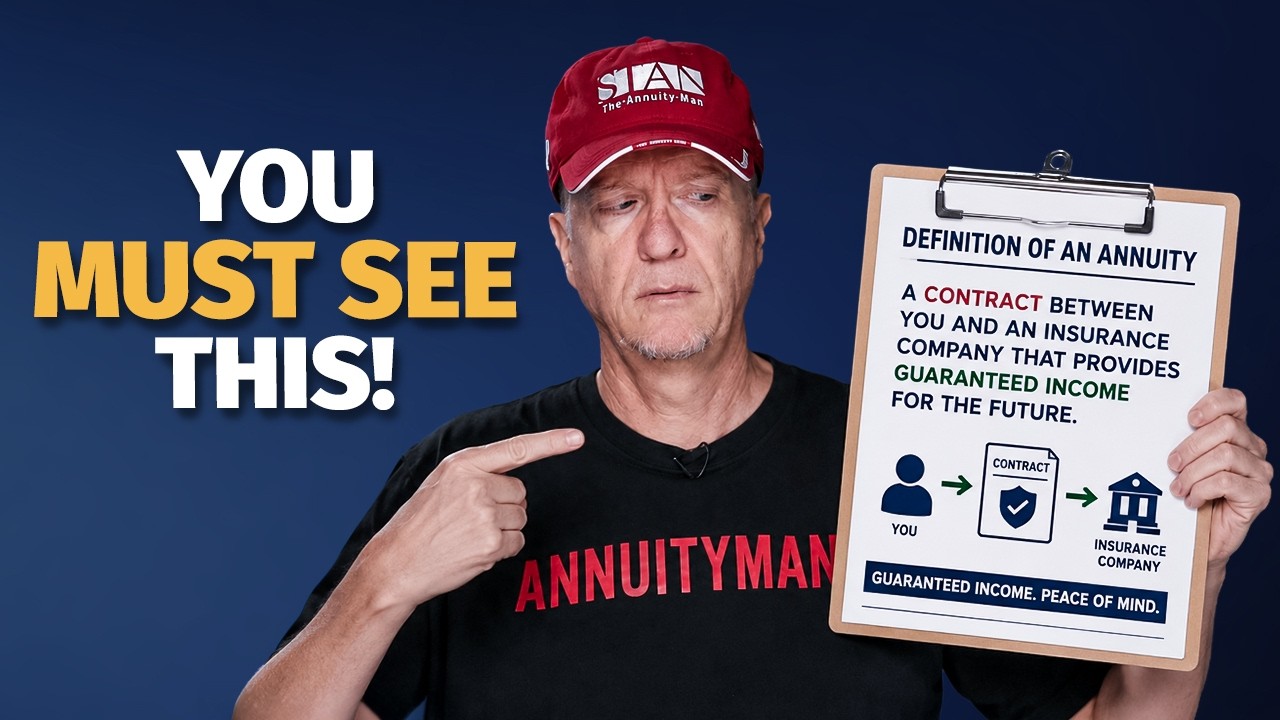


Talk to Stan The Annuity Man® himself
Get Stan for 30 minutes. No cost for his 3 decades of experience. Prepare yourself for the brutal annuity truth.