Jack Lenenberg: Best Time to Shop Long-Term Care
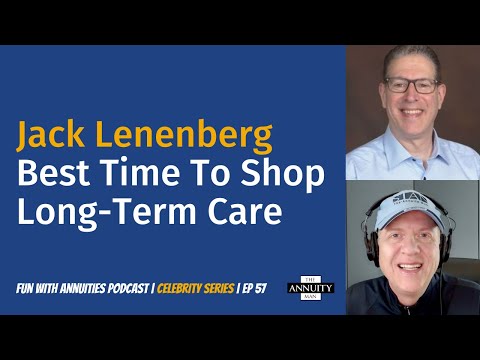
IN THIS EPISODE, THE ANNUITY MAN AND JACK LENENBERG DISCUSS:
- The environment, products, and solutions in long term care currently available.
- The 6 daily functions of life and how they affect long term care.
- The best time to look into and apply for long term care.
- The answers to common questions that Jack is asked by customers.
KEY TAKEAWAYS:
- Your long term care does not need to be permanent. It just needs your doctor to sign off that you need care for at least 90 days.
- There has been a shift to fixed and guaranteed policies to accommodate what people are looking for with their policies.
- Traditional long term care underwriters are leaving the field. Hybrid long term care providers are more prevalent, and are growing.
"The best time to look into long term care is when you are concerned about it and are healthy enough to qualify." — Jack Lenenberg
CONNECT WITH JACK LENENBERG:
Website: LTCPartner.com
LinkedIn: linkedin.com/in/jacklenenberg
Twitter: twitter.com/LTCPartner
CONNECT WITH THE ANNUITY MAN:
Website: TheAnnuityMan.com
Email: [email protected]
Book: Owner’s Manuals
YouTube: Stan The Annuity Man
GET A QUOTE TODAY!
Visit our website - https://www.theannuityman.com/
Use the Calculators - https://www.stantheannuityman.com/annuity-calculator/
Get The Annuity Man's Books - https://www.stantheannuityman.com/how-do-annuities-work
Schedule a time to talk to Stan - https://www.stantheannuityman.com/book-a-call/
0:04
welcome to
0:05
fun with annuities with your host me
0:07
stan
0:08
the annuity man america's annuity agent
0:11
can annuities be fun
0:12
can contractual guarantees be fun
0:14
absolutely they can find out the brutal
0:17
facts about annuities
0:19
with no sales pitches or high pressure
0:21
nonsense
0:22
just the brutal and factual annuity
0:25
truth which is all you need to hear
0:27
let's have some fun with annuities and
0:29
let's have that fun
0:30
start right now
0:33
[Music]
0:39
welcome to fun with annuities i'm your
0:42
host stan the annuity man
0:43
america's annuity agent license in all
0:45
50 states and this is the top
0:47
annuity podcast on the planet today's
0:50
topic is a very good one it's timely
0:52
people are always calling me
0:54
about long-term care fortunately our
0:57
guest today is
0:58
is arguably the top resource
1:01
and expert in long-term care in the
1:03
country his name is jack linenberg you
1:06
can find him at
1:07
ltc partner singular
1:10
ltch
1:14
and we'll have all of his information on
1:16
the website my website
1:19
but every single person for the past up
1:21
teen years that's called stan the
1:23
annuity man
1:24
who's the expert in annuities and they
1:26
say well what do you think about
1:27
long-term care i mean who do you
1:28
and every single person i send to jack
1:31
so he's
1:32
he's like me from the standpoint he
1:34
tells the brutal truth he does not
1:36
mince words he's not he's really just
1:39
not a salesman like i'm not a salesman
1:41
yes we do sell things
1:42
but you know we listen to you and we try
1:46
to apply the right
1:47
uh contractual guarantee for your
1:49
specific situation and we have no
1:51
problem telling you if it doesn't fit
1:53
so with that that introduction i want to
1:56
welcome
1:57
jack lindenberg to the program jack
1:59
welcome to fun with annuities
2:02
hi stan it's great to be here um
2:05
jackie jack is give us some
2:08
let's just start with the brief overview
2:10
of long-term care
2:11
but before that tell us a little bit
2:13
about your background i'm going to give
2:15
it away
2:16
quickly because he's a lawyer he's his
2:18
background he's got a jd
2:20
he's a lawyer long-term care but
2:23
i think that's fantastic tell us a
2:25
little bit about yourself jack
2:27
well thank you stan i mean i yes i do
2:29
have a law degree i graduated from
2:31
boston university school of law in 1997
2:36
but you know i i started in the
2:38
financial services arena
2:40
shortly thereafter in 1998 you know with
2:45
a broad focus
2:47
of you know estate planning life
2:49
insurance planning etc
2:51
[Music]
2:53
but i developed a niche for long-term
2:57
care insurance contracts and
3:01
you know so i started to focus heavily
3:03
in the long-term care insurance arena
3:05
by 2002 um
3:08
i've been an independent producer since
3:10
then
3:12
and i've been blogging and you know
3:15
writing about long-term care insurance
3:16
contracts for the
3:18
you know for the past 24 years so
3:21
see you've seen it done it and forgotten
3:23
more than most people will ever know
3:25
about long-term care
3:27
probably true yeah absolutely well and i
3:30
like the fact that
3:31
you only focus in that area because
3:35
it's not a simple area there's a lot of
3:37
regulations there's a lot of
3:39
things that people need to know about
3:41
long-term care
3:43
and one of the things that i always tell
3:44
people you know annuities solve for four
3:47
things principal protection income for
3:48
life legacy
3:49
and then i say at the end the other l is
3:51
long-term care confinement care p-i-l-l
3:54
but in a perfect world um
3:57
annuities and long-term care is a
3:59
supplemental coverage
4:01
because it's not as good as traditional
4:02
long-term care
4:04
jack and i had a really good
4:05
conversation about that the other day
4:07
but
4:07
kind of take people through the product
4:11
types that are out there
4:12
the solutions that are out there and
4:14
actually the overall environment of
4:16
long-term care in the industry right now
4:19
okay well i mean you know let's first
4:23
start about
4:24
you know talk about what long-term care
4:26
insurance is at its core
4:28
i mean it's tax-free dollars that will
4:31
help uninsured should they be
4:35
chronically ill should they either need
4:37
help with two activities of daily living
4:40
or should they have a severe cognitive
4:42
impairment such as
4:44
alzheimer's or dementia and if if your
4:47
doctor certifies that you need help
4:50
with activities of daily living or that
4:52
you have a cognitive impairment
4:54
then you will be able to receive
4:56
tax-free benefits
4:58
for long-term care and
5:01
all long-term care insurance policies
5:03
that are tax
5:04
qualified that adhere to these benefit
5:07
triggers
5:09
i mean your need for care does not have
5:11
to be permanent
5:13
you know you just need your doctor to
5:14
certify that you have an expected need
5:16
for at least
5:18
90 days and so all policies
5:22
uh will adhere to this language
5:25
and you know if we're trying to fund
5:27
long-term care benefits
5:29
there's a number of of policies today
5:32
that are tax qualified contracts i mean
5:35
of course we
5:36
we have the standalone policies which
5:38
you know just like a
5:40
health insurance policy auto insurance
5:42
homeowners insurance
5:43
no cash value just you pay a premium as
5:46
you go for the rest of your life but if
5:48
you need benefits
5:50
you receive tax-free tax-free benefits
5:53
and then we also have today and these
5:55
are becoming
5:56
hugely popular um asset-based
6:00
policies also known as hybrid
6:03
policies where we're combining cash
6:06
value assets you know with
6:10
tax-free long-term care benefits should
6:12
you need care
6:13
so the asset-based policies can be
6:16
either connected to
6:18
a life insurance contract or an annuity
6:21
contract
6:21
okay you know such that if you don't
6:23
need care
6:24
the premium that you've paid into the
6:26
contract
6:27
comes back to your estate at death so
6:31
those contracts today are i mean very
6:34
popular
6:35
and the market has really moved heavily
6:38
in the past
6:39
eight years you know to the asset based
6:42
funding
6:43
approach do you think that's do you
6:46
think the reason for that is you know we
6:48
have 10 000
6:49
uh baby boomers hitting the age of 65
6:51
every every single day
6:52
do you think it's because people have
6:54
worked so hard for their money
6:56
and they scrimped and saved and planned
6:58
and done without and now they're at this
7:00
point where they're going to plan for
7:00
long-term care
7:02
they just want to make sure that if the
7:04
money's not used it's going to go to
7:05
somebody in their family do you think
7:07
that's the main reason for that
7:09
oh it's a huge reason absolutely stan
7:12
so i think we all
7:16
we want to know that we're covered for
7:18
long-term care we don't want to be a
7:20
burden to our
7:21
to our children to our families um
7:24
but we don't know if we're ever going to
7:26
need it you know so i think
7:28
it's human nature to to think well
7:32
you know i'd like to know that if i
7:34
don't need it i can get a return of my
7:36
premium
7:37
sometimes it's hard to just pay
7:39
insurance premiums thinking we may
7:40
never ever ever need it right and the
7:43
money just
7:44
goes away now the other
7:47
key part i think to this transition to
7:50
the asset based
7:53
policies is the premiums are fixed and
7:55
guaranteed
7:57
which is very important so
8:01
most of our clients they want to know
8:03
that everything is guaranteed
8:05
right you know there aren't any type of
8:07
a trust me contract
8:09
trust us that we won't change your
8:10
premium you know trust
8:12
us that your benefits will be paid out
8:14
in the future
8:15
i mean with the traditional policies the
8:18
main pushback we've received
8:20
you know especially over the past 10
8:22
years
8:23
the underwriter started to increase
8:26
premiums
8:26
dramatically on in-force policyholders
8:30
so every year or two they would receive
8:32
a rate increase notice of 10
8:34
12 15
8:38
and you would have to either pay the
8:39
higher premiums or reduce your benefits
8:42
and then once
8:43
once the policyholders start to receive
8:46
these
8:47
ongoing you know they're not happy
8:51
so the traditional policies have no
8:53
guarantees with regards to
8:56
what the premiums will be in the future
8:59
and yeah for baby boomers buying
9:02
policies that they may have for 25 or 30
9:04
years
9:06
that is a little unsettling so the you
9:09
know that's created the move
9:12
to fixed and guaranteed policies today
9:16
when you were talking about that there's
9:18
a lot of misconceptions in both the
9:19
annuity industry and the long-term care
9:21
industry one of the misconceptions
9:23
in the annuity industry is when you die
9:24
the evil annuity company keeps the money
9:26
right uh and people think that's the
9:29
only way that income can be structured
9:30
of course that's not true uh the vast
9:32
majority of what we do is is
9:34
when you when your legit hits the
9:35
mountain whoever's uh listed on your
9:38
policy gets all of the money the evil
9:39
annuity company doesn't keep a penny
9:41
even
9:41
though they're on the hook to pay i'm
9:43
assuming the same thing holds true with
9:45
what you just said
9:46
i think a lot of people are out there
9:47
saying well i'd never buy long-term care
9:49
because
9:50
you know the premiums just keep going up
9:52
and on no one's ever going to get the
9:53
money if i don't use it and what you
9:55
just
9:55
smacked everyone in the face and woke
9:57
them up is no no no
10:00
no that's not true you can get a policy
10:02
that has contractual guarantees
10:04
that is fixed and is not going to change
10:07
and
10:08
if you don't use it the money goes to
10:10
somebody correct
10:11
absolutely 100 correct 100 percent
10:15
correct
10:16
and see that i think we did one thing in
10:18
this podcast
10:19
and we're gonna we're gonna say it at
10:20
the end too is to
10:22
dispel the misconceptions the rumors the
10:25
misinformation of people
10:27
out there talking about long-term care
10:29
that have no idea what they're talking
10:31
about
10:32
that you can get the contractual
10:34
guarantees that
10:35
are not going to change um and you can
10:37
control the asset which is great
10:39
let me go backwards a little bit jack
10:40
when you mention the
10:42
the two of the six daily functions of
10:44
life let's let's be a little bit more
10:46
fun rudimentary fundamental here can you
10:50
tell
10:50
everyone that six daily functions of
10:53
life
10:55
oh absolutely so eating
10:59
bathing dressing
11:04
toileting maintaining
11:08
continence and
11:12
transferring or also known as mobility
11:15
so the act of moving from
11:17
sofa to chair up the stairs to the
11:20
bedroom etcetera
11:22
those two two of the six like you said
11:24
earlier right
11:25
that's the trigger point right so those
11:27
are the six things
11:29
that the doctor is going to look at and
11:31
say well they i sign off on the fact
11:33
that they can't do two of the six
11:35
which triggers the um the benefit
11:38
correct
11:39
right that's one trigger so there's two
11:41
triggers and
11:42
to get into the race you have to clear
11:45
either one of these low hurdles so the
11:48
second trigger
11:49
is you may be perfectly able to perform
11:52
activities of daily living forever
11:53
but if you have a cognitive impairment
11:57
if your memory is slowing down
11:59
and you know alzheimer's dementia
12:02
organic brain syndrome uh so
12:06
if that's the case benefits will be
12:08
triggered
12:09
as well and it's your doctor and i get
12:13
this question a lot a lot of
12:15
a lot of uh you know clients will ask
12:18
well jack who makes this determination i
12:20
mean i'm sure the insurance companies is
12:22
just gonna
12:23
say that we're fine no the evil
12:26
insurance company they're always they're
12:27
always having to get you yeah
12:29
of course and it's a fair question
12:32
but it is your doctor who makes that
12:35
determination
12:36
so to qualify for benefits you have to
12:39
submit
12:40
a letter in writing from your doctor
12:43
that you need help with two activities
12:45
of daily living
12:46
or that you have a severe cognitive
12:48
impairment
12:50
and once that is submitted
12:53
i mean they're going to review your
12:54
medical records but they're not sending
12:56
their doctor out
12:57
it's it's your doctor's written
12:59
certification and they're going to
13:00
review
13:00
your doctor's records so it really is an
13:04
easy process you know to get
13:07
to get the coverage so understand their
13:10
standardized memory tests
13:11
the wechsler memory scale which is just
13:14
i mean it's
13:15
easy to get get approved i was going to
13:17
ask you that
13:18
let's talk about the process so
13:22
you know i refer someone to you or they
13:24
go to ltcpartner.com
13:28
and they interact with jack you
13:31
tell us about the process you're going
13:33
to do you're going how are you going to
13:35
qualify
13:35
and let's talk about the underwriting or
13:38
what what's needed whether it's
13:40
full underwriting or simplified issue
13:42
can we go through that
13:44
sure i mean well my process is is of
13:46
course the first try to
13:48
understand my clients concerns
13:51
right right their objectives what
13:54
they're
13:55
why they're thinking about long-term
13:57
care planning
13:58
what they're they're trying to
14:00
accomplish you know so i want to really
14:03
learn about my clients you know where
14:05
they're at today and
14:07
and what's on their mind you know so
14:09
that's first of all
14:10
um of course
14:15
you know you buy the coverage not with
14:16
your money i mean
14:18
buy the coverage with your health so we
14:21
we
14:22
really need to know that our clients you
14:25
know can help
14:25
qualify for these policies so
14:28
um i mean i can
14:32
in three to five minutes i'll be able to
14:34
know if my clients can get a policy or
14:36
not i mean you know i don't
14:37
i don't need you know my clients to send
14:40
me all their doctor's records
14:42
right off the bat i don't need them to
14:46
fill out an
14:47
extensive health questionnaire literally
14:49
within three minutes on the phone
14:52
you know if i know the prescribed
14:53
medications if i know the basic
14:55
diagnoses and conditions that they've
14:57
been treated for
14:58
i'll immediately know you know which
15:01
underwriter is perfect for them
15:03
what type of policy they will be able to
15:06
help qualify for
15:08
you know so that's why i love about the
15:11
process
15:12
you just shoot it straight you're not
15:13
going to waste anyone's time
15:15
going down the rabbit hole if you don't
15:17
think that they can get coverage
15:18
but if you do think they're going to get
15:20
coverage um i mean you're pretty much
15:22
shopping
15:22
all providers and carriers for the
15:25
highest contractual guarantee correct
15:27
oh absolutely yes and i would say about
15:30
95
15:31
of my applications get approved maybe
15:34
higher
15:34
i mean it's you know if i'm submitting
15:37
the application we're going to get
15:38
approvals
15:40
so because you've just been doing it you
15:42
understand it
15:43
um and and you handle that process
15:45
turnkey for the client
15:47
and walk them through each step because
15:48
it sounds daunting but i know
15:50
your process and your best practices
15:52
that you've put in place
15:54
um right you know that they're fantastic
15:58
tell us about start to finish and you
16:01
can't give give us a range
16:03
of how long this process typically takes
16:06
and i guess you could break that down
16:07
with product types you know unfull
16:09
underwriting simplified whatever
16:11
can you give us kind of a ballpark on
16:13
that oh yeah
16:14
absolutely so again this will depend
16:16
upon which type of policy my clients are
16:19
interested in what they want to apply
16:21
for
16:22
if my clients want the traditional
16:24
standalone policy
16:26
medical records will always be ordered
16:28
always
16:30
so it's going to be a four to six week
16:32
process to get an approval
16:34
because we will need doctor's records
16:36
and we're at the mercy of the doctor to
16:37
copy and forward the records
16:39
okay the asset-based policies can be a
16:43
lot
16:43
easier for underwriting so with the
16:46
asset-based policies they will do a
16:48
telephone interview
16:50
it lasts 30 to 40 minutes on the phone
16:53
a cognitive screening so they give a
16:55
memory test 10 words
16:57
repeat the 10 words back not difficult
17:01
and if they like everything that they
17:04
hear on the transcribed telephone health
17:06
interview
17:08
i can get an approval in three days so
17:10
in the they
17:11
that you're mentioning that is actually
17:13
a representative
17:14
from that issuing carrier am i correct
17:18
um it's usually a vendor today
17:21
okay so it's usually a vendor that will
17:24
collect the information that gets
17:26
transcribed
17:27
to my underwriter who then
17:31
has a transcribed interview and either
17:34
approves
17:35
i mean again three days and we have an
17:36
approval or
17:39
if my underwriter reviews everything
17:42
and there's medical information that
17:44
they need to dot the eyes across the t's
17:47
they will order medical records so
17:50
i would say about sixty to seventy
17:53
percent of my clients get approved right
17:55
after the telephone interview
17:56
okay but of course everyone has
18:00
you know some type of medical health
18:02
history so if an
18:03
underwriter wants to go and order
18:05
records from a primary care physician
18:08
maybe to look at
18:11
you know t scores to see if there's
18:14
osteoporosis or they may want to i mean
18:16
it could be any numb
18:18
number of medical issues that they just
18:20
want to make sure
18:22
that everything's fine depending upon
18:24
medical history
18:26
so if they want that then okay it could
18:28
be you know three to four weeks to get
18:30
the records
18:31
if they need medical records um but it's
18:34
an easy process i mean there's no
18:36
generally speaking there's no there's no
18:38
exams okay
18:40
you know there's no blood there's nobody
18:42
showing up no nurses showing up at your
18:44
door on a saturday wanting to take blood
18:46
right right now i've got i've got one
18:49
underwriter
18:49
out of the 13 that i work with where if
18:52
they need medical records
18:54
they actually do send an examiner to the
18:56
house to collect
18:58
height weight blood pressure sure i mean
19:00
so
19:01
no blood but um
19:04
so it really it depends upon which
19:05
underwriter we're using and what their
19:07
specific guidelines are but for the most
19:09
part
19:11
half hour on the phone telephone
19:13
interview and nice often we have
19:15
approvals right after the interview
19:17
um tell us about ages like
19:20
how young is too young how old is too
19:22
old
19:24
well i mean the best time to look into
19:27
this is
19:29
when you're concerned about it
19:32
and when you're healthy enough to
19:33
qualify i have clients that
19:38
i mean biggest policy ever wrote was for
19:39
a client who was 37 years old
19:42
wow and his sister who was a few years
19:44
older had been diagnosed with
19:45
early parkinson's he bought the biggest
19:48
policy
19:49
i've ever ridden in 24 years um
19:52
that being said i mean most of most of
19:55
my clients are
19:57
probably between the ages of
20:03
50 and in 65
20:06
give or take that's probably the sweet
20:09
spot
20:09
and again i have clients in there in
20:11
their 70s you know and later 60s and 70s
20:14
and i have clients in their
20:15
in their 40s but i would say the sweet
20:17
spot for planning
20:19
probably you know 50s and 60s because
20:22
usually the catalyst for most of my
20:26
clients when they call me
20:27
usually they're taking care of mom and
20:28
dad yeah and that that's the eye-opener
20:31
it's a wake-up call
20:32
yeah when you have to that's right yeah
20:33
i went through that with my father when
20:35
he before he passed you know when when
20:37
you have to do some things
20:39
uh for your father that you could never
20:41
imagine clean up after him etc
20:43
it does make you think about oh my
20:45
goodness i
20:46
you know i don't want this to happen etc
20:49
um
20:50
it is a it is a wake up call so people
20:52
so people that
20:54
there's really no age range it sounds
20:56
like it just sounds like when you want
20:58
to check off that box and transfer that
21:00
risk because annuities are transferred
21:01
risk products
21:03
long-term care is certainly a transfer
21:05
of risk product you're transferring the
21:06
risk
21:07
to the carrier um
21:11
what else there's no specific age and
21:14
that's something
21:15
i mean sometimes there's consumer
21:18
gurus or they like they like to call
21:20
themselves well we'll say
21:22
you know on the radio dave ramsey's one
21:25
of them
21:26
don't buy long-term care insurance until
21:27
you turn 60 you need to wait that's just
21:30
crazy
21:31
you can't say that that's absolutely not
21:33
absolutely
21:34
right though the worst advice in the
21:37
world and he doesn't know what he's
21:38
talking about
21:39
first of all but he when that advice
21:42
gets
21:42
sent out to people people think i don't
21:45
need to do this 260. it's malpractice
21:48
it's absolutely malpractice i mean you
21:50
can say any way you want to
21:51
and i'm sure he believes in what he said
21:53
but he's absolutely
21:55
incorrect i did a recent youtube video
21:59
just kind of going factually through his
22:01
annuity annuity presentation which was
22:03
factually incorrect as well so people
22:05
just need to be careful
22:07
on the um advisors out there that are
22:09
flying at the 30 000 foot level because
22:12
they're just giving broad brushed
22:13
statements that that aren't true
22:15
and don't make sense uh we both jack and
22:18
i both like what dave is doing
22:20
with getting people out of debt that's
22:21
honorable and that's fantastic work
22:23
but the other stuff um you know with
22:25
specific products and strategies he
22:27
needs to leave to the experts like
22:29
like jack and myself hey let's talk
22:31
about
22:32
life insurance um and and let's just
22:35
kind of go through the asset base
22:37
two types annuities and life insurance
22:39
i'm very interested to hear
22:41
you talk about the life insurance
22:44
asset-based part
22:46
um and long-term care can you start at
22:48
the beginning and just educate
22:51
um the listeners and viewers on of this
22:53
podcast
22:54
oh absolutely so yeah the life insurance
22:58
based policies i mean they are they are
22:59
absolutely terrific today
23:01
you know because they've really morphed
23:03
into what they really are today
23:05
i mean they're not meant at all for life
23:08
insurance
23:09
that's just the chassis that's the car
23:11
that's carrying the money
23:14
down the road as we grow older so you
23:16
know these policies
23:18
are inflation
23:21
adjusted tax-free long-term care plans
23:25
that's what we're buying we're buying
23:26
inflation-adjusted
23:29
tax-free long-term care benefits for a
23:32
fixed cost with return a premium if you
23:37
don't need it
23:37
that's what they are and the life
23:39
insurance policies
23:41
these policies they can be funded in so
23:43
many ways
23:44
single premium you know where you just
23:47
write one check and you're done
23:49
or you can fund the policies through
23:52
tax-free
23:53
1035 exchanges from cash value from
23:55
enforced life insurance policies you may
23:57
have that you don't need anymore
23:59
right or you could fund the premiums
24:03
over five years or 10 years if you just
24:05
want to fund it out of income
24:08
you can use ira rollovers at least with
24:10
one company to get the money into the
24:12
policies
24:12
i mean so many ways to fund it wow um
24:16
you know so but you know so what we're
24:19
usually doing
24:20
is is first talking plan how much
24:22
coverage
24:24
you know do we think we want and then we
24:27
can look at all the different ways to
24:28
get the money
24:29
into the plan you know whether it's
24:33
writing a check single premium uh you
24:35
know spreading premiums out
24:37
over time um you know or
24:41
you know using like qualified money but
24:43
the
24:44
the leverage that we get in these plans
24:47
i mean to give you an idea not to
24:49
but you know so let's say someone has a
24:51
hundred thousand dollars
24:53
you know and they write a check and
24:55
let's just protect you know let's say a
24:57
husband and wife are 60 years old they
25:00
could write a check for a hundred
25:01
thousand dollars
25:03
and they could buy a policy you know at
25:06
age 60 that
25:08
at age 85 when they're likely to need
25:11
care
25:12
is going to provide 700 800
25:15
000 850 000 just depending upon the
25:19
inflation factors that we're using wow
25:22
you know you're getting
25:23
seven to eight to one leverage on the
25:26
money if you need care
25:28
or and it's contracting you get your 100
25:30
000 back at death you know so
25:33
yeah and i think i think probably the
25:35
the only
25:36
because i can just hear the consumer
25:38
right now because because they want to
25:39
have their cake and eat it too
25:41
and it's never like that is is the
25:44
downside in someone's eyes but it's not
25:46
in mine because you just explained the
25:47
upside
25:48
is there's there's no growth portion on
25:50
that hundred thousand you get your money
25:51
back if you don't use it
25:53
which i think is fantastic with a seven
25:54
to eight times leverage that's
25:55
contractual
25:57
um i think yeah that's great i don't
25:59
know what the argument but i'm assuming
26:01
that's the only
26:02
argument you get right well i don't get
26:04
arguments because people calling me want
26:06
long-term care coverage
26:07
that's the reason they're calling me to
26:08
begin with
26:12
yeah i mean i'm not i'm not trying to
26:14
sell somebody anything
26:16
and opening up conversations they're
26:19
already calling me because they want the
26:20
coverage so i'm trying to maximize their
26:22
dollars but you're right if someone
26:25
thinks wow i i spend a hundred thousand
26:28
dollars and all i'm gonna get back is a
26:30
hundred yes it's a zero percent return
26:32
but again you could get seven or eight
26:34
nine hundred thousand in living benefits
26:37
listen if you just want to maximize the
26:38
hundred and not have the seven or eight
26:41
hundred thousand
26:42
well i mean insurance company today
26:43
would probably just say all right we'll
26:45
give you two hundred thousand of death
26:46
that's it
26:47
you can use it for care you can use it
26:50
for life insurance but if you're 60
26:52
years old and you give us a hundred
26:54
a three percent return in 25 years all
26:57
you're going to have is 200 so you're
27:00
you know the net amount at risk is a
27:02
hundred and you're maxing out a two
27:05
and that's not exciting that's not
27:07
leverage to me it's a no-brainer
27:09
you're putting in this case 100 you're
27:12
guaranteeing that that
27:13
that transfer of risk amount in the
27:15
future the downside is you get your 100
27:17
back
27:18
right right that's right that's right
27:20
you give up a little bit of growth
27:22
that's nothing to sing about
27:23
anyway i mean there's nothing we can do
27:26
uh you know laddering cds or i mean
27:29
you can make money three percent i mean
27:30
if you're that's fine
27:32
but you're not gonna get eight hundred
27:34
thousand
27:35
no and i mean the life the life
27:38
insurance
27:38
is nothing more than a cost-effective
27:41
and efficient
27:43
delivery system for the long-term care
27:45
benefits that are contractual
27:47
correct correct that's it
27:51
that's it so it's it it's great leverage
27:55
you know if you're looking to have
27:57
tax-free benefits for long-term care
27:59
planning
27:59
you know as a separate bucket from your
28:01
investment side from your safe money
28:03
side from your income side
28:05
you know so we're using money that's not
28:07
needed for income that's the first
28:08
correlated
28:09
it's none that's right that's right yeah
28:12
right
28:13
we're not using income money we're not
28:15
using we're using money that's
28:18
a separate bucket so so let's talk about
28:21
the other asset
28:22
based type which which would be
28:24
annuities
28:26
and let me just tell people real quick
28:27
about the annuities on my side which you
28:29
know
28:30
i only sell contractual guarantees and
28:32
there are what's called
28:33
income riders attached to policies that
28:36
will say that
28:36
it's confinement care nursing home care
28:38
or enhanced benefit
28:40
and it's and it's guaranteed issue you
28:42
don't have to do anything you know to
28:44
get it
28:45
and that should tell you all you need to
28:46
know it's not primary coverage it's a
28:49
supplemental
28:50
only thought and even then
28:53
i would still refer you to jack to get
28:55
real long-term care so
28:57
let's go through what you have on the
28:59
annuity side
29:00
that's real long-term care right so so
29:04
the asset-based annuities similar to the
29:06
asset-based life insurance right we're
29:08
getting
29:09
extended coverage past the amount we're
29:11
depositing
29:12
you know so typically the underwriters
29:14
will i mean they'll
29:16
they'll triple your money right off the
29:17
bat hundred thousand is automatically
29:19
three hundred thousand for long-term
29:21
care
29:21
got it you know um we can put inflation
29:25
protection
29:26
in the policies to some extent as well
29:29
so again if we want to we're getting
29:31
inflation adjusted
29:33
long-term care benefits you know if we
29:35
buy the inflation on the annuity side
29:38
that comes out of cash value you know so
29:40
if we put write a check for 100
29:42
well okay cash value is now probably 70
29:45
75.
29:46
i mean you're paying then for the
29:47
inflation so
29:50
the the where we use the annuity
29:52
approach
29:53
you know quite frankly is if our clients
29:56
are
29:57
much older okay typically in their 70s
30:02
or they're just
30:05
if they're not in good health if their
30:06
health won't allow them to get the asset
30:09
based
30:09
life insurance contracts because the
30:13
there's more underwriting on the life
30:14
insurance contract so if
30:16
if if you're in good health and
30:19
certainly if you're under 70
30:22
72 years old we're going to be using the
30:25
life insurance asset based policies
30:27
absolutely
30:28
that's a lot if health is compromised
30:33
or if you're older where the mortality
30:36
costs of the life insurance policy
30:38
have now crossed over to be very cost
30:41
prohibitive
30:42
well we have the the annuity policies
30:45
that will be able to give you
30:47
you know six years of coverage um
30:50
i have some contracts that would even be
30:52
lifetime unlimited
30:53
you know with both the annuity or the
30:56
life insurance
30:57
uh approach so we can use either
31:00
avenue to get the the coverage but we're
31:04
usually
31:05
leading with the life insurance approach
31:07
because most of the time
31:08
our clients are healthy enough to get it
31:10
so let's talk about
31:12
the structuring of the policies can you
31:15
is it just single life or are there
31:18
opportunities
31:19
and and vehicles and asset-based life
31:22
insurance and annuities that you can do
31:24
a joint policy with your spouse or
31:26
partner
31:27
yes um i mean all companies offer
31:30
individual policies i have
31:31
one underwriter uh one america they will
31:35
offer joint life so
31:38
so we can you know cover
31:42
you know partners husband and wife
31:44
mm-hmm
31:45
you know with one policy which reduces
31:48
cost
31:50
and you know they can each have their
31:52
own individual benefits so you're not
31:54
sharing your monthly long-term care
31:56
benefit with your
31:58
partner or spouse you each have your own
32:00
individual coverage
32:02
but under one policy a joint life
32:05
policy so yes yes we we can do that as
32:09
well that's fantastic um let's talk
32:12
about
32:13
our friends in washington dc you know
32:15
because um
32:16
they're always got their little fingers
32:18
and everything and they're messing with
32:20
things
32:21
um and we're kind of headed toward that
32:23
socialized medicine platform
32:26
sooner than later um how is this
32:29
if at all going to affect long-term care
32:32
policies in your opinion obviously
32:34
nobody knows the right answer but
32:35
if anyone's going to answer it it's
32:37
going to be you so what do you think
32:38
about that
32:40
i i can't i can't see it
32:43
providing comprehensive long-term care
32:46
benefits
32:47
you know for for everyone you know i
32:50
mean it's
32:51
i mean the money isn't there in the in
32:53
our medicaid system first of all to
32:55
cover it i mean we're
32:57
you know right now the states are trying
32:58
to think of ways to incentivize people
33:01
to private plan for long-term care so
33:04
how are we going to
33:08
you know cover long-term care costs
33:12
you know through through the public
33:14
sector
33:15
that's of any significant uh
33:19
value really i mean the state of
33:21
washington right now
33:22
just uh you know is uh
33:26
going through the process of uh
33:30
passing a long-term care trust act for
33:32
all of the residents
33:33
okay through a payroll tax but it's a
33:36
hundred dollars a day
33:38
for one year that's it i mean that's the
33:41
benefit and that's the same benefit that
33:43
in 2011
33:47
ted you know senator uh kennedy
33:50
um was trying to pass through the class
33:52
act i mean to give everybody
33:54
a hundred dollars a day for one year
33:56
it's a it's a great political speech
33:58
but it has absolutely no teeth to it
34:01
once you dig
34:02
in i mean that's just that's lunacy
34:05
it's so short i mean it listen it it's a
34:09
little bit
34:09
a help but the cost of care today is 9
34:13
000 a month 8 9
34:14
000 a month and they're offering 3 000 a
34:18
month
34:18
at least in washington for one year you
34:21
know so it's it's something
34:23
but it's going to be funded with a
34:24
payroll tax a pretty hefty payroll tax
34:27
so yeah i don't know
34:31
yeah there is there's no good answer
34:32
just just bad sales pitches as i always
34:35
say
34:36
well i mean i i think for for for our
34:38
clients that do have
34:39
assets yes and can plan they need to
34:42
plan
34:43
because you know the public benefits
34:45
that will be available
34:46
i mean you know even if they come up
34:48
with a small benefit for people it
34:51
you know it's going to have strings
34:53
attached
34:54
uh you know income qualifications maybe
34:57
i don't know
34:58
i think it's just wise for everybody to
35:00
plan i can't see how
35:02
the government will be able to pay for
35:04
long-term care with the baby boomers
35:06
at all i hear you so much not there
35:09
let's pivot to without mentioning any
35:11
carrier names
35:13
do you see more carriers getting into
35:16
this
35:16
asset-based long-term care i know that
35:19
the traditional long-term care
35:21
carriers have there's not as many can
35:23
you comment on the space from the
35:25
standpoint of
35:26
of choice because i think another mis a
35:29
misconception out there about long-term
35:30
care
35:31
is there's just not many companies
35:33
offering it
35:34
which means that there's just not a lot
35:36
of competition
35:38
i'm assuming that's just dead wrong
35:40
correct well
35:45
it's it isn't it isn't i mean when it
35:48
you know i mean the tr
35:49
the traditional spaces is ridiculously
35:53
um small today we just had two
35:56
underwriters leave last month we're down
35:57
to
35:58
four underwriters four and going back to
36:00
traditional traditionalist
36:02
i pay and i pay and i pay in but if i
36:04
don't use it
36:05
money goes poof right that's right we
36:07
have four
36:08
underwriters left i had 120 underwriters
36:11
when i began in 1998.
36:13
and there's four left there's four left
36:16
in the traditional side which
36:18
four and two of the four believable and
36:20
two of the four
36:21
you would never buy a policy the
36:23
premiums are through the roof so we
36:24
really have
36:25
two um so the hybrid side i'd say right
36:30
now
36:30
i mean it's a very healthy arena but
36:32
it's it's
36:34
you know it we probably have seven
36:37
eight underwriters i mean we only need
36:39
one but it's been
36:41
you know it's been growing we've had a
36:43
few new entrants in the past uh
36:46
two years and i'm sure we're absolutely
36:48
going to get more entrants
36:50
absolutely over the next three to five
36:52
years because it's where the market's
36:54
going but
36:55
you know right now we have a solid eight
36:56
companies that are
36:58
you know really you know making the
37:00
market
37:01
in inflation adjusted extension of
37:04
benefit products
37:06
you know not the riders on the life
37:07
insurance policy i mean which are death
37:09
benefit focus but just
37:11
inflation-adjusted you know asset-based
37:14
long-term care policies so
37:16
yeah we have eight solid companies and
37:18
they're all high-rated it would seem
37:20
that with the demographic tidal wave of
37:22
all these 10 000 baby boomers reaching
37:24
age 65 that
37:25
companies would certainly look into that
37:28
but there has to be a reason that
37:29
they're not
37:30
running past the door and through the
37:32
door tell us about the regulation
37:35
because this is not the wild wild west
37:37
long-term care is
37:38
is so far from that is heavily regulated
37:42
can you speak
37:43
to that part of the of the business
37:45
obviously you
37:46
you manage that for your clients and you
37:49
go through the weeds and and you deal
37:50
with all that
37:51
but tell us about the regulation and the
37:53
safety of the whole
37:55
industry and how it's how it's run well
37:58
i mean
37:58
with with with all products whether it's
38:01
you know long-term care products and
38:02
life insurance products
38:04
and it's it's you know consumers are
38:07
protected
38:07
you know up to stake guarantee i mean we
38:09
have state life and health guarantee
38:12
associations
38:13
you know of course so that if if we ever
38:15
have an insolvency
38:18
with an insurance company then the the
38:20
state
38:21
will be the backstop up to stake
38:22
guarantee limits you know which
38:25
some states it can be unlimited some
38:27
states like california might be seven or
38:29
eight hundred thousand but we have
38:30
significant
38:31
backstops for for insolvencies and none
38:34
of the companies today are really at
38:35
risk for insolvencies
38:37
um so we have we have and again as far
38:40
as
38:41
like regulation with the contracts all
38:43
the contracts have to adhere to the
38:45
internal revenue
38:46
code 7702 b
38:49
you know so so everything is is
38:52
standardized
38:53
and codified from how the contracts can
38:55
read
38:56
what the benefit triggers are what has
38:59
to be inside a contract for it to be
39:01
considered long-term care insurance
39:04
you know so i like that i mean there's i
39:07
like the fact that
39:08
there's a little bit of a heavy hand and
39:10
a consistency
39:11
within the industry based on that that
39:13
specific um
39:15
law that you mentioned so that yeah
39:18
there's some i mean there's just for the
39:20
consumer i think it's good
39:22
they don't have to they don't have to
39:24
learn everything about it they can go to
39:26
an expert like you who understands it
39:28
back and forth
39:29
give give them your their specific
39:31
situation
39:32
and then you can you know point them
39:35
toward the solution that's
39:36
going to provide the highest contractual
39:38
guarantee
39:39
but the reason we don't have a hundred
39:41
underwriters i mean the reason
39:43
you know again we you know we have on
39:46
that's a base side of solid a companies
39:48
but the reason is
39:49
is again it's a it's a very capital
39:51
intensive
39:53
underwriting business they're trying to
39:55
predict
39:56
a need for care that's for most people
40:00
in their middle to later 80s
40:02
and if the buyers are in their 50s and
40:04
60s today
40:05
it's a hard business to underwrite you
40:07
know we we pretty much know when people
40:09
are going to die but we don't know if
40:10
they're going to need care
40:12
and for how long and to try to
40:14
underwrite
40:16
a healthy individual in their 50s or 60s
40:19
and you know try to project
40:22
the risk at age 85 or 88
40:25
well it's just a lot of insurance
40:27
companies they would rather just not
40:30
have that risk you know that's very
40:33
risky and that's the main reason
40:34
right in that sense always i read
40:37
something a while back that said and and
40:39
i want you to clarify if this is true or
40:41
not
40:41
that when you cannot do two of the six
40:43
daily functions of life of which you you
40:45
talked about in the opening part of the
40:47
podcast that you live
40:49
an average of three years and a maximum
40:52
of seven
40:52
is is that in the ballpark or not it is
40:56
i mean it's in the ballpark you know um
41:01
you know it's just an average but life
41:03
doesn't work in averages
41:04
no i know i know that yeah yeah so an
41:07
average
41:07
an average need today and and we're
41:09
seeing through recent actuarial data
41:12
that it's increasing
41:13
it's up to about 42 months right now
41:15
okay now so the internet will tell you
41:17
it's three years but it's kind of going
41:19
up to three and
41:20
a half right now and uh ninety percent
41:23
of claims will be less than six
41:27
okay but again ten percent are going to
41:29
be longer than six and we have cognitive
41:31
impairments
41:31
alzheimer's dementia where parkinson's
41:35
disease is another you know we're
41:36
you can eat care for a very long time
41:39
and that's the
41:40
that's the benefit proposition of
41:41
transferring risk
41:43
i mean in a nutshell you don't know so
41:46
why not cover yourself and transfer the
41:48
risk to the carrier
41:49
question about that the time of this
41:51
taping and um
41:53
you know we're in the middle um
41:54
hopefully at the very going downward
41:57
toward the coveted end but i doubt it
41:59
does has covet affected anything in your
42:02
business
42:03
oh my god yes i mean it absolutely did i
42:06
mean
42:06
significantly so um
42:10
last year yeah well in march when cove
42:13
it happened
42:15
across the board all of the underwriters
42:19
pulled product you know for applicants
42:22
or restricted it or restricted it for
42:24
applicants 70 and over
42:27
you know so because again the risk the
42:29
risk
42:30
you know if you're older and you got
42:32
covered you could have a higher risk of
42:35
passing away
42:36
right so so absolutely
42:39
um they did restrict um
42:43
issue and um
42:46
they tightened up underwriting it has
42:49
it has now just started to open back up
42:52
again with the vaccinations the
42:54
underwriters
42:55
are for most part business as usual
42:58
although there's
43:00
one or two underwriters that still
43:01
haven't completely
43:03
completely opened it back up
43:07
to applicants in their 70s so
43:10
we had yeah we definitely had impact
43:12
there for sure
43:13
so things are kind of calming down a
43:16
little bit and getting back to normal
43:17
but you can understand
43:19
the uh you know the the underwriters and
43:21
the carriers the unknown was the unknown
43:24
it's blue water never been there before
43:26
so that's right
43:27
that's right so everything was very
43:29
tight last year
43:31
for a solid six months but now we're
43:35
you know back to to ordinary business
43:38
again
43:39
thankfully thank you um we got a few
43:41
minutes left but i wanted to go through
43:43
and just
43:43
ask you what are some of the questions
43:46
that you would like to address or some
43:48
of the issues you like to address that
43:49
we have but we covered a lot of ground
43:51
and
43:52
and this is the last time jack's going
43:53
to be on on the on the program
43:56
but what would you like to address about
43:58
long-term care
44:00
maybe it's misconceptions maybe it's
44:01
common questions
44:03
i don't know just fill in the blanks of
44:05
what we haven't filled in so far
44:09
well
44:13
you know i mean most most of my clients
44:17
the questions that they have really you
44:20
know
44:20
relate around i mean again what we have
44:22
discussed though you know
44:24
okay how do they qualify for benefits um
44:28
how do how do they know will will the
44:30
company be there for them in 25 years
44:32
you know i mean the typical concerns
44:35
about will a company be solvent
44:37
um you know can can the premiums
44:41
change etc which again is more on the
44:44
traditional side than the
44:45
than the asset-based side um a big
44:48
question i get today
44:50
is is you know
44:53
at claim time what is the the process
44:56
of collecting benefits and there's a
44:59
couple of different policy types today
45:03
which you know has has it's changed from
45:06
the past
45:07
in the past the primary policy is a
45:10
reimbursement model
45:11
where you actually have to submit
45:13
receipts right you have to show that you
45:15
have a proof of loss
45:16
to receive benefits and then you're
45:19
reimbursed for your out-of-pocket costs
45:21
so a lot of my clients today a question
45:23
they have is well
45:24
can my daughter take care of me you know
45:27
what if
45:28
what if i want a family member to help
45:30
me out
45:31
etc so
45:34
we have a couple of policies not many
45:37
but we have a couple of policies today
45:39
that have the utmost flexibility they're
45:42
called cash
45:43
indemnity policies no restrictions if
45:46
you need care
45:47
anybody can be your caregiver your
45:49
daughter can take care of you if needed
45:50
you can
45:51
they're just going to give you the cash
45:54
you don't have to even show that you
45:55
came out of pocket and paid a caregiver
45:58
so so that's been one of the you know
46:01
one of the changes and it's it's a
46:02
concern
46:03
you know for a number of my clients you
46:06
know having the flexibility
46:08
uh with the policies to receive the
46:10
benefits with you know no questions
46:12
asked and
46:12
not having to use an agency for home
46:15
care
46:16
um etc so that's you know that's a
46:19
question that i that i receive
46:21
a lot um do they get a hard copy policy
46:25
at the end of the
46:26
uh at the end of the process oh always
46:29
get a hard copy pro is there a free look
46:31
provision with long term care
46:34
there's a free look provision of 30 days
46:37
in every state
46:38
you know so the typical process
46:40
underwriting offers are good for
46:42
60 days you do not have to submit money
46:44
with an application
46:45
okay every underwriter will issue a
46:48
policy without money
46:50
and then i you know i'll fedex the
46:52
policy to my clients
46:53
they can pay for it when they want once
46:55
they write the check
46:57
they then have 30 days you know to get
46:59
their money back
47:00
after you know whatever the date is on
47:02
the delivery receipt and the check
47:05
sure they would have a 30-day free look
47:07
period to ask for their money back uh
47:10
i've
47:10
24 years i've never had a client ask for
47:12
their money back so
47:14
but but you know that with a lot of my
47:16
listeners across the country and i'm
47:18
licensed all 50 states and
47:19
we do national business like you do a
47:21
lot of people just really don't know
47:23
the basics of long-term care and with
47:25
this first interview with you i wanted
47:27
to cover
47:28
really just some fundamentals and some
47:30
basics and
47:31
and some questions that people probably
47:32
had in their back of their mind but
47:34
never really wanted to ask and didn't
47:36
know how to ask it and hopefully we
47:38
we have done this during today's program
47:42
i want to encourage people um to go to
47:46
jack's site
47:46
reach out to him it's ltc just like
47:49
long-term care
47:50
ltc partner p-a-r-t-n-e-r
47:54
dot com so ltcpartner.com
47:58
and like me jack answers his phones and
48:01
he's he's the guy that's gonna be
48:02
working with you
48:03
one-on-one with decades and decades of
48:06
experience
48:08
and a law degree behind it which i think
48:11
is just fantastic
48:12
we will be having jack on in the future
48:15
and with future interviews we're going
48:16
to be going in
48:17
to and doing some examples um
48:20
of some cases and things like that but
48:23
for this one
48:24
jack you've hit a home run i don't know
48:25
if you played baseball you are based in
48:27
the
48:27
atlanta area but i was basketball like
48:31
you stan
48:32
hey you know i shoot free throws and you
48:33
hit home run so you know between the two
48:35
of us we're pretty
48:36
we're pretty tough but uh i really
48:39
appreciate you being on fun with
48:40
annuities
48:41
um any closing words before i close this
48:44
thing out
48:47
well i just appreciate the opportunity
48:49
to help all of your clients stand you
48:51
know what you do is tremendous
48:53
for everyone you're the best in the
48:55
business by far
48:57
and you know i can say the same i can
48:59
say the same thing about you jack
49:01
lundenburg i tell you what
49:03
he is the source uh amv
49:06
thought leader for long-term care and
49:07
i'm not just saying that because he's on
49:09
he he knows that's how i think
49:11
and uh my hope is that people will find
49:13
more and more people will find you i
49:15
mean you're already busy
49:16
as heck but um i do encourage my
49:18
listeners and viewers as people know
49:20
this is on
49:21
this is on all podcast podcast platforms
49:23
we also film it on fun with annuities
49:25
youtube channel
49:26
jack wasn't able to show us his mug this
49:28
time because he's traveling but next
49:30
time we'll
49:30
you'll be able to see jack interact but
49:32
jack i really appreciate you being with
49:34
us and for all you listeners and viewers
49:36
out there
49:36
i'll see you next week on fun with
49:42
annuities
49:44
thanks for listening to fun with
49:46
annuities please hit the subscribe
49:48
button and make sure to go to my site
49:50
at the annuityman.com where you can run
49:53
your own
49:54
spea dia and culat quotes and see a live
49:57
feed of the best
49:58
mega fix rates in the country and even
50:00
get
50:01
indexed and income rider quotes as well
50:03
you can also
50:04
sign up for my six annuity owner's
50:06
manual books and i'll ship them for free
50:09
and under no
50:10
obligation i also encourage you to
50:12
schedule a one-on-one call with me
50:15
stan the annuity man so we can have a
50:17
full discussion
50:18
of your specific situation it will be
50:20
the best
50:21
brutally factual and truthful advice you
50:24
will ever get and that's one guarantee
50:26
you should definitely take advantage of
50:28
so join me next time for the number one
50:30
annuity podcast
50:32
on the planet fun with annuities
50:39
[Music]
50:49
you


Talk to Stan The Annuity Man® himself
Get Stan for 30 minutes. No cost for his 3 decades of experience. Prepare yourself for the brutal annuity truth.