Christine Benz: Avoiding Blind Spots in Your Retirement Portfolio Planning (TAM Classic)
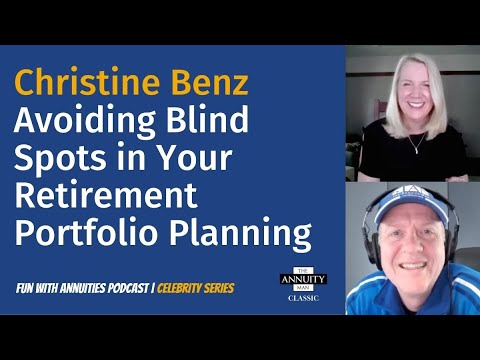
IN THIS EPISODE, THE ANNUITY MAN AND CHRISTINE BENZ DISCUSS:
- Why Christine is so passionate about financial education and retirement portfolio planning.
- Why decumulation is not bad (and when it is a good thing).
- Retirement blindspots to be aware of.
- Staying mindful of additional, variable costs in your spending plan.
- Bucket approach investing and portfolios.
KEY TAKEAWAYS:
- Your portfolio doesn't know whether your withdrawals are coming from income or from selling appreciated securities, what matters is that you are not taking out too much.
- People tend to overestimate our ability and desire to continue working and, often, retire earlier than they originally expected to.
- There is power in diversification in your income portfolios.
- The products under the annuity umbrella are incredibly varied. The type of annuity that is best for you depends on what your needs are.
"If you're looking for something that will zig when your stocks zag, you probably want to ensure that your portfolio includes that cash and treasury bonds." — Christine Benz
Connect with Christine Benz:
Website: https://www.morningstar.com/
Podcast: https://www.morningstar.com/podcasts/the-long-view
LinkedIn: https://www.linkedin.com/in/christine-benz-b83b523/
Twitter: https://twitter.com/christine_benz
Book: Morningstar’s 30 Minute Money Solutions: https://www.amazon.com/Morningstars-30-Minute-Money-Solutions-Step/dp/0470918136
Book: Morningstar Guide to Mutual Funds
https://www.amazon.com/Morningstar-Guide-Mutual-Funds-Strategies/dp/0470137533
Christine’s Article Archive: http://www.morningstar.com/articles/author/30-christine-benz.aspx
LISTEN ON ALL YOUR FAVORITE PODCAST PLATFORMS:
Libsyn: https://directory.libsyn.com/shows/view/id/theannuityman
Stitcher: https://www.stitcher.com/podcast/niceguysonbusiness/the-annuity-man-podcast#/
Apple: https://podcasts.apple.com/us/podcast/fun-with-annuities-the-annuity-man-podcast/id1482993601
Google: https://podcasts.google.com/feed/aHR0cHM6Ly90aGVhbm51aXR5bWFuLmxpYnN5bi5jb20vcnNz?sa=X&ved=0CAMQ27cFahcKEwjgu6j7suzrAhUAAAAAHQAAAAAQAQ Amazon: https://music.amazon.com/podcasts/11fec7ab-59ab-402f-94c7-93860e1694ae/Fun-with-Annuities-The-Annuity-Man-Podcast
Spotify: https://open.spotify.com/show/26y3c7vXgnhfmErLRP3zuM
CONNECT WITH STAN
Call Stan The Annuity Man: 800-509-6473
Website: http://theannuityman.com/
Email: [email protected]
Facebook: https://www.facebook.com/stantheannuityman/
Twitter: https://twitter.com/StanAnnuityMan
TikTok: https://www.tiktok.com/@theannuityman
Instagram: https://www.instagram.com/theannuityman/
Use the Calculators - https://www.stantheannuityman.com/annuity-calculator/
Get The Annuity Man's Books - https://www.stantheannuityman.com/how-do-annuities-work
Schedule a time to talk to Stan - https://www.stantheannuityman.com/book-a-call/
FUN WITH ANNUITIES (r)
0:00
[Music]
0:04
welcome to fund with annuities where
0:06
every single week I welcome a celebrity
0:08
guest expert that can help you maximize
0:10
chapter 2 of your life listen learn
0:14
laugh and love every minute of the most
0:17
unique Financial podcast on the planet
0:21
let's get to
0:23
[Music]
0:28
it welcome to fun with annuities the
0:30
number one annuity podcast on the planet
0:32
I'm your host Stan the annuity man
0:33
America's annuity agent I want to
0:35
welcome everyone listening to us on the
0:38
on all the podcast platforms and also
0:40
remember I have two YouTube channels one
0:42
Stan the annuity Man YouTube channel
0:44
which has up to 400 product videos that
0:47
are very short and informative and non
0:49
salesy about annuity products and then
0:51
this podcast fund with annuities has its
0:52
own YouTube channel which what you can
0:54
go and and view the guest and myself
0:57
interacting and the facial expressions
0:58
and all that good stuff but I don't want
1:00
to waste any time because today's guest
1:02
is a true Superstar her name is
1:04
Christine BS and let me tell you a
1:06
little bit about her she is the director
1:08
of personal finance for Morningstar you
1:10
know what who Morning Star is and a
1:12
senior columnist for morningstar.com as
1:15
well her primary focus is on retirement
1:18
and portfolio planning for individual
1:19
investors which is the reason that
1:21
you're listening uh she's she also
1:23
co-host a podcast for Morning Star it's
1:26
called The Long View I encourage you to
1:28
listen to that because they they bring
1:30
in people and interview them you know
1:32
thought leaders and in the investing and
1:34
personal finance space couple things
1:36
about Christine that you need to know in
1:38
2020 baren named her to its inaugural
1:41
list of the 100 most influential women
1:43
in finance and she also appeared on that
1:45
list in 20121 as well and and she's G to
1:48
be on that list for
1:49
Infinity in 2021 Baron's also named her
1:53
as one of the the the 10 most
1:55
influential women in wealth management
1:57
you can just probably remove the women
1:59
she's proba probably the one of the most
2:00
10 influential people in wealth
2:03
management she's Al also the author of a
2:05
book called the 30 minute money
2:08
Solutions a step-by-step guide to
2:10
managing your finances which I encourage
2:12
you to read she also co-authored a book
2:14
called morning Stars guide to mutual
2:16
funds which is the five star strategies
2:18
for success that's kind of the
2:20
underlying title which you know it's
2:22
been a bestseller since 2003 and she put
2:24
out the second edition and helped do
2:25
that in 2005 pretty interesting
2:27
background from an educational
2:29
standpoint Christine holds a b a
2:30
Bachelor's of Education uh a bachelor's
2:33
degree in political science in Russian
2:35
and East European studies from the
2:36
University of Illinois I think that's
2:38
that's really fascinating she's also a
2:40
board member of the John C Bogel Center
2:42
for financial literacy and is also a
2:44
member of What's called the alpha Group
2:46
which consists of the top thought
2:47
leaders in wealth management uh across
2:50
the country now when she has free time
2:52
which it sounds like she doesn't have a
2:54
ton but when she does she works with
2:56
underprivileged women to improve their
2:58
understanding of personal finance
3:00
Concepts which is fantastic now on my
3:02
site at the annuity man.com we are going
3:04
to have links to her archives that are
3:07
on morning star.com where you can read I
3:09
mean she's a great writer you can read
3:10
her stuff and we're also going to have a
3:12
link to her podcast replays as well I
3:15
could keep going I mean that I
3:17
synopsized the bio believe me but I want
3:20
to welcome Christine Ben to fun with
3:22
annuities welcome Christine Stan thank
3:25
you so much gosh that was such a nice
3:27
introduction I really appreciate it and
3:28
I'm happy to be here today well you've
3:30
earned it obviously so let's just jump
3:33
right in um you know you're very very
3:35
passionate about um retirement portfolio
3:39
planning what are some of the reasons
3:41
that you're so passionate about that I
3:43
know that you have told me that I I
3:44
wrote them all down but I want you to
3:46
tell the people why you know why this is
3:48
such a driving force for you on a daily
3:50
basis sure well I would start with
3:53
saying that it's personal for me because
3:55
I have helped older adults in my life
3:58
through this process my parents my
4:01
in-laws um both my husbands and my dads
4:04
have since passed away and and my mom
4:06
has passed away as well we still have my
4:07
mother-in-law but I've helped them
4:09
through this process and through that
4:11
really began to
4:13
recognize that retirement decumulation
4:16
is so much more complicated than it was
4:19
a couple of decades ago certainly 30 or
4:22
40 years ago where you have more and
4:24
more people like myself who are retiring
4:27
without the benefit of Pensions more and
4:30
more uh folks will be coming into
4:32
retirement without a pension but then
4:34
you also have this very low yield
4:36
environment and that has driven some
4:39
retirees especially I would to
4:42
generalize a little bit some of the
4:43
older
4:44
retirees tend to gravitate to very
4:47
income Centric portfolios they quite
4:50
reasonably want to try to subsist on
4:52
whatever yield their portfolio kicks off
4:56
the odd thing about that today is that
4:58
if you are we to structure a portfolio
5:00
strictly for yield you end up with a
5:02
pretty risky portfolio so there are the
5:04
challenges of the current environment
5:07
another reason I'm attracted to this
5:08
space is that I am involved in financial
5:12
education generally and one thing I know
5:15
from having worked with various groups
5:17
is that people are receptive to learn at
5:20
point of purchase sort of when they have
5:22
to make a decision about something so
5:25
you know if it's a 401k investor if you
5:27
give them a little bit of information
5:29
about how to make a sane allocation
5:31
within a 401k plan they'll be good to go
5:34
and they'll listen to you same goes for
5:36
retirees they need to figure this out if
5:39
they are getting to retirement they need
5:42
to figure out how to extract cash flows
5:44
from their portfolios they need to
5:46
figure out how much they can safely take
5:48
out without overspending so they're
5:50
incredibly receptive I speak to these
5:52
groups of retirees and they are so
5:55
engaged there are no sleepers in the
5:57
audience when I talk about retirement
6:00
planning because they really have a need
6:02
to know this information um and then I
6:05
guess another reason why I like kind of
6:07
being in the um public space to talk
6:11
about these issues is that I think that
6:14
unfortunately there's a little bit of a
6:15
tendency in the financial services
6:17
industry to make things more complicated
6:20
than they need to be and so I like being
6:23
a voice of uh reason in terms of saying
6:27
it doesn't have to be really complicated
6:29
you can do this in a slightly simpler
6:31
way so those are some of the highlights
6:34
of why I like um being in this space and
6:37
I guess just on another personal note um
6:40
the I know that um cognitive decline is
6:43
a major issue among older adults we had
6:46
we experienced that with with my dad
6:48
later in life and I was so happy that I
6:50
was um his investment buddy during his
6:54
later years and I was it was really
6:56
pretty seamless for us where I was able
6:58
to take over my parents investment plans
7:00
I know a lot of older adults don't
7:02
necessarily have that trusted adult
7:05
child who understands Investments so I
7:08
like to do education about this and I
7:10
like to help people create a a plan that
7:14
could effectively manage itself if need
7:17
be for a time or you know for the rest
7:19
of their lives so those are just just
7:21
some of the highlights of why I like to
7:24
talk about this area so
7:25
much when you say the word decumulation
7:28
you know we live in world where we've
7:30
been taught accumulation So when you say
7:32
the word decumulation I think a lot of
7:35
people instinctively reflex because in
7:37
essence what they're what they that says
7:39
to them is my money is going to
7:42
decrease do me a favor and do the do the
7:45
the listeners and viewers of favor and
7:47
tell them that decumulation is okay and
7:50
why it is and um you know I I do think
7:54
that many retirees do have that
7:55
reflexive desire to not touch their
7:58
principle to try to live off of yield um
8:03
but I guess that my point is and the
8:05
philosophy that I bring to this is that
8:07
if you create the best possible
8:11
portfolio that you can with a sane mix
8:13
of risk and reward characteristics that
8:16
portfolio doesn't know whether your
8:18
withdrawals are coming from income or
8:20
they're coming from selling appreciated
8:23
Securities what matters is that you are
8:26
not taking out too much and that you're
8:29
also maintaining that portfolio's risk
8:31
reward characteristics as the years go
8:34
by that's really the name of the game
8:36
and I wouldn't get overly hung up on
8:39
never touching principle because
8:41
sometimes touching principle is actually
8:43
the right thing to do so right now for
8:45
example we've had this tremendous run in
8:48
the equity Market my view has been that
8:51
if you're retired and you're looking at
8:53
what are still very low yields today
8:56
your cash flows for at least the next
8:58
couple of years are hiding in plain
9:00
sight in terms of harvesting some of
9:02
those appreciated Equity Securities
9:05
putting that money into safe Investments
9:08
probably cash short-term bonds but
9:10
essentially setting aside your cash
9:12
flows for the next couple of years and
9:14
simultanously you are reducing risk in
9:17
your Investment Portfolio so my view is
9:20
that it's perfectly okay to pull from
9:23
those appreciated positions in fact that
9:26
very much should be part of your
9:28
decumulation plan and you shouldn't
9:30
worry too much about doing so if in the
9:33
end you're able to maintain your
9:36
portfolio and and maintain a sustainable
9:39
withdrawal rate and make sure that your
9:40
money lasts throughout your retirement
9:42
years that's a that's a great expl
9:44
explanation of decumulation because I
9:46
think that's almost a curse work with a
9:47
lot of people because they they they
9:49
they were they remember Jimmy Carter
9:51
yields you know and I always tell people
9:53
you know Jimmy Carter's building houses
9:54
in Georgia hopefully hopefully he's
9:55
still alive um at the time of this
9:57
taping but um you're not going to
9:59
probably see those yields anymore those
10:01
those 12% CDs so that's tough for people
10:04
um even though if you look at the the
10:06
10e treasury equivalents across the
10:08
globe we're still pretty high um but
10:10
high high right now feels low right from
10:13
a yield standpoint one of the I was
10:15
doing some research on your writings and
10:17
it was fascinating um you had a you had
10:20
an article and and I've seen you speak
10:22
on this on some of the blind spots that
10:24
people um run into and people miss when
10:27
it comes to retirement and I think this
10:29
so important because you know with with
10:31
over 10,000 Baby Boomers hitting the age
10:33
of 65 every single day I mean it's a
10:35
demographic tidal wave that's what I
10:37
call it right um what are some of these
10:39
blind spots that people need to be aware
10:42
of um and again you don't have to write
10:44
it down everybody especially if you're
10:45
driving or on that treadmill I mean
10:47
you're gonna we'll have these replays up
10:49
but but kind of go through the blind
10:50
spots I think I was writing them down I
10:52
think you had around six you might have
10:54
more can you cover those sure sure so um
10:57
I have a presentation that's kind of
10:59
structured along these lines and um one
11:02
of them that I start out the
11:04
presentation with is retirement date
11:07
risk and I think that that's often times
11:09
not discussed very much but the bottom
11:11
line is that even though we might have
11:14
this very what we think is a very
11:16
well-conceived plan of when we might
11:18
expect to retire um in reality when we
11:22
look at the data and my colleague David
11:24
Blanchett who I think is kind of one of
11:26
the leading lights in Retirement
11:27
Research has looked at people's stated
11:30
anticipated retirement dates and when
11:32
they actually retired and what his
11:35
research shows is that we're not very
11:37
good at this we tend to overestimate our
11:40
ability to continue working or our
11:42
desire to continue working we we might
11:45
say oh I plan to you know retire when
11:47
I'm 69 or something like that when we
11:49
look at the data we see that there's a
11:51
gap that people oftentimes are retiring
11:54
earlier than they expected to and there
11:56
are variety of reasons why this might be
11:58
we know that ageism is a thing in the
12:01
workplace yes we know that older adults
12:04
sometimes encounter health issues or
12:06
their spouse encounters health issues
12:08
that makes it difficult for them to
12:10
continue or their parents or their
12:12
parents um so a lot of different forces
12:15
can work against your desire to work
12:19
longer specifically so we see that
12:21
there's typically a gap where people are
12:23
often retiring earlier than expected so
12:27
that's kind of a risk factor for the
12:29
size of the portf it depends on the size
12:32
of the portfolio but if you are over
12:35
withdrawing over a longer time period
12:37
that is a risk factor so that's one of
12:41
the key blind spots that I would point
12:44
to and and to me that really argues for
12:48
thinking through well if I'm not able to
12:50
continue working until that anticipated
12:54
retirement date what's my backup plan
12:56
what's my plan B and I think it's
12:59
worthwhile for all of us really through
13:01
throughout our careers to be thinking
13:03
about well if this thing if whatever I'm
13:05
doing doesn't work for me uh due to
13:08
workplace issues or lifestyle issues or
13:11
health issues could I continue to earn
13:14
some sort of income in the meantime and
13:17
so I I that is sort of a piece of
13:20
counsel that I would bring to this and
13:22
also just be aware that you don't have
13:23
as much control over that retirement
13:25
date as you might wish to believe you
13:27
have so is there there strategy or
13:30
strategies that you would tell people to
13:32
do specifically if um and you covered it
13:35
a little bit about hey I'm going to
13:36
retire at 69 or 65 it's tough you know
13:40
especially because you don't know where
13:41
markets are going to go or interest
13:42
rates are going to go how do you advise
13:44
people to be flexible with that
13:46
retirement date risk
13:48
planning well so I think thinking about
13:50
what your backup plan is certainly
13:52
nurturing your human capital and making
13:55
sure that you are continuing to prove
13:57
yourself valuable to your organization
14:00
throughout your career I think we've all
14:03
especially those of us who are home
14:04
office workers we've all sort of had a
14:07
very uh quick ramp up into being Savvy
14:11
about all different matters of
14:12
technology that we we've all had to be
14:14
our own IT staff I think that's been
14:17
great so continuing to nurture your
14:19
human capital also thinking hard about
14:22
insurance planning a real wild card is
14:24
in this is if you are Prem Medicare and
14:27
somehow separated from your employer
14:30
provided Health Care earlier than you
14:32
anticipated right thinking through your
14:34
plan for that is absolutely essential so
14:38
those are some of the key things from
14:39
sort of a plan uh aspect uh to to help
14:43
protect
14:45
yourself one of the one of the uh risk
14:48
and and blind spots was sequence of
14:50
return risk that you that you mentioned
14:52
and when people typically hear that
14:55
they've heard it before but can you dumb
14:58
it down
14:59
always tell people you know if you can't
15:00
explain it to a nine-year-old no offense
15:02
to nine-year-old you either shouldn't
15:04
buy it or you you it's not simplified
15:06
enough simplify it down sequence of
15:08
return risk for the people out there
15:09
that aren't really sure what that is
15:12
right it's a a concept that retirement
15:15
researchers call talk about and
15:17
basically the risk is that you may
15:20
retire into a not so great Market
15:23
environment so when we think about the
15:26
market environment today what do we know
15:28
well we know that yields are pretty low
15:30
we've talked about that a little bit we
15:32
also know that Equity valuations because
15:34
we have had this long running bull
15:36
market Equity valuations stock prices
15:39
aren't what they once were and so it's
15:42
risky if you come into retirement and
15:45
you do encounter a weak Market
15:47
environment for whatever reason
15:48
inflation I think is potentially a
15:51
consideration today as well the risk is
15:54
that if you over withdraw during that
15:57
period that the market is down whether
15:59
that's you know 6 months or whether it's
16:01
two and a half years whatever if you're
16:04
taking too much from your portfolio
16:06
during that time and that time occurs in
16:09
the early years of your retirement well
16:11
that leaves less of your portfolio in
16:14
place to recover and to rebound when
16:17
stocks eventually do so it's a big risk
16:20
factor for new retirees if you're an
16:23
older retiree if you're someone who is
16:25
80 and you've been retired 15 years well
16:28
guess what You've Won you have retired
16:30
into a pretty good Market environment
16:32
it's the new retirees who I think need
16:34
to be cautious and need to be thinking
16:36
about well what's my plan in that
16:38
instance how do I structure my plan so
16:42
that I can protect myself against that
16:44
possibility of retiring into a weak
16:47
market and it sequence of return risk is
16:49
something you obviously can't control
16:51
similar to dovetailing into one of the
16:53
other blind spots which is the the low
16:55
yield environment that we're in that um
16:58
a lot of the Savers and the CD buyers
17:00
are scratching their heads because the
17:02
the yield isn't there the coupons aren't
17:04
there you know no one knows where
17:06
interest rates are going to go including
17:08
Christine Ben she'll be the first one to
17:09
tell you that she'll pound the table and
17:11
tell you that but what's your advice for
17:13
people in in a environment that's low
17:16
and it doesn't seem like you know the
17:18
government's painted themselves into a
17:19
little bit of a corner printing all this
17:21
money so raising interest rates they're
17:22
going to raise those payments on
17:23
themselves so it'd be like me and you
17:25
raising our mortgage rate right what's
17:27
your advice to people here other than
17:31
grin and Barrett right what is it what
17:33
do you tell people well I think it it's
17:35
worthwhile to rethink why you hold safer
17:38
Assets in your portfolio and why you
17:41
just sort of decide to accept lower
17:44
yields the the key reason is that yes
17:48
cash and bond high quality Bonds are
17:52
there to provide you with yield but
17:53
they're also there to be the ballast for
17:56
your Equity portfolio they are there to
17:58
be the assets that you could spend
18:01
through if you come come into retirement
18:04
and you encounter a weak Equity Market
18:07
you have set yourself up with safe
18:09
assets that you could spend through
18:12
before you need to touch the equity
18:14
assets so I think sort of rethinking the
18:17
role of safe assets that income
18:20
production is less of their value today
18:23
that may change in the future right now
18:26
their key value is safety
18:29
at and providing that cushion of some of
18:32
some sort of an equity Market shock so
18:35
that would be my advice my advice
18:36
absolutely would be not to gravitate to
18:39
very highrisk high yield Securities as a
18:43
big portion of your portfolio you might
18:45
have them around the margins like five
18:47
or 10% in high yield bonds or Emerging
18:49
Markets bonds but definitely not the
18:52
main course because what when we look at
18:55
assets like that whether junk bonds or
18:57
or emerging market markets bonds what we
18:59
see is very equity-like performance we
19:02
see them behave in sympathy with the
19:04
equity Market that's not what you're
19:05
going for for this portion of your
19:07
portfolio you're going for safety and
19:09
you have to contend with and accept very
19:12
low yields on offer
19:14
today which leads us to the gorill in
19:16
the room and your blind spot that you
19:17
list sometimes in your presentations is
19:19
number four which is inflation yes um
19:22
which people are very tuned into because
19:25
even though you hear government
19:27
officials times say that there really
19:29
isn't inflation if you're buying Lumber
19:31
and if you're buying food and if you're
19:32
buying gas and you know you're saying
19:34
wait a minute I think there might
19:36
be obviously in the annuity world as you
19:38
know um annuity companies don't give
19:40
inflation increases away they just
19:42
ratchet down the payments if you're
19:43
buying lifetime income that didn't mean
19:44
it's good or bad but that that also
19:46
means that there's no perfect solution
19:48
to inflation just really bad sales
19:50
pitches as I say um what's your what's
19:54
your thought and advice for people to
19:57
think about about address and and
20:00
strategize around inflation yeah it's a
20:03
huge question today Stan and a year ago
20:05
I wouldn't have been so concerned with
20:07
it but we are beginning to see inflation
20:09
tick up and I think you know the big
20:11
question is whether this is just sort of
20:13
a natural part of this emergence from
20:17
the lockdown that we've been in for the
20:19
better part of a year for more than a
20:21
year um but I think from a retirement
20:23
standpoint you think about protecting
20:25
against inflation in a few different
20:27
ways first you think about your own
20:29
spending patterns and do a little bit of
20:32
um research a little bit of
20:34
reconnaissance on what your spending has
20:37
looked like what categories you tend to
20:39
spend on one thing we know about older
20:41
adults is that they spend more on health
20:44
care than the general population we we
20:47
have historically seen healthc care
20:49
inflation rise at a faster clip than the
20:52
general inflation rate so take a just
20:54
take a close look at your spending
20:56
habits in some areas you may be a loser
20:59
like healthc care uh in other areas like
21:02
energy costs you may be a winner because
21:05
you're not commuting you're not driving
21:06
as much as you were when you were
21:08
working so kind of just think about your
21:10
spending categories and then think about
21:13
your income sources in retirement so if
21:16
you are you know on the really positive
21:19
end of the spectrum from the standpoint
21:21
of inflation and you have sort of a a a
21:25
pension that provides You full inflation
21:27
protection
21:28
and that pension is supplying you with
21:30
all the income that you need well you're
21:32
in great shape and then at the other end
21:34
of the spectrum would be the retie who
21:36
doesn't have any of those in inflation
21:39
protected income sources and has a
21:41
really safe portfolio that he or she is
21:44
pulling from for all of the income well
21:46
that's someone who's really vulnerable
21:48
because their purchasing power is just
21:50
going to be gobbled up by inflation most
21:52
of us in retirement fall somewhere in
21:54
between those two polls where that we
21:56
have some inflation insulation if we're
21:59
getting social security for example we
22:02
might not agree that the little increase
22:05
that we get on our social security
22:06
benefit is sufficient but that portion
22:08
of our income is inflation protected
22:11
it's really the portfolio that we need
22:14
to concern ourselves with to make sure
22:16
that that portion of our withdrawals is
22:19
in some fashion insulated against
22:21
inflation so when we think about
22:23
protecting a portfolio against inflation
22:25
we think about a couple of key
22:27
categories
22:28
one would be to make sure that you
22:30
have stocks in your portfolio because
22:33
even though stocks aren't any sort of
22:35
direct hedge against inflation when we
22:37
look at the asset classes with the
22:39
ability to out earn inflation over time
22:42
stocks very much fit the bill whether
22:44
they will do so over the next couple of
22:46
years or the next five years open
22:48
question but over longer time periods we
22:50
see a pretty good ability for stocks to
22:53
beat inflation so you want to make sure
22:55
you have stocks but on the fixed income
22:57
side I think it's also worth looking at
23:00
a category called treasury inflation
23:02
protected securities or sometimes called
23:04
tips right and tips are issued by the
23:07
treasury but they have a little bit of
23:09
spin on the ball in terms of offering an
23:12
inflation adjustment to your principal
23:14
value which in turns turn affects your
23:17
yield when inflation Trends up so my
23:22
colleagues at Morning Star Investment
23:23
Management put together asset allocation
23:26
programs with within a a person's fixed
23:30
income allocation they typically
23:31
recommend a retired person's fixed
23:33
income allocation they typically
23:35
recommend like a 20 to 30% allocation to
23:39
treasury inflation protected securities
23:42
the idea is that you are protecting the
23:45
purchasing power on on that portion of
23:47
your portfolio some retirees might say
23:50
well why not just have my whole fixed
23:51
income allocation and tips well the risk
23:54
is that that's not very Diversified so
23:57
even though treasury bonds and treasury
23:59
inflation protected securities are the
24:01
most credit worthy bonds that you can
24:04
find um they tend to be somewhat
24:07
interest rate sensitive so you'd
24:09
probably want to diversify to include
24:11
some corporate bonds some agency backed
24:14
bonds some other Securities to ensure
24:16
that your portfolio uh your fixed income
24:19
portfolio is a little bit better
24:21
Diversified but those are some of the
24:22
key asset classes I would think about
24:25
some of the other asset classes that
24:26
people might add would would include
24:29
things like Commodities or Commodities
24:31
tracking exchange traded funds precious
24:34
metals either um uh a an ETF like GLD or
24:40
perhaps some of the precious metals
24:42
mining companies and here I would
24:44
recommend owning some type of a mutual
24:46
fund or an ETF exchange traded fund that
24:48
does this and finally real estate I
24:51
think is another asset class that
24:53
historically has shown some ability to
24:56
protect against inflation and the reason
24:58
is pretty intuitive that when rates are
25:01
increasing and as a Reet owner you're
25:04
able to participate and benefit from
25:06
that well that's also the time when
25:08
inflation is typically running up
25:10
broadly so those are some sort of
25:12
non-core assets that I might think about
25:15
but again keeping them to very small
25:17
positions because they're quite volatile
25:19
as Standalone Holdings you definitely
25:22
don't want to have giant positions in a
25:25
category like Commodities or precious
25:27
medals it's all about allocation and
25:30
proportion and and you you preach that
25:32
with your your writings and what you've
25:33
done uh for for decades at at morning
25:36
start one of the kind of the new
25:37
gorillas in the room and I read a couple
25:39
of recent articles that you have have
25:42
written on this topic is health care and
25:45
long-term care and obviously again the
25:47
demographic title W of people hitting
25:49
age 65 and and we're living longer
25:52
Etc tell tell people why this is
25:55
important why long-term care coverage
25:57
and that trans transfer of risk type
25:59
coverage they should be looking at why
26:01
why should they do that such an
26:03
important topic Stan and um I'll just
26:06
start with talking about healthc care
26:08
expenses in retirement more broadly
26:10
Fidelity annually puts out these um
26:13
estimates of what a 65-year-old couple
26:17
who is retiring will spend over I I
26:21
believe it's like a 25 or 30e period and
26:24
the most recent information that I saw
26:26
was roughly 300 $1,000 so these are
26:30
various premiums that they're paying
26:32
these are outof pocket expenses and so
26:35
forth so even after you're covered by
26:37
Medicare you still have some health care
26:39
costs and what we see when we look at
26:41
those health care costs is that're
26:42
they're not linear they're not the same
26:43
year by year they tend to Trend up later
26:47
in retirement so Fidelity's $300,000
26:50
estimate does not include long-term care
26:52
costs that's just all the other stuff
26:54
that um people pay so I think it's worth
26:57
staying stay mindful about those costs
26:59
and certainly making sure that you are
27:01
incorporating them into your budget and
27:03
into your spending plan but also
27:06
recognize that there's tremendous
27:07
variability in those costs so giving
27:10
some hard thought to what your health
27:13
situation is what your spouse's Health
27:15
situation is where you live is a big
27:18
determinant of your out-of-pocket health
27:20
care outlays so if you live in a
27:22
high-cost part of the country if you
27:24
live in Chicago or LA or some other City
27:27
where High where costs are high at large
27:30
you'll pay more for health care if you
27:32
live in a less urban area you'll tend to
27:34
pay less so give some thought to that
27:37
make sure you're factoring it into your
27:38
budget also long-term care is uh the
27:42
real wild card in my view for many
27:45
retirement plans in fact when I'm out
27:47
speaking if there is a topic that will
27:49
send the room up for grabs because it
27:51
gives people so much angst is this
27:54
people wonder how to contend with
27:56
long-term care care costs so these are
27:58
costs that are not covered by Medicare
28:01
they are costs that many older adults
28:03
incur if they encounter cognitive
28:06
decline or even if they just simply
28:08
start needing help around the home to
28:11
make meals or whatever it might be um to
28:15
you know to help them shower a lot of um
28:18
situations can occur the idea is that
28:21
these costs are not going to be covered
28:24
by Medicare nor will they be covered by
28:26
your supplemental policy policy that you
28:28
may have purchased you need to create a
28:31
plan for what these long-term care costs
28:33
might be and also how you might contend
28:35
with them and so it's super tricky
28:38
because I often speak to retirees who
28:41
thought they were doing exactly the
28:43
right thing by purchasing long-term care
28:46
insurance and what we've seen is that
28:48
the marketplace is pretty troubled that
28:50
unfortunately these policies that were
28:52
priced 20 years ago did not adequately
28:55
incorporate long-term care care usage um
28:59
and they didn't incorporate this very
29:01
low yield environment that we find
29:03
ourselves in which has Afflicted
29:05
insurance companies as well because they
29:07
can't really earn much on the premiums
29:09
that they've been able to take in if
29:11
they want to be able to make uh make
29:14
their policy payments so um that's the
29:19
the troubling part of this the easy
29:21
answer 20 years ago might have been to
29:25
purchase some sort of a long-term care
29:26
policy people have seen their premiums
29:28
really increase to account for the fact
29:31
that it's a pretty troubled Marketplace
29:33
so I would really um when thinking about
29:36
this When approaching this risk I would
29:39
kind of think about my own situation and
29:41
sort myself into one of three groupings
29:44
so for people who don't have a lot in re
29:46
in retirement assets they will probably
29:50
to the extent that they have long-term
29:51
care needs they will be covered by
29:54
Medicaid and and Medicaid is the largest
29:56
payer of long-term care expenses in the
29:59
US many people end up needing Medicaid
30:02
provided care so for people without a
30:05
lot of uh wealth that will be their um
30:09
be their strategy that they probably
30:11
shouldn't overly worry about it now it's
30:14
worth mentioning that you need to
30:17
essentially deplete most of your assets
30:20
which could leave your spouse um needing
30:23
some sort of U financial assistance in
30:25
the meantime but that's sort of that
30:27
group and then at the other ex extreme
30:29
would be very wealthy people who you
30:31
know when they look at their portfolios
30:33
they have more than enough to last
30:35
during their lifetimes and they can also
30:38
cover an extended long-term care need
30:41
comfortably out of their assets I'm
30:44
sometimes asked well how much asked how
30:46
much would I need to have in assets to
30:49
put me in this other area where I'm
30:51
self-funding long-term care expenses and
30:54
my point is I can't tell you that I
30:56
can't tell s you a dollar amount because
30:58
I don't know what you're spending from
30:59
your portfolio right if you have you
31:02
know a $2 million portfolio but you are
31:05
spending too heavily from it well you
31:08
probably should have long-term care
31:10
insurance so um get some guidance on
31:14
that if you're a higher net worth person
31:16
with a sizable portfolio make sure that
31:19
you do have adequate assets to self fund
31:22
long-term care and then my view is if if
31:25
you have determined that you have enough
31:27
go ahead and segregate those assets from
31:29
your spendable assets to ensure that
31:31
you're not considering them part of your
31:34
spending plan if you're a young retiree
31:36
and that's your plan to self-fund
31:38
long-term care segregate those assets
31:41
you'd probably want to invest them
31:42
pretty aggressively because the chance
31:44
of having a long-term care need earlier
31:47
in in your life is pretty low um and
31:50
then that middle group is the the group
31:53
who I think is the best uh candidate for
31:56
some sort of of insurance product to
31:59
help Ure against this risk you can still
32:01
buy long-term care policies but
32:04
increasingly what have come on strong
32:06
are these hybrid type asset based yeah
32:09
they call them asset based coverage yes
32:11
yes which Stan you know more about these
32:13
types of products than I do but it's
32:15
typically either a life insurance policy
32:18
or an annuity with a long-term care
32:20
writer bolted on and those can be
32:24
attractive options especially in my
32:26
opinion for people who had life
32:29
insurance and they had that need to
32:31
protect their dependents when their
32:33
dependents were younger but if they're
32:35
older and they've accumulated sufficient
32:37
assets life insurance May no longer be a
32:41
a big concern for them um but they can
32:44
switch into one of these asset-based
32:47
policies to to help protect themselves
32:50
and they can do what's called a 1035
32:52
Exchange get some tax guidance on this
32:54
before embarking on this but um these
32:57
policies these products can be pretty
32:59
interesting in some situations maybe not
33:02
perfect but um something to consider and
33:06
something to get some unbiased advice
33:08
about um you would definitely want to
33:11
engage the services of some sort of a a
33:14
financial planner or adviser who is not
33:17
selling these products to help assist
33:19
you in in doing your due diligence
33:21
because the products can be a little
33:22
complicated in my experience the hyri
33:25
they certainly can we had a I had a
33:27
guest on recently his name is Jack
33:29
linenberg he's arguably the top
33:30
long-term care expert in the country
33:32
he's also a lawyer as a background um
33:34
but he talked about these asset based um
33:37
Long-Term Care Solutions which covers
33:39
the biggest fear for most people which
33:41
is what if I don't use the M what if I
33:43
don't use the coverage these asset-based
33:45
policies protect the principle which
33:48
would go to your beneficiaries if you
33:49
didn't use it which is the biggest fear
33:51
of traditional long-term care which is I
33:53
pay in I pay in I pay in and it's you
33:55
know it goes poof when I die with these
33:57
newer policies um you know that that
34:01
circumvents and gets rid of that fear
34:03
even though you have the coverage so you
34:05
know uh I would encourage people if you
34:07
can go to my site at the annuity man.com
34:08
and re and relisten to that podcast with
34:10
Jack linenberg because he's going to
34:12
dovetail what Christine's talking about
34:14
but go into detail about those specific
34:16
products which leads me to the the sixth
34:18
blind spot which which is where
34:20
annuities can fit in because they're the
34:22
only product on the planet that can
34:24
provide lifetime income and it's it's a
34:26
blind spot that you talk about it's
34:27
called Longevity risk can you go into
34:29
that yeah you know this is a good news
34:32
story in so many ways um that we see
34:36
life expectancy gains especially among
34:38
higher income adults right um where you
34:42
know the the probability of if you're
34:45
part of a married couple the probability
34:47
of one of you making it to age
34:49
95 is uh is quite High I don't know off
34:52
the top of my head specifically what it
34:54
is but it's I think it's one and three
34:56
um um and when you further sort of
34:59
subdivide that group by higher income
35:02
adults we unfortunately in my opinion we
35:05
see um longevity very much correlated
35:07
with level of wealth and so we do know
35:10
that higher income higher net worth
35:12
people tend to live longer so you need
35:15
to protect yourself against that
35:18
possibility um and there are a few
35:20
different ways to do that I would say
35:22
that right out of the box if you're
35:23
thinking about doing that you want to
35:25
make sure that your money lasts Well you
35:28
certainly want to make sure that you are
35:30
looking at non-portfolio income sources
35:33
with an eye to maximizing those lifetime
35:36
payouts so at the top of the list would
35:38
be to make sure that you're making smart
35:41
decisions about social security claiming
35:43
and Stan I don't know if you agree with
35:44
this assertion but I believe that that
35:47
should really be job one before you look
35:49
at an annuity just to make sure that you
35:51
are getting I agree I agree with that
35:54
and the reason I agree with that just to
35:55
interject real quick is people always
35:57
say well I hate all annuities and I say
35:58
well you already own one and it's the
36:00
best inflation annuity on the planet and
36:03
they go no I'll never own annuity and
36:04
Social Security so I totally agree that
36:07
that's the foundational annuity um that
36:10
you need to make the best decision on um
36:13
and seek someone out not an agent or
36:15
adviser but someone who really
36:16
specializes in Social Security type
36:19
planning so that you can make that
36:20
decision for your situation because
36:22
there's no perfect answer across the
36:23
board it's customizable to what you're
36:25
trying to do and achieve I would think
36:27
absolutely and if you're part of a
36:29
married couple I think that decision
36:31
making is even more important um one
36:34
free tool I would not stand is um from
36:36
my friend Mike Piper who has a website
36:39
called open Social Security it's a free
36:41
website they there's been kind of a
36:43
cottage industry in these Social
36:45
Security calculators Mike's is all uh
36:48
free and it's very rigorous Mike is a um
36:51
a CPA and a social security expert so I
36:55
would urge your listeners to give that
36:57
tool a trial run because it's an
36:59
absolutely terrific tool and it helps
37:01
you include different variables that you
37:03
don't necessarily see everywhere so you
37:05
can haircut your potential benefits if
37:08
you're a younger person for example and
37:10
you're worried well there might be
37:11
changes to Social Security down the line
37:14
you can factor that in you can also use
37:17
different um different Actuarial tables
37:21
that factor in different Health
37:23
situations so if you think that you will
37:25
be an especially long lived retirees you
37:28
can take a look at that so I would urge
37:29
people to check that out what's that
37:31
site again it's called open Social
37:33
Security so open open social SEC open
37:36
social security.com I guess yes I
37:39
believe so okay good um we'll we'll list
37:42
that on our on our site as well but
37:43
getting back to longevity and that
37:45
longevity risk you know Social Security
37:47
big one you got to plan for and and what
37:49
I call this is the income floor what is
37:51
your income floor what is the money
37:53
that's coming into your account that's
37:55
going to hit every single month to that
37:56
will take care of you in what I call
37:58
chapter two of your life um you know
38:00
chapter chapter one is accumulation
38:01
chapter two is decumulation and going
38:03
and living your lifestyle um where do
38:07
you see annuities get a really bad rap
38:09
but um they are the only product that
38:12
can um provide income as long as you're
38:14
breathing and I've seen you speak upon
38:17
about immediate annuities and the sister
38:18
product deferred income annuities and
38:20
also cacs which are deferred Inc commes
38:23
for IAS do you encourage people to look
38:26
at those and it's okay if you say you
38:28
don't because annuities aren't for
38:29
everybody I'm the first one to say that
38:32
how does that how does TH those those
38:34
transfer of risk lifetime income
38:35
products fit into your um portfolio
38:39
planning yeah I I do think that uh an
38:42
annuity can be a good fit for someone
38:45
who has taken the steps to look at what
38:47
Social Security will pay them and to the
38:50
extent that there's a gap in terms of
38:52
fulfilling their basic living expenses I
38:55
think that an annuity can be perfectly
38:58
appropriate unfortunately as as you know
39:01
better than anyone Stan annuities um are
39:04
incredibly complicated it's h we were
39:07
doing our podcast with Carrie petor who
39:09
is uh had a the retirement income
39:11
Journal sure and car said yeah he made
39:14
the point that you know that the word
39:16
annuity is almost useless because the
39:19
products under the annuity umbrella are
39:22
so incredibly varied there's many of
39:24
them yeah you can't say you hate all an
39:26
unless you want to say I hate all
39:28
restaurants um because it just um
39:30
there's so many types uh the annuity
39:32
industry is done a very poor job of um
39:35
of explaining what they are and what
39:37
they can do and what they solve for
39:39
primarily it's either principal
39:41
protection or or income for life one of
39:43
those two I can solve for for legacy and
39:46
long-term care my acronym I use is pill
39:48
you know principal protection income for
39:50
Life Legacy and long-term care and if
39:52
you don't if you if you don't want to
39:53
Sofer any of those four then you don't
39:55
need an annuity so that's kind of my
39:57
Mantra I do want to talk about you were
39:59
mentioning recent we on the phone and
40:00
you were mentioning there's a um there's
40:03
a research team you're part of there's
40:04
four of you um and it's primarily
40:07
revolving around portfolio structuring
40:10
tell us about that that uh that locked
40:12
room that you guys are sitting in and
40:14
what you guys are working on because
40:16
that sounds fascinating that for the
40:18
brightest people on the planet in this
40:20
in this space are talking about
40:22
portfolio structuring what are you
40:23
working on yeah it's really fun we just
40:27
started this team at the beginning of
40:28
January and um it's several of my
40:31
longtime Morning Star colleagues and the
40:34
idea is that at Morning Star we have
40:36
these deep teams that are associated
40:39
with doing individual security research
40:41
so we've got a team of mutual fund
40:43
researchers ETF researchers we've got a
40:46
big stock research team we have fewer
40:49
people working on financial planning
40:52
matters retirement planning portfolio
40:55
planning matters and a very rich
40:57
territory and we also find that the
41:00
community the community of financial
41:02
advisers and individual investors and to
41:05
some extent the institutional Community
41:07
really needs the help in some of these
41:09
areas I think that we have a lot of
41:12
financial advisers who came of age in an
41:14
environment where their secret sauce was
41:17
how do I put together an Investment
41:19
Portfolio and you know what are the
41:22
specific Investments I choose for my
41:24
clients many advisers are recognizing
41:27
that yes perhaps I can add value there
41:29
but there are all these other areas
41:31
where I might add add value as well so
41:35
internally we've kind of called them
41:36
gamma factors so there's Alpha Beta And
41:38
there's gamma where those are the all
41:41
the other levers that you have to
41:44
improve your plan's outcome so those
41:47
would be things like smart Social
41:50
Security decision making uh how to asset
41:54
allocate for retirement what's a safe
41:56
withdrawal rate and retirement so we
41:58
feel like we have a very broad toolkit
42:01
which is a little overwhelming but also
42:03
super fun and um an example of the some
42:06
of the research we've been working on in
42:08
the first quarter we put out a research
42:10
paper that examined the correlations
42:13
among various asset classes and what we
42:16
concluded was that asset correlations
42:19
have trended up over the past couple of
42:21
decades that we're
42:23
seeing assets that historically had be
42:26
differently come closer together so an
42:28
example would be real estate equities
42:31
REITs we've noted that when we look at
42:34
correlations with the broad Equity
42:35
Market they've come more closely aligned
42:39
and so um the paper concluded that there
42:42
are a few asset classes that still do
42:45
provide really good ballast for equities
42:47
it comes down to treasury bonds really
42:50
across the interest rate spectrum and
42:52
cash those two assets generally if
42:55
you're looking for something that will
42:56
zig when your stocks zag you probably
42:59
want to ensure that your portfolio
43:02
includes cash and treasury bonds so th
43:06
those are the kinds of projects that
43:07
we're we're working on we have um also
43:10
been toiling in the retirement income
43:12
space and you'll see some research from
43:14
us uh forthcoming on that topic as well
43:17
last topic that I want to cover with you
43:19
it's been fantastic for I mean my
43:22
listeners are just I'm going to get all
43:23
the love emails and I'll just forward
43:25
them to you but so I mean I mean it's
43:28
been great and I hope to have you on
43:29
again but I wanted to talk to you about
43:32
your bucket approach and bucket approach
43:34
um investing and portfolio um uh the way
43:38
you put together portfolio this is
43:39
nothing new okay the bucket approach
43:42
it's been used excuse my French it's
43:44
been bastardized it's been it's it's
43:47
been improperly shown can you explain to
43:49
people the bucket approach and how it
43:51
might help them with their planning yeah
43:55
thanks for that question understand I
43:57
always say I did not invent the bucket
43:58
approach the strategy um really came on
44:01
my radar I was talking to Harold ensy
44:04
who is a retirement um person and
44:08
Professor was and his wife Dana Catz
44:10
right exactly yeah they fant's he's out
44:13
of Texas Tech University that's where he
44:14
bases his program um but Harold vinsky
44:18
is is a thought leader not to interject
44:20
too much on just retirement planning as
44:22
a whole he's kind of The Godfather a
44:24
little bit yes and um you know but but
44:26
Christine's sitting pretty close toward
44:28
him on all this yeah but go go ahead
44:31
with that yeah so I I was talking to
44:34
Herald um gosh it must have been close
44:36
to I don't know 12 years ago or so and I
44:39
was asking him I was thinking very much
44:40
about this yield issue the fact that
44:42
yields then were pretty low too so just
44:45
talking to him about all the dimensions
44:47
of how he crafts his clients portfolios
44:50
and I asked him that question about well
44:53
like how how do you do it and how do you
44:55
keep your your clients comfortable with
44:58
portfolios today that or back then that
45:01
should include healthy allocations to
45:03
equities and his comment was that well I
45:06
use this kind of bucket system and I
45:07
know Harold has evolved a little bit on
45:09
this view over the years but basically
45:11
he said he took one to two years of his
45:15
client's cash flow needs and held it in
45:17
cash alongside the total return balanced
45:21
portfolio that he was running for them
45:23
and what he said was that he found that
45:26
it gave his clients an incredible amount
45:28
of Peace of Mind to sit tight with a
45:31
long-term portfolio knowing that they
45:33
knew that their cash flows for the next
45:36
couple of years were were pretty much
45:38
secured um and he said sometimes he
45:40
would call his clients on the Market's
45:42
down days and ask well how are you
45:45
feeling about this big Market shock and
45:47
basically his clients would say no I'm
45:49
okay because I've got this cash buffer
45:52
this bucket and so a light bulb went off
45:55
in my head because I you know I'm so
45:57
attuned to the behavioral aspects of all
45:59
of this you know if we optimize a
46:01
retirement plan but people can't live
46:04
with it and and it makes them
46:05
uncomfortable well that's not worth
46:07
anything we want the plan that people
46:09
will be able to live with and be
46:10
comfortable with and so Harold made the
46:13
point that doing this gives the clients
46:16
peace of mind so that's really um led me
46:19
to provide guidance on how you might
46:22
sort of incorporate this bucket system
46:23
into your own plan and the way I think
46:26
about it is that you're using maybe two
46:29
years worth of anticipated portfolio
46:31
withdrawals and you're holding that
46:33
money in cash Investments and then from
46:37
there you're stepping out on the risk
46:39
Spectrum so you're holding high quality
46:41
fixed income Investments with the next
46:44
bucket so your cash buckets bucket one
46:47
bucket two would be sort of your high
46:48
quality Bond bucket and that's holding
46:51
maybe another five to eight years worth
46:53
of portfolio withdrawals and with with
46:56
those two buckets you've effectively
46:58
built yourself a bull workk that you
47:01
could spend through if you we're talking
47:04
about sequence of return risk if you're
47:06
one of those retirees who walks headlong
47:09
into a really bad Equity Market yeah
47:11
well with your buckets one and two
47:13
you've given yourself a set of assets
47:15
that you could spend through and maybe
47:17
not have to touch your Equity Holdings
47:21
for another 10 years which should give
47:23
them the opportunity to recover
47:26
so that's kind of the basic structure I
47:28
know that there are a lot of different
47:30
variations but that's how I approach it
47:32
and I think it's kind of an intuitive
47:34
way to visualize what a sane asset
47:38
allocation for retirement might look
47:40
like and it's also just a way to build
47:43
yourself a portfolio that you could live
47:45
with and that would give you peace of
47:48
mind to stick with it to stick with the
47:50
long-term Investments through um various
47:54
forms of volatility that might
47:57
materialize I'm going to tell you this
47:59
has been this has been a great
48:01
conversation I know my listeners and
48:03
viewers have enjoyed it as well remember
48:04
who this is if you don't already know
48:06
Christine Ben she's the director of
48:08
personal finance for morning star and a
48:10
senior columnist at morningstar.com
48:12
we're going to have her links to her
48:15
archives on my site we're goingon to
48:16
have the links to her podcast recordings
48:18
on my site and I encourage you to start
48:20
following her following her if you don't
48:22
already um Christine thank you so much
48:25
for being here any any final thoughts
48:27
for the the retirees pre-retirees or
48:31
post retirees that are tuning in well
48:34
one thing I always like to say Stan is
48:37
as much as I like to help counsel the
48:40
DIY type investors people who have done
48:43
you know their own portfolio plans I
48:45
would say this is an area where it
48:47
really helps to get some help get at
48:50
least a second set of eyes on your plan
48:53
to make sure you're just thinking
48:54
through your own situation and it may
48:58
not be that you are you know engaging
49:01
with an adviser where you have to pay
49:03
him or her forever but at least get a
49:05
second set of eyes on that plan to make
49:08
sure that you're thinking things through
49:10
and the other nice thing about engaging
49:11
some sort of a professional either on a
49:13
shortterm or long-term basis is that you
49:16
are building in kind of a backup plan
49:20
that if something should happen to you
49:22
there is someone somewhere who knows
49:25
kind of the broad Contours of whatever
49:27
plan you were using I'm a big evangelist
49:30
for this idea of getting a a little bit
49:32
of help with your plan even though
49:34
you're very engaged and you know might
49:37
consider yourself very Savvy about these
49:38
matters do just get another set of eyes
49:40
on the plan Sage advice from an absolute
49:44
Financial advice Superstar and
49:46
recognized Financial advice Superstar
49:49
Miss Christine Benin thanks for joining
49:50
us I really appreciate it's been it's
49:52
been an honor and a privilege and hope
49:54
you can join us again soon
49:56
uh on the number one annuity podcast on
49:58
the planet and we will see all of you
50:00
next week on all major podcast platforms
50:03
and on the fun with anu's YouTube
50:04
channel thanks again Christine
50:10
vins



Talk to Stan The Annuity Man® himself
Get Stan for 30 minutes. No cost for his 3 decades of experience. Prepare yourself for the brutal annuity truth.