60 Bill Black: The Math and Taxes of Life Insurance
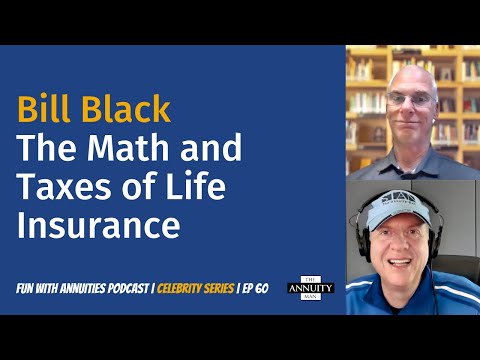
IN THIS EPISODE, THE ANNUITY MAND AND BILL BLACK DISCUSS:
- What is happening in the life insurance space (especially during the current pandemic).
- How interest rates affect life insurance policies.
- Benefits of life insurance to the beneficiaries.
- What to watch out for in the sales pitch world of life insurance.
KEY TAKEAWAYS:
- Oftentimes, term insurance can be changed to permanent insurance without the health checks being redone.
- Life insurance is the best return on investment that you will never see.
- Like with annuities, you buy life insurance for what it will do, not what it might do.
- Rather than letting a life insurance policy lapse when you don’t want to continue it, it can be sold like you would a stock or bond.
"There are no ifs, ands, or buts when you buy the right policy that has the right guarantees on it." — Bill Black
CONNECT WITH BILL BLACK:
Website: http://www.whbco.com/
LinkedIn: https://www.linkedin.com/in/whblack/
CONNECT WITH THE ANNUITY MAN:
Website: TheAnnuityMan.com
Email: [email protected]
Book: Owner’s Manuals
YouTube: Stan The Annuity Man
GET A QUOTE TODAY!
Visit our website - https://www.theannuityman.com/
Use the Calculators - https://www.stantheannuityman.com/annuity-calculator/
Get The Annuity Man's Books - https://www.stantheannuityman.com/how-do-annuities-work
Schedule a time to talk to Stan - https://www.stantheannuityman.com/book-a-call/
0:04
welcome to
0:05
fun with annuities with your host me
0:07
stan
0:08
the annuity man america's annuity agent
0:10
can annuities be fun
0:12
can contractual guarantees be fun
0:14
absolutely they can
0:16
find out the brutal facts about
0:18
annuities with no sales pitches or high
0:21
pressure nonsense
0:22
just the brutal and factual annuity
0:25
truth which is all you need to hear
0:27
let's have some fun with annuities and
0:29
let's have that fun
0:30
start right now
0:33
[Music]
0:39
welcome to fun with annuities i'm your
0:41
host stan the annuity man america's
0:43
annuity agent license in all 50 states
0:45
i'm so glad you joined us for this
0:47
podcast episode
0:49
we have a life insurance expert now
0:52
annuities are
0:53
issued by life insurance companies but
0:55
life insurance and annuities
0:56
are two separate strategies um i do not
0:59
sell life insurance i have a ton
1:00
of life insurance on myself but um
1:04
pretty much the top uh person in the
1:07
life insurance
1:08
industry and he's a been a thought
1:10
leader for decades he's been in the
1:12
business for over 40 years
1:14
i mean he's a personal friend we've
1:16
spoken at
1:18
at events together we've spoken you know
1:20
at the same time
1:21
you know we presented life insurance and
1:23
annuities at the same time
1:25
i trust him period for all things life
1:28
insurance
1:29
a little bit about him he's six foot
1:30
eight inches tall i'm six foot six but
1:33
so when we speak it's it's a pretty
1:34
interesting view we look like a tag team
1:37
wrestling match
1:38
he resides in winter park florida he's a
1:40
triathlete
1:41
um winter park florida is a little bit
1:43
uh is part of
1:44
the nicer part of orlando let's just put
1:46
it like that but boy does he have some
1:48
credentials
1:49
i was talking to him recently and i said
1:51
you know he's been
1:53
uh and i'm gonna look down and read it
1:55
um
1:56
core to the table top of the table all
1:59
of that stuff
2:00
that's unbelievable to qualify for he
2:03
did that 20 years in a row and just
2:05
stopped
2:05
applying for it because he'd done it so
2:07
so many times and there's so many
2:09
plaques on his wall
2:10
he didn't have enough space for it but
2:14
his name is bill black and he is going
2:16
to be
2:17
and is our life insurance expert and i
2:20
want to welcome him to fun with
2:21
annuities
2:22
bill welcome to the podcast stan thank
2:25
you so much for having me today i
2:26
appreciate this
2:28
absolutely so let's just jump right in
2:31
bill
2:32
just give everyone a an overview
2:35
of the life insurance industry
2:39
today in factoring in covin and all that
2:41
what what's happening what have you seen
2:43
is it
2:44
um what's happening in that life
2:46
insurance space
2:47
well what's really affecting the life
2:49
insurance you know of course we always
2:51
have to pass a physical exam
2:52
and with a 99 survival rate on the covet
2:56
issues you know absent any comorbidities
2:58
uh heart issues diabetes which are you
3:01
know the the
3:02
mitigating factors with covid somebody
3:04
probably wouldn't have passed the
3:05
physical with that anyway so the cove
3:07
had really
3:08
what we've seen is it's doing more to
3:10
keep the examiners
3:12
from getting to the people to get the
3:15
examinations done
3:16
more than anything else i'll tell you
3:18
what's really affecting the life
3:19
insurance industry today
3:21
the zero interest rates and and that's
3:24
had a significant effect on the market
3:26
there are actually insurance
3:27
companies that have gotten out of the
3:30
life insurance business because of the
3:31
zero interest rates
3:33
and that presents a whole different set
3:35
of challenges
3:37
and uh the different type of policies
3:39
that are available as a result of that
3:41
let's go deeper into the zero interest
3:43
rate effect uh into life insurance
3:45
policy because obviously in the annuity
3:47
world
3:47
when someone there's there's many types
3:49
of annuities i always tell people if you
3:51
hate all annuities then you hate your
3:52
social security because that's an
3:53
annuity
3:54
but there's lifetime income streams uh
3:57
you know that's that's the monopoly that
3:58
annuities
3:59
have is providing an income stream you
4:01
can never outlive and that that pricing
4:02
is primarily based
4:04
on your life expectancy at the time of
4:05
the time you take the payments
4:08
interest rates play a secondary role but
4:09
there are annuities that are
4:11
100 subject to interest rates which is
4:14
like multi-year guarantee annuities
4:16
fixed rate annuities
4:17
in the life insurance world explain how
4:19
interest rates
4:20
affect policies okay so
4:24
let's say that take a rudimentary
4:26
example let's say that you want a
4:28
million dollar policy
4:29
and let's say that your life expectancy
4:32
is
4:32
20 years earning zero interest what are
4:36
you going to do well you got to put away
4:37
50 000 a year
4:38
every year for the next 20 years because
4:41
if the insurance company can't earn
4:42
anything on the money
4:44
then you know there's no discount
4:47
so to speak plus adding back in their
4:50
overhead for their
4:51
cost of doing the examination their
4:53
office space their employees etc
4:56
so it becomes kind of like how do we how
4:58
do we make this
5:00
uh financially viable for all of our
5:03
clients and so one of the things i look
5:05
at
5:06
is what is the internal rate of return
5:08
on the policy just to give you an
5:10
example
5:12
working with a client yesterday who's 70
5:15
years of age
5:16
he has a term insurance policy and that
5:18
term insurance policy
5:20
is is is almost over but it is what is
5:24
called convertible to permanent
5:26
insurance
5:26
so what convertible means is you have a
5:28
term insurance policy
5:30
the premium is level for a number of
5:32
years what happens at the end of the
5:34
level period man that premium is going
5:35
to get pricey
5:37
and so what you can do is you can say
5:40
thank you
5:41
i don't want this term insurance anymore
5:43
mr insurance company give me a permanent
5:45
policy
5:46
the part that's good about that is they
5:47
will issue that new policy without
5:50
any evidence of insurability number one
5:53
and
5:53
issue it at the health status you were
5:57
when you bought the term policy so he
5:59
was super preferred
6:01
non-tobacco user if he today
6:04
had had multiple heart attacks stints
6:07
diabetes ever i'm just thinking of any
6:09
crazy
6:10
out there on the they still would have
6:12
reissued they still will reissue
6:15
that new policy that converted policy at
6:17
the super preferred non-tobacco
6:19
rates so my point being that most of the
6:22
time you want term insurance because you
6:24
just want
6:25
the coverage and the protection right
6:27
right and so
6:29
one of the one day maybe you say well
6:30
you know i really do need this insurance
6:32
permanently or i'm uninsurable now i
6:34
need some type of protection you get to
6:36
convert it
6:37
so the question of course becomes what's
6:39
my premium going to be if it's permanent
6:41
insurance it's going to be pretty
6:42
expensive
6:43
and then of course the natural question
6:45
is well i can probably take those
6:46
premium dollars
6:48
and invest it and have it grow to the
6:51
same amount as the
6:52
survivors benefit and so what i do is i
6:55
look at what's called the internal rate
6:57
of return
6:58
what would you have to earn on that
6:59
premium stream
7:01
to have a grow to an amount equal to the
7:03
survivor's benefit
7:05
it's an appropriate it's an
7:06
apples-to-apples comparison for sure
7:07
yeah you can put
7:08
open up an excel spreadsheet just run
7:10
the numbers and what that irr means at
7:12
any particular
7:13
point in time or any like five years
7:16
from now 10 years whatever point in time
7:17
you're looking at
7:18
what would you have to earn to have that
7:20
premium stream grow to the survivor's
7:22
benefit and you can excel spreadsheet it
7:24
if this client lives to 90 years of age
7:26
in this particular conversion option
7:29
he would have to make eight percent per
7:31
year every year
7:32
after taxes to have the to have
7:37
right to to beat to
7:40
to have that premium stream grow to the
7:41
survivor's benefit now tell me the day
7:43
you're going to die
7:44
yeah i'll tell you the day you're but
7:45
life expectancy is 87 years of age right
7:47
so
7:48
because he's not tobacco uh excellent
7:50
today i i pushed it out to 90.
7:53
eight if you could promise a client and
7:55
that's a guaranteed
7:56
return if you could promise a client an
7:58
eight percent uh
8:00
after tax rate of return for the next 20
8:01
years you you
8:03
they built a statue of you on wall
8:05
street i mean yeah
8:06
right that's that's crazy and i yeah i
8:09
was just thinking as you were as you
8:10
were
8:10
laying that out so simplistically to
8:13
everyone and it's
8:14
it's so easy to understand obviously if
8:15
you have a term client term policy
8:17
that's
8:17
that's um you know coming up you need to
8:19
contact bill and his information will be
8:21
on our site
8:22
but i quote bill all the time he he said
8:24
something a long time ago and bill i've
8:25
known bill for a long time
8:26
one of the first things he ever told me
8:28
is stan
8:29
one out of one of us is gonna die and i
8:32
have quoted him on that
8:33
so many times but i actually followed up
8:36
with that and i have another one that
8:38
i've always said which is
8:39
life insurance is the best return on
8:41
investment you you will never see
8:43
because you're dead and bill bill just
8:46
gave
8:46
that uh example and it's a contractual
8:49
example it's a transfer
8:51
of risk just like annuities are a
8:53
transfer
8:54
of risk so so interest rates obviously
8:57
would increase the
8:58
the roi yeah so the more the insurance
9:02
company can earn
9:03
on your premium dollars the less they
9:05
have to charge you
9:07
right so for example if you're going to
9:10
um earn 10 a year on the investment
9:13
return
9:14
you know so so part of their ultimate
9:17
amount that they have to pay out is
9:18
coming from earnings they can charge you
9:20
less
9:20
for that premium and we saw that for
9:23
years and years for example in the 70s
9:25
you were paying less return insurance in
9:26
the 60s and in the 80s less than the 70s
9:28
and
9:29
why well not only interest rates but
9:31
also mortality because as we live longer
9:34
they collect premiums for a longer
9:35
period of time so there's another
9:37
what's called actuarial gain there so
9:40
these two things fit together now
9:42
uh because life insurance is a shifting
9:46
of the risk and what what
9:47
are are we talking about well if you
9:50
drive let's say
9:51
what a fifty thousand dollar car thirty
9:53
thousand dollar car whatever
9:55
it is right if you don't insure your car
9:57
and you
9:58
wreck yeah you gotta pay that whole
10:00
thing out of pocket
10:01
so by buying car insurance you hope
10:03
you're not going to have an accident but
10:04
why are you only paying a fraction of
10:06
the price
10:07
because when everybody throws that money
10:08
into one pool and they pay out the
10:10
people that
10:11
right it's sharing the risk right so
10:13
that's what insurance is
10:14
it's really assigning the risk to
10:17
somebody else
10:19
and the thing that people say to me uh
10:22
every now and then is you know i'm
10:23
betting
10:24
i'm going to die and their bet and i'm
10:25
going to live and that's not it at all
10:27
with life insurance
10:28
life insurances we're all going to die
10:30
and many people say look i got
10:32
i got a lot of money i'm worth 10 15 20
10:34
million dollars i get that
10:36
but there's two problems with that one
10:38
is often those assets are not liquid
10:41
and number two the irs wants 40 of it
10:44
and so the life insurance is really
10:46
liquidity
10:48
it allows us to have liquid assets
10:51
uh to settle debt to provide for
10:54
beneficiaries to provide for charities
10:57
a lot of times i'm getting off point but
10:58
a lot of times you'll see at these
11:00
universities
11:01
uh somebody's got a building or a wing
11:03
or a stadium in their name
11:04
often that was paid for with life
11:06
insurance and if you think about it
11:09
maybe a 10 15 20 30 million dollar
11:12
stadium was built or that's probably
11:13
cheap right
11:14
um but for 10 cents on the dollar with
11:16
life insurance and you get to deduct the
11:18
premium if it's charitable so
11:19
there's all sorts of neat little things
11:21
and remind people that
11:23
when when if you're the beneficiary of
11:26
your life insurance policy
11:27
that lump sum is coming to you i'll let
11:29
you fill in the
11:30
blank income tax-free
11:33
and judgment credit proof right hello
11:37
yes so if the if and
11:40
uh if the uh insured
11:43
had debts of whatever volume it doesn't
11:46
matter
11:47
right those those survivors benefits go
11:50
to the surviving beneficiary
11:52
income tax rate because the proceeds of
11:54
life insurance are income tax free
11:57
and protected from the claim of judgment
11:59
creditors in virtually all jurisdictions
12:01
certainly in florida and many other
12:03
jurisdictions so there's a lot of uh
12:07
a lot of benefit to that and bill is a
12:10
nation i mean he's national like i am i
12:12
mean
12:13
he he's not regional he's national so
12:15
regardless where you're living give
12:17
you know touch base with him actually
12:19
his his website
12:20
which i'm going to put on mine so you
12:22
can get to it but if you're dying
12:24
to get to them right now it's it's w
12:27
h b c o dot com
12:31
w h b as in boy co
12:34
dot com that's how you get to bill black
12:37
bill let's
12:38
go through um just some basic
12:41
uh the types of life insurance whether
12:44
it's term it's whole life it's index
12:46
universal
12:47
can you do a a brief 30 000 easy to
12:50
understand
12:52
um life insurance life insurance types
12:54
for people out there that are listening
12:56
to us
12:57
sure so there's two basic types term and
12:59
permanent
13:00
right so term insurance we're all
13:01
familiar with uh you have a very thin
13:04
small premium you're renting your
13:07
insurance right
13:08
so back in the old days and i mean way
13:11
back
13:11
they had something called a rt or art or
13:14
annual
13:15
renewable term okay and the premium
13:17
started off
13:18
real cheap and then in year two it went
13:20
up and in year three it went up and year
13:22
four it went up and every year it went
13:23
oh no why does it go up
13:24
well because every year we're a year
13:26
older and we're a year closer to the end
13:28
of the line right that's right
13:29
and then every year it was like oh gosh
13:31
you went up again you know
13:32
so what they did was they being the
13:35
insurance industry came out with what is
13:36
called
13:37
level premium term insurance and you can
13:39
buy a term insurance policy that has a
13:41
level premium for 10 years 15 years 20
13:43
years or 30 years
13:45
now how can they make it level well they
13:47
charge a little bit more in the first
13:48
couple of years and they charge a little
13:49
bit less in the
13:50
you know so it's just a flat premium and
13:52
and that's really the best in my mind
13:55
type of insurance and surprisingly
13:58
you probably don't want to buy five year
14:00
level term and people go well why not
14:02
well because it's almost the same price
14:04
as ten year level term surely if you
14:06
price it out so it's like
14:07
why pay for five when you can pay the
14:09
same thing and get a level for ten right
14:12
and so you know you've got this premium
14:14
level for 10 15 20 30 years
14:16
why do you buy term and temporary
14:18
insurance man lots of reasons first of
14:20
all it keeps your premium
14:21
down and what do we really want we want
14:23
it for protection it's not an investment
14:25
i'm going to be the first guy to say
14:26
it's not an investment it's a
14:28
non-correlated asset
14:30
it is but it's liquidity that's really
14:32
what it is right
14:33
and so a lot of clients say listen the
14:35
reason i need term insurance is because
14:38
i'm a developer i'm building this big
14:40
project and the bank says listen we'll
14:42
loan you the 100 million dollars or
14:44
whatever it is right
14:45
or somebody's got a mortgage for a
14:46
million or two million or whatever
14:48
i i just need the insurance in case i
14:50
die the bank wants their money back
14:52
that's a temporary need you're going to
14:54
buy term insurance
14:55
you know my kids are going to be out of
14:56
school
14:58
you know they're three now they'll be
15:00
out when they're 21 22. i really need
15:02
the liquidity for that all sorts of
15:03
temporary reasons right
15:06
now when you get a permanent need for
15:08
insurance
15:10
what are you going to use well most
15:11
people think whole life i pay a premium
15:13
every year until i'm a hundred
15:15
and a age 100 the face value equals a
15:17
cash value
15:18
what's wrong with that you're paying too
15:19
much in premium right and here's the
15:21
reason i don't like cash value
15:24
let's say you've got a million dollar
15:25
policy and a 300 000
15:28
cash value you pass away they're going
15:30
to pay you a million dollars
15:32
where's my 300 000 cash value i i know
15:34
what i'm going to do i'm going to beat
15:35
the system
15:36
i'm going to borrow that 300 000 out and
15:38
then when i die my wife's gonna get a
15:40
million uh oh
15:41
sorry charlie uh here's a million dollar
15:44
survivors benefit you borrow 300 000
15:46
from us in a policy loan your
15:48
beneficiary gets the net of 700
15:50
000. so then i got to throw it back to
15:52
you and say
15:53
what good is your cash value you know
15:55
what keep your cash value
15:56
give me the thinnest smallest premium
15:59
possible to guarantee the death benefit
16:01
until i'm 100 or 110
16:03
and you know where my cash change is
16:04
going to be it's going to be on my
16:05
balance sheet and premium savings and
16:07
stocks or bonds or mutual funds or
16:09
annuities right and so when i pass away
16:12
my survivor is going to get not only the
16:13
survivor benefit
16:14
but these excess assets i've got on my
16:16
balance sheet for my premium savings
16:18
because all i want is the survivor's
16:19
benefit
16:21
so how are we going to get this
16:22
permanent insurance
16:24
they've got something called universal
16:25
life they've got something called
16:27
uh indexed universal life
16:31
etc so when you have universal life it's
16:34
a lot like buying term and investing
16:36
the difference you pay a premium it goes
16:38
into the cash value of the policy
16:40
they take away what we call coi the cost
16:43
of insurance and the balance is earning
16:46
interest
16:46
and so as time goes by
16:50
you know some of these policies have
16:51
guaranteed premiums that they
16:53
for this particular premium at your
16:54
particular age and health status
16:56
you pay this premium every year till
16:58
your age 100 the death benefit the
17:00
survivor's benefit
17:01
is guaranteed right that is the type of
17:04
policy that is
17:05
fast disappearing because of the zero
17:07
interest rates
17:09
so the other thing that they've uh
17:11
gravitated to they being the insurance
17:13
companies is what's called
17:14
indexed life so how does that work you
17:17
pay a premium
17:18
it goes into the cash value they take
17:19
away the cost of insurance
17:21
the balance of it goes into uh the
17:24
standard and poor's
17:25
typically uh that's your index call
17:28
option
17:29
like a call option right right just like
17:30
an indexed annuity right exactly what it
17:32
is
17:33
so if the if the standard poor's in this
17:35
example if the index goes down
17:37
your option expires without value
17:40
there's no loss to you but there's no
17:42
gain either
17:43
if the market goes up that option is
17:46
exercised at a profit
17:47
and and part or all of that gain is
17:50
allocated to your policy
17:52
and so that's really kind of where
17:53
things are going is there's a little bit
17:55
of uh
17:56
you know the risk is being shifted back
17:58
to the insured in that type of an index
18:01
option so what you've got to do is ask
18:03
yourself what are the guarantees in this
18:04
policy that's uh
18:05
okay and you taught me that a long time
18:07
ago one of the other things that bill
18:09
drove into me in my head you know as we
18:12
were traveling and speaking to
18:14
to the large events the financial shows
18:17
and things like that
18:18
is by the most death benefit you can for
18:21
the least amount of money
18:23
right and that's a basic basic thought
18:26
and i totally believe that now once we
18:28
get into the index universal life and
18:30
and those type of policies that's where
18:32
the hopes and dreams
18:33
are and as you know the fun with
18:35
annuities um
18:37
saying is living the reality not the
18:38
dream and i also say you own an annuity
18:41
for what it will do not what it might do
18:42
same thing with life insurance you know
18:44
for what it will do not what it might do
18:45
yeah but the u but the sales pitch
18:48
unicorns chasing the butterflies
18:49
you know all of the planets aligning
18:51
themselves are now
18:53
rolling into these index uni index
18:55
universal life policies where
18:57
i have seen some of the assumptions
19:00
so high that you'd have a you'd be the
19:02
world-class money
19:03
manager if you ever got that or
19:05
back-tested returns which in some states
19:08
are illegal to show and i hope it
19:09
becomes illegal because you can juice
19:11
those numbers
19:13
um which leads leads me to i really want
19:16
your comment on this because this one
19:18
drives me
19:18
crazy bill and i and because you're the
19:21
life insurance expert
19:23
i need you to just slice this up
19:25
factually and and
19:26
put this one to bed once and for all got
19:29
a call the other day and the guy said
19:30
well i'm considering
19:31
index universal life or etc with the
19:34
cash value
19:35
so i can get tax-free income oh sure now
19:38
that's a neat sales pitch um but the ir
19:41
the irs hasn't approved that uh when you
19:44
take money out of a bank
19:46
you know and you get a loan from a bank
19:48
that's not income when you take money
19:50
out of a life insurance policy if i'm
19:51
not mistaken bill
19:53
that's a loan that's not income am i
19:55
right about that
19:56
yeah that's why it's tax free because
19:57
it's a loan so go to the bank today
19:59
go to the bank today and borrow a
20:01
million dollars go to loan your son or
20:03
daughter some money today nobody's
20:04
paying tax on those loans that's not
20:06
income but
20:07
when agents and advisors semantically
20:10
and play these word games saying saying
20:13
tax-free income
20:15
the trusting public is saying well that
20:17
sounds good martha
20:19
that's fantastic i love tax free i don't
20:22
want to pay taxes
20:23
it's alone well here's a couple of
20:27
things that are going on
20:28
first of all it's semantics number one
20:31
number two it is true to a degree
20:35
that's the important part it is true to
20:37
a degree
20:39
around the edges though bill you know
20:41
right no no no let me explain what's
20:42
going on so i see some things that
20:45
they're all right and i see some things
20:47
that you just want to scream
20:49
give you an example of one i saw the
20:51
other day i get a lot of referrals from
20:53
cpas okay
20:55
and so he said bill look at this
20:57
client's
20:58
analysis he was going to pay a
21:02
premium for 10 years
21:05
two years later he was going to borrow
21:07
or withdrawal
21:08
90 of what he paid into the policy back
21:11
is what's called a withdrawal
21:13
that's not taxable because it's your
21:14
cost basis then he was going to wait
21:16
another five years
21:18
and take out of that policy
21:22
something like 15 of the cash value
21:24
every year for the next 30 years
21:26
and i went over that with a cpa and i
21:28
said this is mathematically
21:30
impossible and the cpa looked at it and
21:33
he goes
21:35
where do these numbers even and i said
21:37
yeah it's all smoke and mirrors right
21:39
absolutely
21:40
so beyond what you're saying some of
21:42
these illustrations
21:44
just aren't even mathematically possible
21:45
but here's here's what's going on
21:48
listen pay these premiums into these
21:50
policies
21:52
that's after-tax money it's going to go
21:55
into these policies and the index is
21:56
going to return all these
21:58
wonderful rates of return because that
21:59
aren't guaranteed no no
22:01
well well you know if the index goes up
22:03
you're going to get credited if the
22:04
index goes down you're not going to lose
22:06
anything so
22:07
you know the market did 18 last year and
22:10
i'm only projecting seven percent for
22:11
you
22:12
so you know you're going to do really
22:13
good oh my gosh now
22:15
you know let's ignore the fact that you
22:16
know the market fell forty percent no
22:18
eight and let's let's ignore the fact
22:20
that you know
22:21
okay we're gonna ignore that reality
22:23
okay exactly
22:24
now you get x years down the road
22:28
and you've got all these wonderful
22:30
policy values
22:32
and you're going to take tax-free income
22:34
from the policy now why is it tax-free
22:37
well because in the early years you're
22:39
not taking a loan you're taking a
22:40
withdrawal
22:41
and the reason it's a withdrawal is
22:43
because that's considered a return of
22:45
your principal so that's not taxable
22:48
so once you withdraw down to your
22:49
principal now you start taking loans
22:52
because if you don't
22:53
take loans and you take withdrawals and
22:55
now you're getting into the gain of the
22:56
policy and if it wasn't a loan
22:58
that would be taxable okay sounds good
23:01
so i'm going to take a loan
23:03
from this policy hey what's not to like
23:06
okay
23:07
well sorry but because it's a loan
23:09
there's interest
23:11
on that loan correct and you either
23:14
pay the loan interest in cash which
23:17
nobody wants to do or that's okay you
23:20
know what don't pay that interest back
23:22
we'll just take the interest out of the
23:24
policy value
23:26
so now what happens is not only do you
23:28
have the amount that you borrowed
23:31
but it's increasing by the interest that
23:33
you're not paying out of pocket
23:35
so that doesn't sound like a big deal
23:37
let's say that the interest is
23:40
let's let's be easy and say it's three
23:42
percent okay okay you borrow a hundred
23:44
thousand dollars in year one yeah what
23:45
the heck right it's 103. my loan's 103
23:48
with interest what's the big deal is
23:49
only three grand
23:51
it's not a big deal until you add the
23:53
second year's hundred thousand on it
23:54
and the third year's hundred thousand in
23:56
the fourth year now all of a sudden and
23:58
keep in mind interest it's
24:00
compounded not simple so by the time
24:02
you've taken 10
24:03
loans out of the policy now that's you
24:06
know
24:07
30 000 plus the interest on the interest
24:10
that you haven't been paid
24:12
now what happens oh wait a minute
24:13
weren't we talking about
24:15
the market fell so your gains or your
24:18
credits on your
24:18
cash value growth isn't what you
24:20
anticipated aren't we talking about
24:22
interest rates have been falling lately
24:23
so all those original projections from
24:25
20 years ago that the interest alone was
24:27
going to be six
24:28
oh wait a minute every year there's a
24:30
cost of insurance
24:32
they take away from that policy you mean
24:34
to tell me that the board of directors
24:36
can
24:37
increase that cost of insurance at will
24:39
and they do
24:40
so how do you think when a policy that
24:42
you bought 20 years ago
24:44
at a minimum guaranteed rate of five
24:46
percent on the cash value
24:48
and they can't get five percent of their
24:50
investment portfolio
24:52
oh yeah i know how we can fix that we'll
24:55
increase the cost of insurance on this
24:57
class of policies ooh
24:58
now not only are you you're paying
25:00
interest on your loans but now you got
25:01
higher costs coming out
25:03
so your cash value is decreasing at an
25:06
increasing rate
25:07
okay so some people say yeah yeah yeah
25:09
so listen
25:11
i thought i was going to take that loan
25:13
out for 10 years or 15 years
25:15
but because of all the stuff you're
25:17
telling me i'll only take it out for
25:18
eight years well
25:19
wait a minute what happens is when you
25:22
quit taking that
25:23
loan out that loan's balance still
25:26
exists and they still are charging you
25:28
interest
25:29
and if you don't pay the interest and
25:31
that policy what i call
25:33
cannibalizes itself right then what
25:36
happens
25:36
is the policy collapses of its own
25:38
weight for lack of a better
25:40
explanation and there's something called
25:42
a forgiven loan
25:43
because when that policy lapses without
25:45
value the loan you've borrowed
25:47
you don't have to pay it back they
25:50
forgive it
25:51
yeah you took the policy out all that
25:53
money there's no more money left to
25:55
support the policy so the policy lapses
25:57
you don't have to
25:57
pay us back that's okay but they give
26:00
you a 1099
26:01
because it's a forgiven loan and a
26:04
forgiven loan is taxable as ordinary
26:06
income
26:06
so if you've got a million dollars that
26:08
you've borrowed out of that policy over
26:10
the last 10 years
26:11
accumulated interest on top of it and
26:13
everything else this year you've got a
26:15
million dollars of
26:16
phantom income that is subject to income
26:19
tax now
26:20
what state do you live in well if you
26:22
live in florida okay it's only 37
26:25
because let me guess let me let's let's
26:26
both agree that if you got a million
26:28
dollar loan that's forgiven that you get
26:30
a 1099 for
26:31
it's probably going to throw you into
26:32
the maximum tax bracket i think we
26:33
should both agree on that
26:34
absolutely now what if you live in
26:35
another state like california like
26:38
new york or other high-tech state that
26:40
costs you half a million dollars
26:42
wow wow right wow so i had a client
26:46
that um said bill my my son-in-law
26:49
is being shown these wonderful and you
26:51
know if you look at it
26:53
the income that's coming off those
26:55
projections is like
26:56
sky-high incoming quotation marks
26:59
right right right right the yes
27:03
and so i i mean the first thing i did
27:05
was i i looked at the projected values
27:08
and i said right but look at what's
27:09
guaranteed
27:11
and after he took out the first loan
27:13
income whatever you want to call it
27:15
guarantees went to zero so you know it's
27:18
like you and i are both
27:20
saying this is a you know if you go into
27:22
any business situation what are you
27:24
looking at
27:25
what's the best i can do what's the
27:26
worst i can do if you can live with the
27:28
worst then it's okay
27:30
right right and if the worst you're
27:32
gonna do in a policy like this
27:34
is take the first quote quote income out
27:36
and the policy collapses
27:38
probably not a good deal well and and it
27:41
just
27:41
all comes back to if it sounds too good
27:43
to be true or looks too good to be true
27:45
it is every single time and you're not
27:47
focusing on the contractual guarantees
27:48
you're focusing on
27:50
the pie in the sky numbers that the
27:51
agent or advisor wants you to do that
27:53
and the other thing this we're not going
27:55
to mention any names or any type of
27:57
marketing that's going on because
27:59
we're just not but but what's happening
28:02
in the industry showing people
28:03
a quote-unquote tax-free income this has
28:06
been around
28:08
bill you and i both know for for 30
28:09
years they just keep putting lipstick on
28:11
the pig
28:12
and selling hopes and dreams and the
28:14
stories you know get better and
28:16
and and sexier etc um
28:19
p i got a call the other day which is
28:21
one of the most disturbing
28:23
life insurance calls i've ever received
28:25
this person was being
28:28
advised to cash in their ira
28:33
pay the penalty and then front end load
28:36
a life insurance policy which i want you
28:39
to not only talk about that
28:40
but talk about the phrase modified
28:43
endowment
28:44
contract and the reason people need to
28:47
understand what that is
28:49
can you cover both this ridiculous um
28:52
and people and people every day are
28:55
cashing in their iras to buy life
28:57
insurance policies
28:58
cover that and cover the mech modified
29:00
endowment contract
29:01
yeah well first of all now you're
29:04
starting to irritate me right
29:06
because when people when people say this
29:08
these are the type of people
29:10
that are advising that don't understand
29:12
taxation right they don't understand
29:14
what's called present value and future
29:16
value
29:17
right and and and the growth trajectory
29:20
so
29:20
let's talk first of all about cashing
29:23
our
29:24
ira in now your ira when you cash it in
29:27
is is taxable as ordinary income
29:30
and if you're under 59 and a half you're
29:32
going to pay a 10 penalty
29:34
in addition to the taxation right right
29:38
so let's just say for sake of
29:39
conversation let's just say that's 35
29:42
percent
29:43
the 10 and a 25 will be generous and say
29:45
it's a 25
29:47
uh federal tax bracket and a 10 uh
29:50
excise tax you're paying
29:52
35 we'll forget state income taxes and
29:54
everything else
29:55
if the market fell by 35 today
29:58
you would be shell-shocked right you
30:02
would you would just be sitting here
30:03
going wait a minute
30:04
but somehow we're being advised to let
30:07
the tax authorities take 35 percent of
30:09
our money and that's okay
30:11
yeah now secondly when you take that
30:14
money and you reinvest it in some
30:15
alternate investment you got a whole you
30:18
got to
30:19
dig yourself out of right you got to
30:22
earn
30:22
you know 50 on your money right you only
30:25
got 65 percent left you got to earn
30:28
30 000 and 35 000 or 50 of what you got
30:30
left
30:31
to get back to even okay wait a minute
30:34
there's an
30:34
ugly reality here this is why i say life
30:36
insurance is protection
30:39
when you buy life insurance if you
30:41
bought
30:42
a mutual fund today just the the average
30:45
listener
30:46
today is not going to want to buy what's
30:49
called a retail
30:50
a share that means you're going to pay
30:52
five and a half percent
30:53
off the top to sales loads so you've got
30:57
95 cents on the dollar working for you
30:59
okay that's not really a great
31:02
right but somehow i'm supposed to let 35
31:06
percent of the value of my ira go
31:08
in taxes and then buy a life insurance
31:10
policy that has front loads like premium
31:13
tax in some states
31:14
and other loads so now the insurance
31:16
company and the tax authorities are
31:18
going to take
31:18
five to ten percent of what i pay into
31:20
that policy
31:22
now i'm going to have a surrender charge
31:23
on that policy if i want my money back
31:25
i'll be lucky if i'm getting 40 cents on
31:28
the dollar
31:29
or even 35 cents on the dollar and now
31:31
i'm going to wait all of this time
31:33
and then start taking income out that
31:36
isn't even guaranteed
31:38
and it's not even income well yeah i
31:40
mean it's a loan right
31:41
right it's it's flow is of some type
31:44
if we just took that ira left it where
31:47
it was
31:48
projected it forward at a three percent
31:50
rate of return
31:52
maybe even two percent right and then
31:55
looked at the income we were going to
31:57
take out of that compared to this
31:59
wonderful recommendation uh client's not
32:02
going to be any better off
32:04
and now what you're doing is you're
32:06
taking a leap you're taking a leap of
32:07
faith
32:08
and i hate to say it but probably going
32:11
to be severely disappointed
32:14
explain a modified endowment contract so
32:17
what happens
32:19
is back when interest rates were at 16
32:22
18 percent remember
32:23
jimmy carter yeah go get a cd for 16
32:27
18 it was like wow right yeah well what
32:31
happened back then where life insurance
32:32
policies were basically paying about
32:34
three percent so what did you do
32:36
you went and borrowed your cash value at
32:37
three percent bought a cd at 18
32:40
you back then you could deduct the
32:41
interest right and so the insurance
32:43
company said listen stan don't do that
32:45
i know what you're doing we're taking
32:47
the money that you pay us and we're
32:48
investing in getting a higher rate of
32:50
return anyway
32:51
and we're going to credit this higher
32:52
return to your cash value so there's no
32:54
need to go through all these
32:55
machinations
32:56
instead of you getting a 16 cd we're
32:59
crediting 16
33:00
to your cash value so just go to these
33:02
newer type of policies
33:04
well people are smart in certain ways
33:07
and so what happened
33:08
was and it all starts in california
33:11
they started selling this thing called
33:13
single premium whole life
33:15
listen stan give me a million dollars
33:16
and i'll give you a million dollar
33:17
insurance benefit
33:19
why would i do that uh well because life
33:21
insurance grows without taxation on the
33:23
cash value
33:24
you can loan or borrow that money out of
33:26
the cash value without paying tax on it
33:28
and then when you pass remember that
33:30
money goes income tax free to your
33:32
beneficiary and outside the reach of
33:34
judgment creditors
33:36
and so by calling a life insurance
33:38
wrapper around it it didn't cost you
33:39
anything because if you give me a
33:40
million i'll insure you for a million
33:42
there's no risk so i'm not charging you
33:43
for the insurance
33:44
right and uh you're still getting the
33:46
you know good rate of return and you're
33:47
not paying tax on it because the cash
33:49
value growth
33:50
the growth in the cash value isn't
33:51
taxable you can borrow that money out
33:53
loans aren't taxable you know everything
33:55
like that so the irs after a while said
33:58
wait a minute hold on
34:00
this isn't life insurance it's not
34:03
insurance because there's nothing at
34:04
risk
34:05
right so we're going to change the rules
34:07
and we're going to say for every dollar
34:09
you have in cash value you have to have
34:11
a certain multiple of survivors benefit
34:16
and that's called the corridor so that
34:19
corridor
34:20
is shown in every policy and so let's
34:22
say at age
34:23
40 i'm just picking out numbers for
34:25
every dollar you have in cash value you
34:26
got to have two dollars and 40 cents and
34:28
survivors benefits
34:30
right yeah so if you don't have that
34:33
corridor if you're below the corridor so
34:35
let's say in this example you don't have
34:37
two dollars and forty cents
34:39
uh multiple you've got a dollar forty
34:41
multiple
34:42
that's a modified endowment policy so
34:45
when you pass away the survivor's
34:47
benefit is still
34:48
income tax free but when you access
34:51
policy values in the form of a loan or
34:53
anything else
34:54
it's what's called lifo last in first
34:57
out
34:58
so now the first loan you get or
35:00
withdrawal you take is considered
35:02
the return of the earnings not your
35:05
principal
35:05
so it's taxable as ordinary income down
35:09
until you've taken all the earnings out
35:10
and then
35:11
once you're down below that you take the
35:13
money out in principle then there's no
35:14
tax on that but so it's a lifo
35:17
but the survivor's benefit is still
35:18
income tax free so
35:20
if you're buying life insurance for the
35:22
survivor's benefit mech doesn't really
35:24
matter
35:25
but if you're buying life insurance for
35:26
the survivors benefit you're not going
35:28
to have on that because you're not going
35:29
to load it up to build up the cash value
35:31
right so it's kind of a mutually
35:33
exclusive thing so those mechs come in
35:35
and these overloaded
35:39
look at all this wonderful cash value
35:41
type right projection
35:43
and yeah and people just have to be
35:45
careful about that
35:46
um you know once again you can contact
35:48
bill his his site is w-h-b-c-o
35:52
if you have a policy you can you know
35:54
he'll take a look at it and tell you the
35:55
brutal and factual truth about it
35:58
and i forgot to mention earlier that he
36:00
is also a specialist and
36:01
and nationally known for employer
36:05
um benefit plans um and you know for
36:08
all size companies he's he's a master of
36:11
that
36:12
you know he's been in the business four
36:13
years but those his two lanes are that
36:16
employ your benefit plans and then uh
36:19
life insurance i mean you know doing it
36:21
for four decades you know
36:22
he's forgotten more than anyone will
36:24
ever know about life insurance i mean he
36:25
truly
36:26
you can if you you're just listening to
36:28
his his radio
36:29
tv voice he's got the best voice ever
36:32
but uh
36:33
i mean he does but it he understands
36:37
life insurance backwards and forwards
36:38
and i think the key thing here bill is
36:42
you can get through the sales pitch you
36:44
can get through the proposal and the
36:45
juice numbers
36:47
um for consumers out there and the
36:48
people that are listening to this on all
36:50
the podcast platforms
36:52
with fun with annuities and also my
36:54
youtube channel the fun with annuities
36:55
youtube channel
36:56
what would you tell the consumer to
36:59
watch out for
37:00
in the sales pitch world of life
37:02
insurance
37:04
well when you're buying life insurance
37:06
for a reason other than the life
37:08
insurance
37:09
when it's being positioned as an
37:11
investment
37:13
there are some times when that does have
37:15
merit
37:16
but often not right
37:19
and so the first thing you want to look
37:21
at is
37:23
why is it not just for the protection
37:27
and that's that's the first thing i
37:29
would i would be wary of if
37:31
if i may yeah
37:34
well and and we had a uh we did a
37:36
podcast recently with jack lindenberg
37:38
who's one of the
37:39
he's the top long-term care specialist
37:41
and there's such things called
37:42
asset-based
37:43
long-term care that's used uses life
37:45
insurance as a delivery system for that
37:47
benefit
37:48
but once again you're not buying it for
37:51
the life insurance
37:52
uh death benefit you're buying it for
37:53
the long-term care so there are
37:55
there are certain situations but
37:58
is it fair to say and i always say this
38:01
in the annuity industry if it sounds too
38:02
good to be true it is
38:04
is it fair to say that in the life
38:05
insurance side as well i'll tell you
38:07
what
38:07
the life insurance policies that have a
38:09
long-term care rider
38:11
are are fantastic and let me explain why
38:14
you buy a long-term care policy today
38:16
just a flat out long-term care
38:18
policy if you never use it you just
38:20
spent all that money
38:21
right goes down the rabbit hole
38:23
absolutely but these long-term
38:24
care policies see the thing about life
38:26
insurance is we're all going to die and
38:28
mortality
38:29
is pretty believe it or not exact at the
38:32
beginning of the year an insurance
38:33
company knows what they're paying out
38:34
claims at the end of the year because
38:36
mortality is what it is
38:37
yep okay so the thing about morbidity
38:41
which is what it's called when you have
38:43
long-term care is it's not predictable
38:45
right how many people are going to get a
38:46
heart attack this year how many people
38:47
are going to blah blah blah
38:49
so what happens is those long-term care
38:51
policies and i'm sure a lot of listeners
38:53
know this
38:54
the carrier can come back and say stan
38:55
we got to raise our rates this year
38:57
right we're going to lower your benefits
38:59
how do you get around that
39:00
you buy a life insurance policy with a
39:02
long-term care benefit
39:04
hooked onto it and here's how it works
39:08
they're going to pay you two percent of
39:11
the face value of the policy
39:13
for 50 months now most people i think
39:16
the statistics will show
39:18
last a little over three years right 36
39:21
months
39:21
correct so they're gonna pay you two
39:22
percent of the face value a month for 50
39:25
months
39:26
that's a little over four years so what
39:29
happens if you buy a
39:30
500 000 policy they're going to give you
39:33
10
39:33
000 a month for long-term care benefits
39:37
and that's tax-free and then when you
39:39
pass away
39:40
there's a little calculation right what
39:42
was the survivor's benefit
39:43
policy originally how much did we pay
39:45
out long-term care the rest goes to your
39:47
name beneficiary
39:48
income tax free and that is a fixed
39:52
price
39:52
there's no monkey business with it
39:54
there's no ifs ands or buts when you buy
39:55
the right policy that has the right
39:57
guarantees on it
39:58
but then they also have something called
40:00
an accelerated benefit writer
40:03
and if you've got less than six months
40:05
to live the typical policy they're all
40:07
the writers are all just slightly
40:08
different but the general idea is
40:11
if you've got six months left to live or
40:13
less
40:14
and you get a letter from a doctor
40:15
they'll pay you out a large percentage
40:17
of that survivor's benefit
40:19
today and it's tax-free now why do they
40:21
do that
40:22
well mathematically whether they pay it
40:24
out six months early or not doesn't
40:25
affect their
40:26
curve their mortality curve sure most
40:29
people don't pass
40:30
right now right like a car wreck like a
40:32
sudden heart attack they linger
40:34
what happens when you're lingering
40:36
you're running up medical bills
40:37
right and so by them giving you this
40:40
cash now it's really something that is
40:42
uh
40:43
public policy it helps the family not to
40:46
have that
40:47
first of all we've all had people pass
40:49
and it's really rough the last thing you
40:50
want is
40:51
a mountain of bills on top of it that's
40:53
just more stress right
40:54
so there are good things that come
40:56
wrapped in these life insurance policies
40:59
and you know what we do is we we look at
41:03
a client's
41:03
insurance policy like i got someone on
41:05
my desk today i've got this
41:07
insurance that i'm not paying anything
41:09
for i mean i've got a million dollars
41:10
and i pay 600
41:11
a quarter sure and i said yes
41:14
now here's a story about this client
41:17
this client has had severe health issues
41:19
severe health issues and uh they've got
41:22
other problems
41:24
well you know how long is that premium
41:26
for oh that's
41:27
the way it is for the rest of my life no
41:29
you know it's not right so i looked at
41:31
the policy and it was a 20-year level
41:33
term premium they thought it was
41:34
you know forever because they've had it
41:36
for 18 years right
41:37
well i say you know what in two years
41:39
this premium is going to go through the
41:40
roof
41:41
and they were just totally unaware of it
41:43
right so while it's still convertible
41:46
you you because those conversion windows
41:48
close they're not good forever right
41:50
there's a time when that conversion
41:51
windows close it's usually the end of
41:52
the level period or age 65
41:54
depending on what comes first now got
41:57
other policies where
41:59
another one came across my desk today
42:00
they had a 15-year term
42:02
policy one year left on it what are you
42:05
going to do at the end of you know next
42:06
year
42:07
rates are going to be if you stay with
42:09
this policy be going way way up
42:10
can we just do a simple mathematical
42:12
analysis this is where you are now this
42:14
is where we'd recommend you go
42:16
here's the difference in dollars it's a
42:18
sterile financial analysis
42:19
right it's not oh bought cash value oh
42:23
but i'm your nephew
42:24
oh i'm your golf buddy it's not about
42:26
nonsense right it's just
42:28
dollars it's math and taxes it's matt
42:31
hey um we got we got a one more segment
42:34
i kind of want to get to before we close
42:35
this out
42:36
and let's talk a little bit about you
42:38
remember you mentioned to me the other
42:40
day in preparation for this podcast
42:42
about the settlements with life
42:43
insurance can you can you cover that
42:46
for people because that's there's a lot
42:48
of misinformation out there about
42:49
settlements yeah yeah here's here's the
42:52
situation
42:53
you got to forget for a second life
42:55
insurance and think of it as an
42:57
asset right it's an intangible asset
42:59
just like a stock certificate right
43:01
sure so what happens to that insurance
43:04
well it's a lot like your
43:05
boat your car there comes a time when
43:07
you don't need it or want it anymore
43:10
and so you can just tell with the term
43:11
insurance you know what i don't want
43:13
this anymore i'm just going to let it go
43:15
i'm just not going to renew the premium
43:17
and goodbye
43:18
well another real life example got a
43:21
client that has a
43:22
750 000 term insurance policy he's had a
43:26
level premium for 20 years
43:27
next year the policy is going through
43:29
the premium is going through the roof
43:31
doesn't want the policy anymore right
43:33
wait a minute
43:34
don't just walk away from it and you
43:36
know now the insurance company's got all
43:38
that cash
43:39
you can sell that policy just like a
43:41
stock a bond or a mutual fund now who's
43:43
buying it right there was a comment you
43:46
made earlier
43:46
about non-correlated assets
43:50
so hedge funds are buying these policies
43:52
well why
43:53
well you've got a diversified stock
43:55
portfolio oh you've got some of it in
43:56
consumer goods some of an energy
43:59
some of it well you know what when the
44:00
market goes down it's all going down
44:03
i don't care how well diversified it is
44:05
when the market goes down all those
44:06
shares are going to lose value
44:08
right well okay but a hedge fund has to
44:12
return
44:12
uh to its investors and so what they do
44:16
is they buy these life insurance
44:17
policies and they pay the premium on
44:19
them
44:20
and when the policy when the insured
44:22
passes away
44:23
they get the survivors benefit so this
44:25
particular client had a million-dollar
44:27
policy
44:29
his health had deteriorated and what
44:32
happens is
44:32
you get your um medical records they
44:35
calculate
44:36
a life expectancy and they make an offer
44:37
on it this particular client they
44:39
offered him a hundred and fifty thousand
44:41
dollars for his policy
44:43
so think about that for a minute you're
44:44
going to walk away from it or you're
44:46
going to sell it to a hedge fund
44:48
and get substantial cash now yes it's
44:51
taxable as income but
44:53
if you had a gain on your stock
44:54
certificate it would be taxable as
44:56
income what'd you pay in premium what do
44:57
you get for selling the policy the
44:59
difference is taxable as income
45:00
it's a fair deal but rather than just
45:03
and walking away from a policy
45:05
i don't want my policy anymore i got
45:06
seventy five thousand in cash values
45:08
just going
45:08
wait a minute wait wait wait what if i
45:10
could get 125 for that policy
45:12
instead of just turning it in for 75
45:14
000. this is where
45:16
you just and you know what if we shop
45:19
the market for a client
45:21
the offer is always going to be more
45:24
than the surrender value of the policy
45:26
otherwise the offer is no offer because
45:28
if you're concerned for a dollar
45:29
nobody's going to offer you 80 cents for
45:31
it right
45:32
right it's just not yeah so what happens
45:35
is the worst you're going to do
45:37
by shopping the market is being the same
45:39
position you are
45:41
today right because you'll never get
45:42
worse yeah there's no downside
45:45
so a lot of times a client will come to
45:47
us and and uh you know i'll tell them
45:48
right out of the gate
45:49
you know there's either value here
45:50
there's not no why would there not be
45:52
value
45:53
if they're 60 years old they're in great
45:55
health and they got a 40-year life
45:57
expectancy sorry it's probably not a lot
45:59
of value
46:00
but if you bought that policy and it's a
46:01
preferred non-tobacco user and now
46:03
you've had a health incident or two
46:05
or you're 75 or 80. there's probably
46:08
going to be some value in that policy
46:11
and that's what a life settlement is and
46:13
that's the reason you see all these
46:14
television commercials
46:15
you know saying you can sell your life
46:16
insurance policy yeah bill and i
46:18
obviously been around the block a long
46:20
long time and we know people in the
46:21
hedge fund world and i
46:22
i had one person they told me they call
46:24
them death bonds
46:26
because in essence it functions like
46:28
like a bond
46:29
for the uh for the hedge fund um
46:32
yeah but they're getting they're getting
46:34
a coupon based on life expectancy
46:36
and when you die and i think it's a very
46:39
interesting
46:40
um market and i think that the listeners
46:43
need to understand that just don't let
46:45
the policy lap give
46:46
give bill a call um he's got he's got
46:49
the best staff in the business
46:51
literally his staff is talented so they
46:54
can go
46:55
in and and see if there's some value
46:57
there for you but um all of these ads
46:59
that you're seeing
47:00
on tv we're not going to mention the
47:02
names and they're you know sell your
47:03
life insurance policy and all that stuff
47:05
what they typically do is they package
47:07
those those
47:08
settlements and then sell it to a hedge
47:10
fund in a lot of cases or the
47:12
hedge funds are directly buying it and
47:14
they're just the middlemen
47:16
but if you're going to have a middleman
47:18
in this situation
47:19
why not someone with 40 years of
47:21
experience bill black
47:23
bill we've we covered a lot today and
47:25
we're going to have you back on
47:27
to go deeper in and give more examples
47:29
of your clients
47:31
what you're seeing out there and what
47:32
you can do remember
47:34
that not only is he a life insurance
47:36
expert you know he does he is an expert
47:38
on him
47:39
employ your benefit um strategies you
47:42
know for retirement
47:43
plans etc i mean he he knows what he's
47:45
doing once again
47:47
his um his website will be on our site
47:50
but i encourage you to go there it's
47:51
it's
47:52
of course www.whbco.comwhbco.com
48:00
his name is bill black he's a dear
48:01
friend of mine we've been uh
48:03
we've known each other for a very very
48:04
long time
48:06
and bill i really appreciate you being
48:08
with us any
48:09
any final comments before i close this
48:11
out yeah something just came to me about
48:14
life settlements
48:14
if you go to the people on tv you're
48:17
going to one person
48:19
and they're going to give you an offer
48:20
that's maybe 15
48:22
above cash value right and you're going
48:23
to think you've got to gain
48:25
what we do is we actually go to the
48:27
market and shop it among what are called
48:29
all the funders there's many people many
48:32
hedge funds out there buying it so we're
48:34
going to negotiate the highest
48:35
and best price for you a lot of times
48:38
when you just go to the one person on tv
48:40
whomever that may be
48:41
and they know you're not chopping it
48:43
you're not going to get the best value
48:45
most often so just something to keep in
48:48
mind
48:49
in fact i've been at the industry events
48:51
just like you have stan
48:52
and i've had some of these guys say oh
48:54
yeah the client will take 50 000
48:55
more than the value of the policy and
48:57
think they've got to gain and we're
48:59
you know and i thought to myself you
49:01
know that's just
49:02
not good business but you know so
49:04
there's some things like that that are
49:06
going on behind the scenes that you want
49:07
to be real careful about
49:09
and uh like anything else we bid it out
49:12
to everybody
49:13
to get the highest and best value so
49:16
sounds familiar to my clients because i
49:18
always say i shop all carriers for the
49:19
highest contractual guarantee
49:21
bill does the same thing i think uh in
49:23
conclusion
49:25
my listeners have just found their life
49:26
insurance agent his name is
49:28
his name is bill black and i encourage
49:30
you to contact him he is a straight
49:32
shooter and he's a true
49:34
true professional if there ever was one
49:36
but i appreciate everybody joining us
49:38
for this
49:39
episode and i'll see everybody next week
49:43
on fun with annuities
49:50
thanks for listening to fun with
49:52
annuities please hit the subscribe
49:54
button and make sure to go to my site
49:56
at the annuityman.com where you can run
49:59
your own
50:00
spea dia and culat quotes and see a live
50:03
feed of the best
50:04
mica fix rates in the country and even
50:06
get
50:07
indexed and income rider quotes as well
50:09
you can also
50:10
sign up for my six annuity owner's
50:13
manual books and i'll ship them for free
50:15
and under no
50:16
obligation i also encourage you to
50:18
schedule a one-on-one call with me
50:21
stan the annuity man so we can have a
50:23
full discussion
50:24
of your specific situation it will be
50:26
the best
50:27
brutally factual and truthful advice you
50:30
will ever get and that's one guarantee
50:33
you should definitely take advantage of
50:34
so join me next time for the number one
50:37
annuity podcast
50:38
on the planet fun with annuities
50:55
you

Talk to Stan The Annuity Man® himself
Get Stan for 30 minutes. No cost for his 3 decades of experience. Prepare yourself for the brutal annuity truth.