078 Wade Pfau: Retirement Income Style Awareness
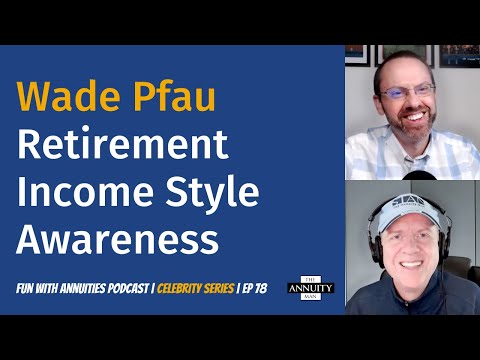
IN THIS EPISODE, THE ANNUITY MAN AND WADE PFAU DISCUSS:
- Success in retirement
- RISA - Retirement Income Style Awareness
- Funding long-term care
- Reverse mortgages and risk pooling
KEY TAKEAWAYS:
- Retirement doesn't only mean stopping work, it's about being able to do what you want.
- Three retirement strategies: Total return investment strategy, time segmentation or bucketing, or annuity and social security.
- These are the factors that determine which retirement strategy or style will work for you: probability-based or safety first; and optionality versus commitment.
- There is no ROI until you die, up until that point it’s a transfer of risk.
Retire to something, don’t retire from something.
"Retirement… doesn't have to mean just not working, it's about having financial independence to do what you want and be who you wanna be… it's about finding your passion and purpose. " — Wade Pfau
CONNECT WITH WADE PFAU:
Website: www.retirementresearcher.com | http://wpfau.blogspot.com/
LinkedIn: https://www.linkedin.com/in/wpfau/
Twitter: https://twitter.com/WadePfau
LISTEN ON ALL YOUR FAVORITE PODCAST PLATFORMS:
Libsyn: https://directory.libsyn.com/shows/view/id/theannuityman
Stitcher: https://www.stitcher.com/podcast/niceguysonbusiness/the-annuity-man-podcast#/
Apple: https://podcasts.apple.com/us/podcast/fun-with-annuities-the-annuity-man-podcast/id1482993601
Google: https://podcasts.google.com/feed/aHR0cHM6Ly90aGVhbm51aXR5bWFuLmxpYnN5bi5jb20vcnNz?sa=X&ved=0CAMQ27cFahcKEwjgu6j7suzrAhUAAAAAHQAAAAAQAQ Amazon: https://music.amazon.com/podcasts/11fec7ab-59ab-402f-94c7-93860e1694ae/Fun-with-Annuities-The-Annuity-Man-Podcast
Spotify: https://open.spotify.com/show/26y3c7vXgnhfmErLRP3zuM
CONNECT WITH STAN
Call Stan The Annuity Man: 800-509-6473
Website: http://theannuityman.com/
Email: [email protected]
Facebook: https://www.facebook.com/stantheannuityman/
Twitter: https://twitter.com/StanAnnuityMan
TikTok: https://www.tiktok.com/@theannuityman
Instagram: https://www.instagram.com/theannuityman/
Use the Calculators - https://www.stantheannuityman.com/annuity-calculator/
Get The Annuity Man's Books - https://www.stantheannuityman.com/how-do-annuities-work
Schedule a time to talk to Stan - https://www.stantheannuityman.com/book-a-call/
FUN WITH ANNUITIES (r)
- 0:00 Intro
- 0:39 Welcome Wade Pfau
- 3:34 Wades background
- 6:14 The 4 rule
- 10:12 Retirement Guru
- 11:06 COVID
- 15:43 Retirement Income Style Awareness
- 23:47 Contractual Guarantees
- 25:56 Lifetime Income Insurance
- 29:13 AssetBased Long Term Care
- 39:04 What does Grow mean
- 41:28 No Debt
- 43:41 Reverse Mortgage
- 45:02 Risk Pooling
- 49:12 Non Financial Aspects
- 53:40 The Future of Annuities
0:04
welcome to fun with annuities with your
0:06
host me stan the annuity man america's
0:09
annuity agent can annuities be fun can
0:12
contractual guarantees be fun
0:14
absolutely they can find out the brutal
0:17
facts about annuities with no sales
0:20
pitches or high pressure nonsense just
0:23
the brutal and factual annuity truth
0:25
which is all you need to hear
0:27
let's have some fun with annuities and
0:29
let's have that fun start right now
0:33
[Music]
0:39
welcome to fun with annuities i'm your
0:41
host stan the annuity man america's
0:43
annuity agent license in all 50 states i
0:46
want to welcome everyone on all the
0:47
major podcast platforms and also on the
0:49
fun with annuities youtube channel where
0:51
you can see me and the guest
0:53
interact and facial expressions and you
0:55
can check out how just utterly fantastic
0:57
fantastically good looking we both are
1:00
which is great um laugh laugh right
1:04
today's
1:06
guest is a
1:07
i'm so happy he's here um just because
1:10
for the consumers that are listening to
1:11
this
1:12
this person is the real deal he's the
1:15
true retirement expert his name is wade
1:17
found
1:18
a p-f-a-u
1:20
is the spelling of his last name
1:23
he's the miles davis and the jimi
1:24
hendrix of retirement research and
1:26
expertise obviously i'm a music guy
1:29
but that's who i i quite equate him to
1:31
he's in rarefied error if there was a
1:34
a mythical annuity mount rushmore his
1:36
face would be on it he is a professor of
1:39
retirement income at the american
1:40
college of financial services in king of
1:42
prussia pennsylvania
1:44
he also hosts the retirement researcher
1:47
website
1:48
and i would encourage you to go there
1:50
retirementresearcher.com we're going to
1:51
have all of his links
1:53
on the site so you can access those etc
1:56
he's the pr he's a principal and
1:58
director for mclean asset management he
2:00
holds a doctorate
2:01
of economics from princeton university
2:04
he's written so much stuff you can't
2:06
even start to count it hundreds of
2:08
articles hundreds of white papers and
2:10
research work he has four books that i
2:12
own all four
2:14
um the first one that he put out was
2:17
called
2:18
safety first retirement planning which
2:20
is an integrated approach for worry-free
2:22
retirement then he did one that was
2:23
fascinating called reverse mortgages how
2:26
to use reverse mortgages to secure your
2:28
retirement third book was how much can i
2:30
spend in retirement a guide to
2:32
investment-based retirement income
2:33
strategies and the fourth one that i
2:35
just got
2:36
retirement planning guidebook book
2:38
navigating the important decisions
2:40
for your retirement success once again
2:42
we'll have links to all of those where
2:44
you can buy them on amazon i would
2:45
encourage you if you're doing any type
2:47
of research on retirement
2:49
he has to be on your bookshelf with that
2:52
being said
2:53
welcome to fun with annuities
2:55
wade
2:56
fowl
2:57
well thank you it's a pleasure to be
2:59
here and thanks for that very nice
3:00
introduction
3:01
you've earned it you've absolutely i
3:03
don't know if you've ever been um
3:05
compared to jimi hendrix and miles davis
3:07
but
3:08
to me that's who you are
3:11
thanks so much
3:13
well let's let's um i want to kind of
3:15
break this interview up into kind of
3:17
three parts and the first part
3:18
i've never really seen done with you but
3:21
it's something that that i selfishly
3:23
want to know which is
3:25
who is the mythical weight foul
3:27
um who are you where are you from what
3:30
what what makes you tick who is wade
3:32
fowl the person
3:34
sure sure so well born in michigan
3:37
raised mostly in iowa
3:39
uh just i became interested in economics
3:42
and that really became my focus in grad
3:44
school
3:45
i i moved to japan and i worked as an
3:47
economics professor in japan mostly on
3:50
pension systems in developing market
3:52
countries but i wanted to move back to
3:54
the u.s and i started trying to find a
3:56
way to be marketable and just sort of
3:57
stumbled into financial and retirement
4:00
planning
4:01
my background in that regard i'm more
4:03
like from the investments world
4:05
just i i was studying for the cfa
4:07
designation as a part of wanting to move
4:09
back to the us and just really steeped
4:11
in
4:12
you know building a low-cost indexed
4:14
investment strategy
4:16
but then as i looked at the retirement
4:17
planning the first article i did kind of
4:20
from with that overseas experience i'd
4:22
heard about this four percent rule of
4:23
thumb
4:24
it's it's from the investment world it's
4:26
kind of the baseline of building a
4:28
retirement strategy you build a
4:29
portfolio of 50 to 75 stocks
4:32
you start taking distributions at four
4:34
percent of the account balance at
4:35
retirement and just keep doing that with
4:37
inflation adjustments that that amount
4:39
that you take out
4:40
and your money should last and i i had
4:43
data on 20 different countries and i was
4:45
curious because that that rule of thumb
4:46
is based on u.s data
4:48
and i found that it did work
4:49
historically in the us and canada but in
4:52
the other 18 countries it did not work
4:54
and the mileage varied in terms of the
4:57
international experience it really
5:00
would mean people think it worked 100
5:02
percent of the time in the u.s it was
5:03
really it worked about two-thirds of the
5:05
time when we look at that in aggregate
5:07
across the world so that really led me
5:10
down a path of thinking maybe
5:12
investments aren't always the right
5:14
solution in every circumstance for
5:16
building a retirement strategy
5:18
and i didn't have any background in
5:19
insurance or annuities but people
5:21
started saying well hey if you yeah you
5:23
know that there are there can be issues
5:25
with investments why don't you have a
5:26
look at annuities
5:28
and that's what then led me down that
5:29
path of looking into more depth and and
5:32
starting to then recognize too that we
5:34
really have completely different
5:36
viewpoints out there of in terms of
5:39
people can ask basic questions about
5:41
retirement and give completely opposite
5:43
answers
5:44
and
5:45
either approach can be valid it really
5:47
what works for you as an individual but
5:49
certainly
5:50
i came to see through the kind of doing
5:52
simulations and so forth that annuities
5:54
definitely have a strong case that can
5:56
be made for them
5:57
in terms of providing a tool to help
6:00
sustain retirement spending over a
6:02
potentially very long retirement and
6:04
that's kind of then just being agnostic
6:07
and and considering all the different
6:09
approaches to retirement income and
6:10
certainly then seeing the value of
6:12
annuities and insurance is part of that
6:14
so the fork in the road was the four
6:16
percent did that just trigger something
6:18
in you to say wait a minute why is this
6:20
such a known and accepted
6:23
um statement because my background i
6:24
work for dean witter morgan stanley
6:26
payne webber and ubs on the stock
6:28
investment side become before i became
6:30
the mythical stand the annuity man
6:32
is that what really said you just kind
6:34
of head slap moment and go wait a minute
6:36
that that didn't make sense let me look
6:37
into that was that the time was that
6:39
really the
6:40
when you just kind of started digging in
6:43
yeah because i didn't really have a
6:45
clear i didn't know a lot about
6:47
financial planning
6:48
in academics it's a new field the first
6:50
phd program in financial planning that
6:53
began at texas tech university in the
6:54
year 2000 it's not
6:56
so when i was in well i was in grad
6:58
school around that time but i it wasn't
7:00
even on my horizon so that's yeah
7:03
starting to look at how this sort of
7:05
practitioner-based approach to
7:06
retirement work
7:08
works and then seeing
7:09
you know the the four percent rule going
7:12
down that path was just looking at it
7:13
with the international data
7:15
that led me down this path of more
7:17
generally seeing issues because some
7:20
people will challenge that international
7:21
data and say well we live in the us i
7:24
mean assuming that's true and we invest
7:25
in the us it doesn't really matter like
7:28
if bill bengan the creator the four
7:29
percent rule had been italian
7:31
and he was looking at italian stocks and
7:33
italian bonds the four percent rule only
7:36
worked about 25 percent of the time
7:38
historically not 100 of the time but who
7:41
the argument would be who cares about
7:42
that we live in the us we have us data
7:45
and this can start getting philosophical
7:46
but i think
7:48
because there's so much uncertainty in
7:49
financial markets there's value at
7:51
looking at a broader international
7:52
experience
7:54
but then that just opened so many other
7:55
doors too like now interest rates are
7:58
lower than they ever were in that
7:59
historical data that gave us the four
8:01
percent rule and that's huge and a
8:04
mathematical certainty if interest rates
8:06
are low
8:07
bond yields our bond returns will be low
8:10
and you can't spend as much from a bond
8:12
portfolio
8:13
we see the same issue with the stock
8:14
market and so forth so i just developed
8:17
all these concerns
8:18
that just having everyone go into
8:20
retirement with 50 to 75 stocks
8:23
and having the viewpoint that it will be
8:25
fine because u.s historical data showed
8:27
that it worked
8:28
i i didn't think that was going to be
8:29
for everyone and yeah that that was
8:31
really the starting point for all that
8:33
that's fascinating because when you
8:34
bring that up i'm now thinking well in a
8:36
in a balanced portfolio where you have
8:38
international exposure in the global
8:40
marketplace where everything's
8:41
interconnected
8:42
and we're on you know we're on a
8:44
real-time basis with everyone yeah the
8:46
four percent rule based upon the
8:48
research that you have have laid out
8:50
that doesn't work and i applaud you for
8:52
not just
8:53
you know that's that's your background
8:54
is not to take everything
8:56
at face value is to dig in and make sure
8:58
it's true but i think you've done the
8:59
public a good service because
9:02
you have given validity
9:04
uh from a math and research and um
9:08
just a an educated standpoint on
9:10
annuities because in the annuity
9:12
industry as you know has earned its bad
9:13
reputation
9:14
on some of the sales practices and all
9:16
sales environments have good and bad
9:18
people in it but i think you've you've
9:20
definitely added the foundation that
9:22
when you're talking about it there's no
9:24
sales pitch it's it's math and for you
9:27
it's math um a couple other questions
9:30
before we get dig in
9:32
non-retirement plan guru hobbies what
9:35
what is what does wade foul do when he
9:38
says i don't want to talk about
9:39
annuities in retirement what do you do
9:42
i have three young children now so that
9:44
definitely takes
9:46
a lot of time but
9:47
i mean watching some during the pandemic
9:50
watching shows with them we just we'd
9:52
gone through adventure time i thought
9:53
that was really good cartoon for kids
9:55
and for adults and
9:57
uh with hobbies beyond that i've always
9:59
had an interest in things like amateur
10:01
radio shortwave radio so that's really
10:03
the internet has
10:05
to some extent killed out that entire
10:07
hobby
10:08
uh as an option for people but yeah i
10:10
mean that that's that's me spending time
10:11
with kids that's neat do you consider
10:13
yourself a um
10:15
a lifer in this retirement guru space
10:18
that you that you dominate is this a
10:20
passion do you wake up and does it keep
10:22
you going
10:24
because it really does come from
10:27
real to some extent what started me in
10:28
all this was just curiosity about my own
10:31
saving i've always been a saver and so
10:33
always been interested and then
10:35
understanding how to invest that and i'm
10:37
not yet at the retirement phase myself
10:39
but that naturally extends and if you're
10:41
thinking about saving and planning for
10:43
the future how do you then build a
10:45
retirement strategy around that so that
10:47
that really did
10:48
motivate me with the early research and
10:50
as i've done more and more into it yeah
10:52
all the different aspects of retirement
10:54
income planning like
10:55
even now things like how you medicare
10:57
decisions and everything else i find it
10:59
all very interesting because it all
11:01
interconnects and fits together when
11:03
you're thinking about how do i build a
11:04
complete retirement plan
11:06
and your last book really dives into
11:09
long-term care medicare medicaid and and
11:11
those type of planning which
11:13
a lot of um a lot of people don't go
11:15
into and and work you're working that
11:17
into the whole retirement plan thought
11:19
and process one last personal question
11:20
before we dig into the meat of the
11:22
matter
11:23
um
11:25
how is covid at the time of this taping
11:28
we're still dealing with coven and the
11:30
delta variant
11:31
how has that affected
11:32
your work your outlook
11:35
um
11:36
or has it it might not have has it or
11:38
has it not affected you
11:41
not from a personal basis but just kind
11:43
of how you're viewing retirement
11:45
um and how you're
11:47
speaking with people as you go out and
11:49
and you're speaking in front of either
11:51
agents and advisors or consumers
11:53
has it affected you at all from that
11:55
standpoint
11:57
it has on a few different levels and and
12:00
one is just along with covid we just
12:02
interest rates they were already low and
12:05
they've dropped even lower and it's
12:07
like just shocking that you can't get
12:09
inflation protection anymore without
12:11
taking on market risk
12:13
and so that's been a huge issue of just
12:16
how do retirees transition their wealth
12:18
into income because interest rates are
12:20
just simply so low
12:22
uh yeah i'm at a professional level i i
12:25
moved to i live 10 minutes from dallas
12:27
fort worth airport now because i did so
12:29
much business travel and now
12:31
that's not helpful for me anymore
12:32
because i have not been
12:34
on a business trip at this point since
12:36
the end of february 2020 but
12:39
so so there's that aspect but doing a
12:41
lot more on the internet and
12:43
yeah i mean just yesterday i was doing a
12:45
workshop about budgeting for retirement
12:48
and
12:48
someone was asking me about well i don't
12:50
i haven't been doing this is it okay to
12:52
just use the recent expenses and just
12:55
trying to emphasize i think a lot of
12:56
people did spend less in 2020 it was not
12:59
a normal year for them
13:01
so they have to be careful if if they
13:03
are thinking about well how much did i
13:05
spend in 2020 that might not truly
13:07
reflect their retirement budget excuse
13:09
me because they might want to do a lot
13:11
more travel or a lot more like
13:12
restaurants and things and so the amount
13:15
they spent in 2020 might give them a
13:17
misguided view about what a good
13:19
retirement can be
13:21
and i do worry about like people who are
13:23
at retirement right now and maybe at
13:24
their peak years for doing all those
13:26
things they wanted to do the
13:27
international travel
13:29
and so forth and yeah i mean that's
13:31
that's a concern that
13:33
people aren't getting that opportunity
13:34
to take full advantage of their
13:36
retirements if they're right that's
13:38
where they are right in their life cycle
13:40
when all this is happening
13:41
got it i mean
13:43
interest interesting take on that as i
13:45
said before and we were talking
13:47
previously before the recording
13:49
um the people that are listening to this
13:51
primarily are consumers yes there are
13:52
some agents and advisors that listen
13:54
because i'm standing annuity man they
13:55
want to see what i'm doing
13:57
but 99 of consumers and they are either
14:00
retired getting ready to retire thinking
14:01
about retirement trying to spell
14:03
retirement planning for retirement and
14:05
as you know there's a demographic tidal
14:07
wave happening right now 10 000 baby
14:08
boomers reaching age 65
14:11
um every single day so it's it's you
14:14
know the annuity industry is in front of
14:17
um
14:18
you know that demographic tidal wave and
14:20
they have products that can transfer
14:22
risk and guarantee income and
14:24
and address long-term care and principal
14:26
protection those type of things you know
14:29
from a broad definition standpoint
14:31
of say retirement success and i know
14:34
we're kind of getting to the end of the
14:37
of the book
14:38
and missing the start but we'll get
14:39
there what's your definition of a
14:41
person's retirement success
14:44
to be able i think you know partly like
14:47
what does retirement mean and it doesn't
14:49
have to mean just not working it's
14:51
really like having the financial
14:53
independence to do what you want
14:55
and and to be who you want to be and you
14:57
know if that involves working that's
14:59
fine
15:00
you can still be retired but you're
15:02
you're not driven by the need for income
15:04
necessarily from work you have other
15:07
assets that can can do that for you so
15:10
it's really about finding your your
15:11
passion and your purpose
15:13
and feeling comfortable that you have a
15:16
plan that will last for you a lot of
15:18
people are worried about market
15:19
volatility they're worried what if i
15:22
live to 95 or 100. so having a plan in
15:25
place that gives you the comfort that
15:26
your you will be protected in that type
15:28
of circumstance
15:30
and having them the comfort to really
15:32
take advantage of your retirement
15:34
fulfill your purpose and your passion
15:35
and
15:36
do what really motivates you and makes
15:38
you happy and gets you up in the morning
15:40
i think that's that's a big part of it
15:43
one of the things i applaud you on that
15:45
you've done well
15:47
is to
15:48
amongst tons of things but the one that
15:50
jumps out to me is is
15:52
understanding a person's retirement
15:55
income style and why that's important
15:58
in fact it's risa is kind of the acronym
16:01
you you use which is retirement income
16:03
style awareness
16:06
and it really is that's helping in
16:08
essence that the english version of that
16:09
is helping people to position
16:12
annuities if they fit and are suitable
16:14
and appropriate in retirement planning
16:16
can you
16:17
give us that thirty thousand foot view
16:20
and and help the the listeners and
16:21
viewers understand
16:23
why having a person personal retirement
16:26
income style is important and what those
16:28
are
16:29
yeah yeah absolutely and we we call it
16:31
resa the retirement income style
16:33
awareness it it means smile in spanish
16:36
and it's really been something
16:39
kind of percolating for a long time i
16:41
think in general we've known for a long
16:43
time there are different well we've
16:44
already been talking about it like for
16:46
some people a retirement strategy is
16:48
this kind of let's invest a total return
16:50
investing strategy 50 to 75 percent
16:53
stocks take distributions that's one
16:55
kind of strategy
16:57
another one is it's called either time
16:59
segmentation or bucketing which is where
17:01
we think about let's build bonds and use
17:04
bonds to cover our short-term expenses
17:06
and then that gives us a window where we
17:08
can invest the rest in the stock market
17:10
and if the market goes down we have this
17:12
time to wait for the recovery and
17:14
hopefully have our stocks recover before
17:16
we have to have to sell them and so
17:18
that's another kind of retirement
17:19
strategy
17:20
then we have the different kinds of
17:23
essential versus discretionary or it
17:25
goes by different names like flooring
17:26
but it's thinking about
17:28
for my core retirement expenses i may
17:30
not be comfortable taking a lot of
17:31
market risks so that's where an annuity
17:34
can play a role and you have social
17:35
security and then if you still like to
17:37
have some additional protected income
17:40
different types of annuities can fill
17:41
that role
17:42
and that's as well as you know of course
17:44
like simple kinds of income annuities
17:47
and then possibly the different types of
17:48
deferred annuities with the the living
17:50
benefits that give you the protected
17:52
income also with some upside potential
17:55
and and some well having liquidity for
17:58
so you can still get access to those
17:59
funds you're not signing away that money
18:01
forever necessarily mm-hmm and those so
18:04
the styles are that it's do i want to
18:06
take that total return investing
18:08
strategy do i want a bucketing strategy
18:10
or do i want a strategy where i build a
18:12
floor of reliable income through an
18:14
annuity
18:15
and in the past we've never really had a
18:17
way to help guide people towards one of
18:20
those strategies or to understand what's
18:21
best for them it's
18:23
so many different like speakers whether
18:26
it's the consumer media financial
18:28
advisors who may have websites or radio
18:30
shows
18:31
personal finance bloggers
18:33
they have a particular style in mind
18:34
that they tend to think works best for
18:37
everyone and that can lead to a lot of
18:39
mismatching or failed plans or people
18:42
doing something and then later doing
18:43
something different
18:45
and so with alex mcgee as a part of a
18:47
retirement researcher
18:49
we did this study of could we
18:51
figure out how to ask people questions
18:54
in a way
18:55
that will help guide them towards a
18:57
style that that resonates with them that
18:59
works with them because at the end of
19:01
the day an annuity is not right for
19:03
everyone but it's going to be right for
19:04
some people and also
19:06
a total return investment strategy is
19:08
not going to be right for everyone but
19:10
it's going to be right for some people
19:12
and we need to figure out what works for
19:14
who
19:15
and in the process of doing that study
19:17
we were able to identify really there's
19:19
six factors that help to explain a style
19:23
now two of them are the most important
19:25
the other
19:26
four are helping to tell the story but
19:28
but the most important ideas are
19:31
we call it probability based or safety
19:32
first
19:33
am i comfortable relying on the stock
19:35
market to fund my retirement or would i
19:37
prefer some sort of contractual
19:39
protection to help support my retirement
19:42
and then the other big factor is
19:44
optionality versus commitment
19:46
do i want to keep my options open as
19:48
much as possible to make any sort of
19:50
change that i want to or am i more
19:52
comfortable committing to a strategy
19:54
that i know will work that i can kind of
19:56
check it off my list don't have to be as
19:58
worried about it at that point and
20:00
and just enjoy my retirement not i can
20:03
give up some of the potential
20:04
flexibility because i know i have a
20:06
strategy that will work
20:08
and then when you look at those
20:09
combinations it's what really shocked us
20:12
when we were doing that was how well
20:13
they fit into
20:15
our existing retirement strategies and
20:17
how well even the stories behind those
20:19
strategies
20:20
makes sense
20:21
so
20:22
people who are probability based relying
20:24
on market growth
20:26
also there's a correlation with they
20:28
also tend to be more optionality focused
20:30
they want to keep their options open
20:32
and that's that's a total return
20:34
investing strategy rely on market growth
20:36
keep your options open
20:37
and then the other big one though would
20:39
be the the opposite of that someone
20:41
who's more safety first wanting
20:43
contractual protections
20:45
and is more comfortable committing to a
20:46
strategy and we call that the income
20:49
protection style
20:50
and that's the world of really looking
20:52
at like simple income annuities building
20:55
a lifetime income floor having that
20:56
reliable income
20:58
and then using the investments on top of
21:00
that for discretion for more like
21:02
discretionary types of expenses
21:04
but having that secured lifetime
21:06
protected income floor to cover your
21:08
basics
21:09
and those are the two core strategies
21:11
and this is where it's like really
21:12
interesting so something like time
21:14
segmentation
21:15
it's more of a behavioral strategy in
21:18
that
21:19
it's not really rational but it was
21:21
designed to help
21:23
provide for certain concerns that don't
21:25
necessarily correlate with each other
21:27
and those were
21:28
somebody who wants contractual
21:29
protections but also wants a lot of
21:31
optionality
21:32
you don't
21:34
if you're going to sign a contract you
21:35
don't really think you're going to get a
21:37
lot of optionality but that's what that
21:39
bucketing strategy does it's
21:42
i use individual bonds to get
21:44
contractual protections for the short
21:45
term
21:46
it's not giving me any lifetime income
21:48
but then i have that growth portfolio to
21:50
cover me over the long term and i keep
21:52
all that optionality for that growth
21:54
portfolio
21:55
and then the other one it's as you know
21:57
since the 1990s we've developed this
21:59
entire universe of deferred annuities
22:02
with the living benefits
22:04
and we call that risk wrap it's people
22:06
who
22:07
are more comfortable with market growth
22:09
but also want to have some more
22:11
commitment to a strategy and and to
22:13
really flesh that out too with some of
22:15
the secondary factors
22:17
they also they're they're more worried
22:18
about living their wealth so they want
22:20
to more backload or protect their future
22:22
spending
22:23
they're thinking in terms of the
22:24
technical liquidity that
22:26
the asset just
22:29
an important aspect of retirement is you
22:31
have to match assets to their expenses
22:33
and even though like a brokerage account
22:35
is liquid it may not be truly liquid if
22:37
you've earmarked it to cover your future
22:39
spending and that kind of mindset is the
22:41
same with an annuity where technically
22:43
it's liquid but you're marking that
22:45
asset to cover the future spending
22:47
and and that but all these
22:48
characteristics that's describing
22:51
a deferred annuity with a living benefit
22:53
and and so now we can really understand
22:55
based on how someone ranks with these
22:58
two primary factors
23:00
now we have a starting point for a
23:01
discussion
23:02
is
23:04
are you going to resonate better with a
23:05
total return investing strategy are you
23:07
going to resonate better with an income
23:09
protection strategy that builds that
23:10
lifetime protected income floor with an
23:12
annuity
23:13
are you someone who might think more in
23:15
terms of the deferred annuities so you
23:17
can combine the protection with the
23:19
upside potential and the same annuity
23:21
product
23:22
are you someone who likes that bucketing
23:24
approach that resonates with you that
23:27
you feel comfortable with the idea that
23:28
if i can just hold on to my stocks for
23:30
long enough they should go up before i
23:33
actually have to tap into them
23:35
and that becomes a starting point for
23:36
the conversation that now we know which
23:39
strategy resonates with you
23:41
and how can we then best serve that
23:43
strategy and get you a strategy that
23:45
will work for what you want
23:47
makes total sense and you and moshe
23:49
milevsky have been a very um you've been
23:51
a motivator for how i've built my
23:53
business in sight which is trying to
23:55
match people with the correct
23:57
contractual guarantee i've kind of
23:58
narrowed it down to two questions ask
24:00
people what do you want the money to
24:01
contractually do
24:02
and when you want those contractual
24:04
guarantees to start then from there i
24:06
can either determine whether they either
24:07
need an annuity and if so what type will
24:10
provide the highest contractual
24:11
guarantee which comes back to what
24:13
you're talking about which is how can
24:16
people find the right plan for their
24:17
specific situation it comes down to and
24:20
i think you're correct figuring out who
24:22
you are as the consumer because the
24:24
annuities are not one size fits all even
24:26
though people think they are correct
24:29
right right and there's so much like
24:30
variation with annuities and i know from
24:32
reading your work that you're very
24:34
focused on look at just what is the
24:35
minimum downside guarantee
24:38
the the upside potential may or may not
24:40
happen don't definitely don't count on
24:42
it right certainly that's a very valid
24:44
view but i i think then
24:47
of course those annuities with that
24:48
upside potential are still popular and
24:50
it's it's more
24:52
how i view that with the retirement
24:53
income style awareness
24:55
the more you lean towards the safety
24:57
first side and this is all you're on the
24:59
commitment side already but then the
25:00
more you lean towards safety first
25:02
the more you emphasize the downside
25:05
protections so this the single premium
25:07
immediate annuities the deferred income
25:08
annuities the uh
25:10
fixed index annuities that that sort of
25:12
thing
25:13
and then as you shift you're still in
25:15
the commitment part but as you shift to
25:16
the
25:17
uh probability based side
25:19
that's where you may be open to like the
25:21
variable annuity that might have less
25:24
downside guaranteed protection
25:26
but
25:27
as a trade-off gives you more upside
25:29
potential that of course may or may not
25:30
happen
25:31
but you're more comfortable kind of than
25:33
rolling the dice thinking you will get
25:35
some of that upside potential
25:38
and that because you're more comfortable
25:40
relying on market
25:41
i mean we on on average we certainly
25:43
think the stock market will outperform
25:45
the bond market it's just we never know
25:47
for anyone's retirement
25:49
if that's actually going to happen for
25:51
them the way they're they're hoping and
25:52
so that's how we have to decide what are
25:55
we going to do in that regard
25:56
i always ask people do you need lifetime
25:58
income insurance some people need life
26:00
insurance some people don't some people
26:01
need lifetime income insurance some
26:03
people don't
26:04
but that's the monopoly that in the
26:06
annuity category has which is that
26:07
transfer risk pension like payment
26:10
um i really wish the annuity industry
26:12
would lean a little bit more heavily
26:14
from the standpoint of promotion
26:16
to tell people you know you already own
26:18
an annuity type which is social security
26:20
because it's a lifetime income stream so
26:22
you just can't cavalierly say you hate
26:23
all annuities which makes me laugh
26:26
let's talk a little bit about
26:28
the long-term care medicare medicaid
26:31
portion of that because
26:33
most
26:35
most advisors either
26:37
don't talk about that shy away from that
26:39
i was so happy to see that you addressed
26:41
that in detail in your latest book
26:45
can you dig into that for us
26:47
sure sure when it comes to long-term
26:49
care
26:50
there's really four ways you can think
26:52
about funding long-term care
26:54
you can build up additional reserves to
26:57
try to self-fund that i just say okay
26:59
i'm gonna
27:00
earmark or say i want this much
27:02
additional money as part of my
27:04
retirement assets before i'm comfortable
27:06
retiring
27:08
just in case i experience some long-term
27:10
care event in the future so that would
27:12
be self-funding
27:14
a lot of americans don't really have
27:16
enough financial assets to self-fund
27:19
their long-term care should they
27:21
experience a need to spend like several
27:23
years living in a nursing home or other
27:26
institutional setting so that's where
27:28
medicaid can step in and that's not not
27:31
medicare because medicare does not cover
27:32
long-term care
27:35
but medicaid is once i've spent down all
27:37
my
27:38
uh well there's a whole lot of rules
27:40
around it but sure effectively once i
27:41
spent down my assets and in income
27:44
then medicaid will help to pick up bills
27:46
for long-term care expenses
27:48
and if i am somewhere in the middle
27:51
where or even if i could potentially
27:53
self-fund but i can see the value of
27:56
you know with thinking ahead about the
27:58
inheritance i'm going to leave not
28:01
wanting to be worried about whether i
28:02
get care because i'm worried i'm
28:04
spending the child's inheritance or
28:06
something
28:07
long-term care
28:08
insurance can step into the picture and
28:10
there's the traditional long-term care
28:12
insurance which has made a lot of people
28:15
uncomfortable because there's a lot of
28:16
aspects of it that are
28:18
um challenging in terms of rising
28:20
premiums and lapsing with the policies
28:23
where it's you're no longer holding it
28:25
when you actually need it and so forth
28:27
but then now we're seeing more and more
28:29
growth with that like they're called
28:30
hybrid or it doesn't have a clear name
28:33
different types of hybrid products right
28:35
either with an annuity and and i don't
28:37
know a lot about the different hybrid
28:39
annuity products but more so on the life
28:41
insurance side sure that you can have
28:43
permanent life insurance that either
28:45
allows you to spend down the death
28:47
benefit of the insurance for a long-term
28:49
care need
28:50
or may even go above and beyond that and
28:53
provide some sort of well first you
28:54
would spend down the the death benefit
28:56
portion but then you might have an
28:58
additional continuation of benefiter to
29:00
support
29:01
additional long-term care
29:03
and those are the four basic options
29:05
self-fund medicaid traditional insurance
29:08
and hybrid life insurance long-term care
29:11
or annuity long-term care and the hybrid
29:14
that wade's talking about what we call
29:16
that asset-based
29:17
long-term care a lot of people are under
29:18
the assumption that you know they pay
29:20
they pay they pay and if they don't use
29:22
it money goes poof
29:24
with the asset-based coverage for
29:26
long-term care which i applaud the
29:27
industry for pivoting and listening to
29:29
the consumer
29:30
um you're not gonna you're not gonna
29:32
lose that asset you you're gonna have
29:33
the coverage and somebody in your family
29:35
is gonna get it which i think
29:36
is fantastic their second book kind of
29:39
blew me away
29:40
when it came out because i thought it
29:42
was brave and i thought
29:45
it was so outside the box because at the
29:47
time you wrote it
29:49
reverse mortgages was the wild wild west
29:53
and it might still be we don't see as
29:55
many ads for it we see the joe namaste
29:57
of the world you know or some celebrity
29:59
that's
30:00
no longer
30:02
a big celebrity is pushing uh that the
30:04
the 65 year olds understand and
30:07
recognize pushing reverse mortgages or
30:09
at least looking at it like a tom
30:11
selleck mm-hmm yeah and i think joe
30:13
namath is medicare advantage okay
30:15
i'm getting them all
30:17
i'm getting all mixed up okay uh you
30:19
know 20 years from now to be way nice
30:21
sitting on the couch going you ever
30:23
thought about an annuity
30:26
but the reverse mortgage thing is
30:28
interesting i want you to kind of dig
30:29
into that because a lot of the you know
30:31
the people listen to this they're
30:32
sitting on
30:34
a big asset which is their home
30:37
and i thought you were just brave as
30:39
heck to just say okay let's talk about
30:40
this from a mass standpoint from an
30:43
asset standpoint from a retirement
30:45
planning standpoint
30:47
wade let's talk about let's get your
30:49
take on reverse mortgages sure sure and
30:51
it's really the same story as annuities
30:54
in terms of the consumer perception
30:56
isn't always incredibly positive
30:58
so i do get a lot of tomatoes thrown at
31:00
me but
31:02
it's the same story though it's
31:04
it's about retirement planning risk
31:06
changes in retirement people now have to
31:09
support their lifestyle over an unknown
31:11
period they don't know whether they'll
31:13
live five more years or 45 more years i
31:16
mean i guess depends on their retirement
31:17
age but they don't know how long they're
31:18
going to live and then
31:20
the market volatility and the way they
31:22
thought about investing
31:24
changes when they start to spend from
31:26
their assets there's this idea called
31:28
sequence of returns risk that if
31:30
if you're spending from your investments
31:32
and the market goes down
31:34
you have to sell a bigger percentage of
31:36
what's left to meet your spending need
31:38
and that digs a hole for the portfolio
31:39
that can be very difficult to to dig
31:42
yourself back out of
31:43
and so the way people think about
31:44
investing when they're saving for
31:46
retirement
31:47
that that that volatility we experience
31:50
with investing really gets amplified in
31:51
retirement
31:53
and so that's where it just opened the
31:56
door about okay let's look at this in
31:58
terms of
31:59
annuities first and then i
32:02
reverse mortgages later it was a very
32:04
interesting tool for me to look at
32:05
because it happened
32:06
there how did that i mean it was it just
32:08
natural and you or you saw you saw um
32:12
tom selleck or whoever that was on i
32:14
mean did you go wait why is tom selleck
32:15
talking to me why is why is magnum pi
32:17
talking to me how did this happen
32:19
uh it was something i'd already i had
32:22
always been meaning to look at and then
32:23
uh but
32:25
there's a research team at texas tech
32:27
university john salter hail davinsky
32:29
sean pfeiffer
32:31
john salter deana katz don't forget dina
32:34
yes she she's parted absolutely
32:36
he sent me a stack of articles about
32:38
reverse mortgages and invited me to a
32:40
meeting where they were going to be
32:41
talking about it and as i was on the
32:42
flight to that meeting
32:44
just reading through that stack of
32:45
articles is the the first time i'd
32:47
really
32:48
paid much attention at all up to reverse
32:50
mortgages but i thought it was just
32:51
really fascinating and then i started
32:54
writing programs to test the results of
32:56
the past research studies in that area
32:59
found that all that played out i mean
33:01
there was truth to the idea it can help
33:03
manage sequence of returns risk
33:05
and it's you see as a parallel
33:07
conversation sometimes in the time
33:09
segmentation world as well where
33:12
when the markets are down if i can spend
33:15
from my reverse mortgage line of credit
33:17
that will kind of give me a bridge or a
33:19
buffer to allow more time for my
33:21
portfolio to recover
33:23
and i found that that really does help
33:24
manage sequence of returns risk so
33:26
reverse mortgages can be expensive to
33:28
set up it's true
33:30
but in the long run what i find is you
33:33
can increase the the chances that your
33:35
financial plan will work and it doesn't
33:38
really eat into your legacy in the long
33:40
term that like the kind of these two
33:42
metrics are
33:43
will i meet my spending goals in
33:44
retirement and then how much money will
33:46
i have at the end so the reverse
33:48
mortgage
33:50
you're borrowing from your home equity
33:52
but you're better protecting your other
33:54
assets so that at the end your other
33:57
assets plus your home equity minus your
33:59
loan or plus your home value minus the
34:02
loan that is due on the reverse mortgage
34:05
can be higher
34:06
than if you just simply didn't do
34:08
anything or weighted the the last resort
34:10
option is if you just simply wait until
34:12
everything else has failed and then open
34:13
reverse mortgage
34:15
that doesn't work as well as setting it
34:17
up earlier you become eligible at age 62
34:20
and so setting it up
34:21
earlier once you're in a home that you
34:24
think you'll stay in and continue to
34:26
live in
34:27
the the secret sauce is this idea of a
34:29
growing line of credit
34:30
that
34:32
it's a it's an extra special advantage
34:34
of reverse mortgages that really help to
34:36
explain why
34:37
setting it up early and letting that
34:39
line of credit start to grow
34:41
and it's a it's a non-recourse loan this
34:43
is where doing the research about it is
34:45
interesting
34:46
even if the loan balance grows to be
34:48
higher than the value of the home
34:50
you're not forced to pay back more than
34:52
95 of the appraised value of the home at
34:55
the time the loan becomes due
34:58
and you're paying the the reason why we
35:00
talk about reverse mortgage as being
35:01
expensive it's primarily the mortgage
35:03
insurance premiums that you're paying as
35:05
a part of that
35:06
but that provides one of the the
35:08
benefits it provides you is the
35:10
protection of this that it's a
35:12
non-recourse loan you don't have to pay
35:14
back more
35:15
than the home is worth
35:16
and so when you build that into the
35:18
simulations about retirement too
35:20
it's a really powerful strategy
35:22
just like an annuity just it's a way to
35:24
help manage these retirement risks
35:26
that people aren't always thinking about
35:28
because they're they're used to the
35:30
accumulation pre-retirement
35:32
investing and not to what happens
35:34
post-retirement
35:36
and it speaks to why a reverse mortgage
35:38
can help or why an annuity can help and
35:40
why you really have to think more
35:41
holistically about all the household
35:43
assets
35:44
and not just get too focused on some
35:47
sort of investing strategy alone
35:50
fascinating and i think it's interesting
35:52
that
35:54
both annuities and reverse reverse
35:57
mortgages i mean the the
35:59
misconceptions misperceptions out there
36:01
are just horrific in a lot of cases
36:04
so you're saying at age 62 you should at
36:07
least be
36:08
thinking about or visiting or looking
36:10
under that rock to see if that makes
36:13
sense and at least establishing that am
36:15
i right
36:17
yeah it's definitely worth having a look
36:19
at it and if you are planning to move in
36:21
the next couple of years it's probably
36:23
worth waiting until you're in a home
36:24
that you anticipate staying in because
36:26
of the there's a large upfront cost to
36:28
set it up
36:29
so it works better if you're planning to
36:31
stay in the home a long time
36:33
and then also for couples
36:35
if you're close to the same age you have
36:37
to be at least 62 to be a borrower on
36:39
the loan
36:40
so there could be value to waiting until
36:42
both members both individuals reach age
36:45
62 first
36:46
but then yes absolutely even
36:50
as a part of a responsible retirement
36:52
income plan so even if you have a
36:54
sufficient amount of assets that you're
36:56
unlikely to run out of money the reverse
36:58
mortgage can still help to improve your
37:00
outcome so that you can
37:02
meet your spending goals but also then
37:05
in the end leave a larger legacy behind
37:07
as well by being more strategic in how
37:09
you approach
37:10
the retirement planning process
37:12
it's an unknown retirement insurance
37:15
lever
37:17
that you can access that most people
37:18
don't feel like accessing and i think or
37:21
don't even know
37:22
um if you were going to explain setting
37:24
up a reverse mortgage to a nine-year-old
37:26
no offense to nine-year-olds of course
37:28
how would you explain that because i
37:30
know a lot of people on here on this
37:32
i've heard of it not thought of it and
37:34
now wade fowl
37:36
and they found out you wrote a book on
37:37
it is saying hey you might want to look
37:39
into this explain
37:40
30 000 foot view just what you're doing
37:43
with the home
37:44
so when you set it up and if you set it
37:46
up around age 62
37:48
based on where like interest rates are
37:50
right now and
37:52
you'll you get access to about 40 to 50
37:55
percent of the home value that then
37:57
becomes a line of credit
37:59
that will grow over time throughout your
38:01
retirement
38:03
and you can just spend from it as you
38:04
wish and it's it's proceeds from a loan
38:07
so it's not taxable income and also that
38:09
can help with some tax management
38:10
strategies too where
38:12
if you're going to go into a higher tax
38:14
bracket you might tap into the reverse
38:16
mortgage as a spending source that won't
38:18
push you into the higher tax bracket and
38:20
so forth but it's a way to just create
38:22
liquidity for your home equity
38:24
so that you can also spend just like you
38:26
spend from your investment portfolio
38:29
you can also spend from your reverse
38:30
mortgage and balance those or coordinate
38:33
them in a way that like when the stock
38:35
market's doing well go ahead and spend
38:37
from your investment portfolio but if
38:38
the stock market has a downturn
38:40
maybe tap into the reverse mortgage that
38:42
year and by being able to better manage
38:45
that it's just helping you better manage
38:47
the overall retirement situation
38:49
and better manage the the sequence of
38:52
returns risk this idea that a market
38:54
downturn can impact you more in
38:56
retirement
38:57
if you're forced to continue spending
38:59
from the the declining investment
39:00
portfolio
39:02
in those circumstances
39:04
and when you say grow for the listeners
39:06
and viewers they're yelling i'm sure
39:07
they're yelling at the the speaker going
39:09
grow what does that mean way tell me
39:11
what grow means
39:12
right so probably everyone can
39:14
understand that if i borrow money the
39:16
the loan balance will grow
39:19
the cool planning aspect of the reverse
39:21
mortgage and i think it was
39:23
an unintended consequence
39:26
the assumption was if you open a reverse
39:27
mortgage you are probably borrowing from
39:29
it
39:30
and so then this growth would just be
39:31
the growth of your loan balance
39:33
the cool planning aspect of the reverse
39:35
mortgage is you can open it up
39:38
but you don't well you have to keep like
39:40
a 50 balance at least or maybe a hundred
39:42
dollars with some company you have to
39:43
have some minimal balance but otherwise
39:45
you don't have to borrow from it
39:47
and so you have this principle limit
39:50
which is what you've borrowed plus
39:51
what's left over in the line of credit
39:54
and that's the thing that's really
39:55
growing at some rate over time
39:58
so if if you open it and you don't
40:00
borrow from it
40:01
your line of credit is growing like the
40:04
loan balance would have been growing
40:06
and then that's what grows and so then
40:09
later you have more line of credit that
40:11
you can tap into
40:13
and at some point there was a big
40:16
it so something happened with social
40:18
security that then happened with reverse
40:20
mortgages
40:21
in the early 2010s people figured out
40:23
all these cool planning strategies where
40:25
you could get extra spousal benefits out
40:27
of social security
40:28
and then the government shut that down
40:30
and 20 started phasing it out in 2015.
40:33
well this line of credit growth was
40:35
amazing i had written an article
40:38
probably in 2015
40:40
about how there's like a 50 chance that
40:43
line of credit could be worth more than
40:44
the value of the home in about 20 years
40:47
and then in 2017
40:49
the government caught up and changed
40:50
some of the parameters around that
40:52
so everything i'm talking about is still
40:54
true that's just not as shockingly
40:56
amazing as it was pre-2017 i had to
41:00
there's a second edition of my reverse
41:02
mortgage book because i had to entirely
41:04
rewrite it after that 2017 rule change
41:06
but everything i'm talking about right
41:08
now is thinking more in terms of the
41:09
current rules which is still
41:11
it's not as likely that that line of
41:13
credit will grow to be worth more than
41:14
the home
41:15
but it does grow and and it does speak
41:18
to the the value of opening it sooner
41:20
and letting that line of credit grow
41:22
rather than waiting until later and
41:24
opening it
41:25
and and missing the line of credit
41:27
growth during that period
41:28
what a great strategy i think that um a
41:31
lot of
41:32
a lot of the the baby boomers out there
41:34
grew up in a world where they were told
41:37
it's good to have no debt and a lot of
41:39
the clients that that certainly work
41:41
with me a lot of people i talk to they
41:42
have no debt and they're proud of that
41:44
and i think maybe one hesitation for
41:46
everyone would be you know why would we
41:48
do that we don't want more debt but
41:50
you're this isn't you're not incurring
41:52
the debt you're setting it up
41:54
as part of the plan as a
41:58
old just in case oh by the way i might
42:00
need this and why wouldn't you because
42:03
you know the house is i don't know what
42:04
the status i'm sure you do
42:06
which is the the primary asset
42:09
for most people if they just look at it
42:12
what it's worth am i correct about that
42:14
yeah at the like the average for the
42:16
average american reaching their 60s
42:19
the home equity plus it's like twice as
42:22
much as the investment portfolio or when
42:24
you like look at their investments in
42:25
their home
42:26
the home is worth about two-thirds of
42:28
that total so it's a bigger asset than
42:30
the investments for most people
42:32
approaching retirement age and and yeah
42:34
the the default the advice is
42:37
ignore the home it's not really part of
42:39
the retirement plan
42:41
and that's where like the the push with
42:43
the reverse mortgage concept is no this
42:45
actually provides a way to incorporate
42:46
the home
42:47
into the retirement plan and definitely
42:49
there is a psychological
42:51
hurdle to the reverse mortgage as you're
42:53
saying like people it is it's a it's a
42:55
mortgage so you if you borrow from it it
42:59
is a loan
43:00
it works a little bit differently than
43:02
most loans people are used to because
43:03
there's no fixed payment obligation
43:06
you can wait until the end like the
43:08
reverse mortgage terminates when you've
43:10
either passed away uh moved out of the
43:12
home for at least a year
43:14
and or don't make uh do your basic
43:16
homeowner obligations like very basic
43:19
home maintenance uh paying homeowners
43:21
insurance and property taxes
43:23
but as long as you're meeting the
43:24
requirements you don't have to make any
43:26
sort of payment until
43:28
one of those things happens
43:30
and so
43:31
while it is a loan it
43:33
because it doesn't have that fixed
43:35
repayment schedule
43:36
it works different than how people are
43:38
mostly thinking about the way loans work
43:41
definitely when i turn age 62 i'm going
43:43
in that direction just because it makes
43:44
total sense have advisors masters of the
43:47
universe
43:49
however they want wealth architects and
43:51
the people that you talk to about this
43:52
has there been good reception to that or
43:55
is there an initial reflex from people
43:58
about reverse mortgages based upon just
44:00
the bad
44:01
information that a lot a lot of people
44:03
have gotten about reverse mortgages what
44:04
has been the reception well more people
44:06
are becoming open to it but yeah i think
44:09
there's still this it's almost like a
44:10
universal misconception that you somehow
44:13
hand over the home to the bank when you
44:15
initiate the reverse mortgage and we're
44:17
talking about like more than 90 of
44:19
reverse mortgages are the home equity
44:20
conversion mortgage program it's
44:22
administered through the government
44:24
there's a whole set of rules and you no
44:26
one ever handed over the title to their
44:28
home so i think everyone just starts
44:30
from that misconception
44:32
and that that makes it a struggle from
44:34
the very beginning because it does
44:36
require taking some time to understand
44:38
how it actually works
44:40
so it's a it's a slow process and then
44:44
i have seen a lot of financial advisors
44:46
become more open to it
44:48
but then the problem they have is their
44:50
clients may not be open to it and so got
44:53
it and the client might think hey what's
44:55
going on why are you talking about a
44:56
reverse mortgage are you trying to scam
44:57
me so it's a very sensitive conversation
45:00
well you're doing it you're doing a good
45:02
job of giving it validity which is what
45:04
you've always done but it's eerily
45:05
similar to when people call me up and
45:07
say
45:08
i'll never buy an annuity because when i
45:10
die the evil annuity company keeps the
45:11
money and that and a lot of people think
45:14
that that's true
45:15
i mean you both know that's just one of
45:17
40 different ways to maybe structure an
45:19
immediate annuity or deferred income
45:21
annuity but it doesn't apply in most
45:23
cases but that's what people believe and
45:25
if that's what people believe and that's
45:26
what they heard and then they hear you
45:28
know i hate annuities or i hate reverse
45:30
mortgages they're not open to it i'm
45:32
hoping that people will hear you
45:35
because the next topic i kind of want
45:37
you to speak about
45:39
and i know it's basic for you but once
45:41
again our listeners and um and viewers
45:45
need to understand risk pooling
45:48
and what that means from the standpoint
45:50
of
45:50
life insurance and annuities when we're
45:52
talking about implementing these
45:54
strategies if they are suitable and
45:56
appropriate for them so can you kind of
45:58
give us a basic uh view of risk pooling
46:01
sure yeah and risk pooling
46:04
the
46:05
so we we had traditional company
46:06
pensions especially in the post-war era
46:09
in the united states the
46:11
you work for 30 years and then 60
46:13
percent of your i mean however work but
46:15
like 60 of your salary gets replaced and
46:17
it lasts for the rest of your lifetime
46:19
that traditional company pension
46:22
pools both market risk and longevity
46:24
risk and what that just means is
46:27
i'm not taking any risk about what the
46:29
financial markets are going to do or how
46:31
long i'm going to live the my employer
46:34
is taking that risk
46:36
over time they're going to be investing
46:37
to pay these
46:39
payments to me
46:40
but
46:41
they can because different workers are
46:43
starting their careers and ending their
46:45
careers at different times
46:46
the employer can focus more on providing
46:48
a pension that matches the average
46:50
market return over time
46:52
and then also they know as well some
46:54
people will not live very long in
46:55
retirement other people will live longer
46:58
so if i'm trying to manage that risk on
47:00
my own i have to be worried well what if
47:02
i retire when markets go down and what
47:04
if i retire and then it's good that i
47:05
live a long time but it's just then it's
47:07
a lot more expensive for me to fund my
47:09
retirement
47:10
well the the employer could pool that
47:12
risk because they they can pay everyone
47:14
the pension based on an average lifetime
47:17
it's like your pension's based on you'll
47:18
get an average market return and live an
47:20
average length of time
47:22
and it doesn't really matter what
47:23
happens in your individual circumstance
47:25
you're protected even if
47:27
you're
47:28
like if you had been investing that
47:29
money on your own you would have got
47:30
really poor returns and you end up
47:32
living a really long time and can't
47:34
afford to to pay for the retirement the
47:36
employer took on all that risk
47:38
but that traditional company pension
47:40
for most people i mean they they still
47:42
exist but they're much rarer these days
47:45
and an annuity is a way to build that
47:47
pension
47:48
on your own through an insurance company
47:50
where the insurance company will pool
47:52
that risk
47:54
and especially the it's the longevity
47:56
risk
47:57
i if i'm 65 years old i might live to 68
48:01
i might live to 98. i don't know
48:03
i have to
48:05
worry if well if i am worried about this
48:07
that plan more what if i do live to 98
48:10
and then i have to spend less to stretch
48:11
that money out for longer
48:14
the insurance company though has the
48:15
actuaries who are figuring out well if
48:17
the average person lives to 86
48:20
then i can pay everyone who buys that
48:22
annuity a higher level payment because i
48:25
can pay everyone like they're going to
48:26
lift to 86.
48:28
and then for those who end up not living
48:29
as long
48:30
that money doesn't go to the insurance
48:32
company it goes to the other members of
48:34
that risk pool who do live longer there
48:36
you go so if you live a long time it's
48:38
great from the perspective of you you
48:40
got your money's worth out of the
48:41
annuity
48:42
but given that people don't know in
48:43
advance which group they're going to
48:45
fall in
48:46
it helps to raise the standard of living
48:47
for everyone in the risk pool because
48:49
everyone can now spend like they're
48:51
going to live to 86 or just however that
48:53
the life expectancy rather than being
48:56
worried well what if i am the one who
48:57
makes it to 95 or beyond
48:59
i can enjoy a much higher standard of
49:01
living because i pull that risk through
49:03
the insurance
49:04
rather than accepting and taking on that
49:06
risk on my own and being forced to spend
49:08
less as the only method i have to manage
49:10
that type of risk
49:12
and i i am always breaking things down
49:15
to a very simplistic level because
49:16
people always say what's my return on
49:18
investment or something like that i'm
49:19
like there's no roi until you die up
49:21
until that point it's a transfer of risk
49:24
um
49:25
last part of this segment i want to
49:27
transition you know and i appreciate you
49:28
going into the details of that and once
49:30
again for everyone listening and viewing
49:32
we're going to have all of wade's his
49:34
his website
49:35
retirementresearcher.com you know access
49:37
to his books where you can buy them on
49:38
amazon i would encourage you to do that
49:41
um
49:42
i want to close with a few questions
49:43
about just some some other things when
49:46
it comes to
49:47
retirement
49:49
the non-financial aspects that are that
49:51
you'd would deem important in retirement
49:54
as you're also looking at these other
49:57
mathematical views into retirement what
50:00
are the the non-financial
50:02
items you would like people to focus on
50:04
yeah and i do focus mostly on the
50:06
finances so i had to
50:08
do some a lot of background reading on
50:10
that when i was writing the chapter and
50:12
the guidebook about the non-financial
50:14
aspects but
50:15
they're as important as the financial
50:16
aspects and maybe even more important
50:19
because at the end of the day people can
50:20
adjust to their finances and
50:23
even if it's just a social security
50:24
benefit in the end people can adapt but
50:27
the non-financial aspects are a lot
50:30
harder to adapt to and kind of a rule of
50:32
thumb is
50:33
you want to have something that you're
50:34
retiring too rather than something that
50:36
you're retiring from like you don't want
50:38
to retire because you hate your job you
50:40
want to retire because you have
50:42
something else you'd rather be doing
50:44
that will give you purpose and passion
50:45
wait repeat that again
50:47
yeah it's not that you want you want to
50:49
retire to something not retire from
50:51
something there you go and that we can
50:54
think about so work
50:57
of course provides us income but but it
50:59
does a lot more than that other aspects
51:01
or other like positive life experiences
51:04
we get through work
51:05
it's a source of social engagement
51:07
friend friendship
51:09
camaraderie
51:10
uh it's
51:12
a structure for the day like
51:14
i know i have these hours of the day i'm
51:16
going to work a routine and structure
51:18
that can be important to some people
51:21
it's a sense of identity for some people
51:23
that like when someone asks who you are
51:26
if your response is your career like i
51:28
am an accountant or i am a lawyer
51:30
that can be a big part of your identity
51:32
and so retirement can take away that
51:34
that identity and also people can feel
51:36
like they're valuable contributors to
51:38
society through their work
51:40
and if they don't have a replacement for
51:42
that they might also then have less of a
51:44
sense of self-worth
51:46
when when they don't have that career as
51:48
part of who they are so working provides
51:51
all these positive attributes
51:54
that need to be replaced as part of
51:56
retirement
51:57
and that's a big aspect of the
51:58
non-financial side of how are you going
52:01
to spend your days how are you going to
52:02
continue to mean social engagement and
52:05
like it's if you don't have anything
52:06
that forces you to get out of the house
52:09
it can become a hurdle for you
52:11
and
52:12
you're going to be spending more time
52:13
potentially with a partner or spouse and
52:15
how are you going to manage that and to
52:16
make sure that grey divorce is on the
52:18
rise and
52:20
and spouses or partners need to
52:22
communicate with one another to make
52:23
sure there's an understanding about what
52:25
are you going to do together as a couple
52:26
what will you do separately
52:28
and how you manage
52:30
the extra eight hours of the day that
52:32
you're spending together that you
52:33
weren't necessarily used to doing and
52:35
especially now that the children have
52:36
grown
52:37
you don't have that child rearing as the
52:40
source of what you're talking about or
52:42
what you're doing together as well
52:44
so that that's kind of a nutshell of the
52:46
non-financial aspects the the things
52:49
that are really important to be thinking
52:50
about and also i mean health taking care
52:53
of your health and mental health
52:55
and just the risk of people becoming
52:58
depressed when they leave work
53:00
because they're just losing all these
53:01
benefits of work above and beyond the
53:04
income
53:05
that
53:06
can can lead to negative feedback loops
53:08
and and it's just important to
53:10
really be thinking about and to prepare
53:12
for what's going to give you purpose and
53:15
passion and make you have that
53:17
retirement that you really want to have
53:19
and not just fall into the inertia of
53:22
the days just wasting away and a lot of
53:24
people will have a honeymoon period at
53:26
the start of retirement that could last
53:28
a month or a year even but at some point
53:31
sitting on the couch all day or going
53:33
golfing every day there's got to be
53:35
something else to really sustain a
53:37
successful happy retirement experience
53:40
definitely um wayne gretzky hockey
53:43
player always said i don't skate
53:45
after the puck i skate to where the puck
53:47
is going to be
53:49
for wade fowle where's the puck
53:52
going wade where are you where are you
53:54
trying to get to
53:56
um from a you know the annuity industry
53:59
from a life insurance industry from a
54:01
product standpoint and you
54:03
where do you see the future for the
54:05
industry products and where's that puck
54:07
gonna be
54:08
well i've been really excited at a
54:10
personal level about one of the topics
54:12
we we discussed was that retirement
54:14
income style awareness idea
54:16
and like my dream is i think there's so
54:19
much potential value there that if every
54:21
one of those 10 000 baby boomers
54:23
reaching age 65 every day like if
54:25
everyone just started by taking
54:28
the the visa the retirement income style
54:29
awareness understanding their visa
54:32
profile which is just the starting point
54:34
of what retirement strategy resonates
54:36
with them
54:37
i think that could provide so much value
54:39
and service as a starting point for
54:41
people to then think about
54:43
how to build their retirement strategies
54:45
so kind of what's driving me right now
54:46
is
54:47
getting that message out there and
54:49
trying to build that momentum that the
54:52
the risa really is the starting point
54:55
we've had we have risk tolerance
54:57
questionnaires and maybe a lot of the
54:58
listeners have taken one even which is
55:01
you know for your investment portfolio
55:03
what stock allocation should you use
55:05
that's not really all that relevant for
55:08
retirement or it's still important but
55:09
it's only for the investing piece it
55:11
doesn't speak to
55:13
and this is what we showed in the
55:14
research like a traditional wrist honest
55:16
questionnaire doesn't have anything to
55:18
say about
55:19
are you concerned about meeting your
55:21
core expenses over a long retirement
55:23
like are you concerned about living your
55:24
money
55:25
it doesn't speak to liquidity concerns
55:28
which is do i have reserves what if i
55:30
like have a big long-term care bill do i
55:32
have sufficient funds to help cover that
55:35
the risk tolerance questionnaire doesn't
55:36
help with that it can kind of describe
55:38
lifestyle concerns which is the overall
55:40
kind of the accumulation investing
55:43
process of just how can we maximize our
55:45
lifestyles as much as possible
55:47
but it's not a good starting point for
55:49
the retirement conversation
55:51
first people need to understand their
55:53
style
55:54
then they can take a risk tolerance
55:55
questionnaire and i'm just trying to
55:57
help build the momentum to to get this
55:59
idea out there that
56:01
understand your style it simplifies the
56:03
conversation it provides a vocabulary
56:06
my website gets so many questions from
56:08
people and now the vocabulary is
56:09
changing instead of somebody asking me
56:12
should i do this or that they say
56:15
i'm time segmentation should i do this
56:17
or that nice and then it's easier to
56:19
to answer the question
56:21
of course the question still always it
56:23
depends but now one of the big it
56:24
depends
56:25
is less i mean there's less uncertainty
56:28
now we can have that conversation is
56:30
building a bond ladder right for
56:32
somebody who has time segmentation it's
56:34
much more likely to be correct for that
56:36
type of person than for for someone who
56:38
has a different style
56:40
great answer wait foul true thought
56:42
leader in the industry an icon
56:44
as you can tell by just
56:46
listening to him he's a good person and
56:48
he's trying to help and he's trying to
56:52
create a foundation of facts
56:54
and insight that will help the retirees
56:57
pre-retirees post retirees whatever you
56:59
want to call yourself baby boomers
57:01
and um it has been an absolute pleasure
57:04
for you to be on the fun with annuities
57:06
podcast hope you're going to join us in
57:07
the future i wish you the best on this
57:09
new book yeah it's fantastic i do
57:11
recommend all four of his books but um
57:14
wait any last thoughts before we close
57:16
this thing out
57:17
no i've admired your work for a long
57:18
time and so it's a pleasure to talk with
57:20
you about it thank you well great
57:22
hopefully we can meet one of these days
57:24
i'll buy you dinner in a post covered
57:26
world i hope um but i want to thank
57:28
everybody on all the plot podcast
57:30
platforms and the fun with annuities
57:31
youtube channel don't forget i also have
57:33
a stanley nude man youtube channel that
57:35
has over 400 videos at the time of this
57:37
taping that are informative and
57:39
non-salesy so with that i will see you
57:42
next week on fun
57:43
with annuities
57:49
thanks for listening to fun with
57:51
annuities please hit the subscribe
57:52
button and make sure to go to my site at
57:55
the annuityman.com
57:57
where you can run your own spea dia and
57:59
q lat quotes and see a live feed of the
58:02
best micah fix rates in the country and
58:04
even get indexed and income writer
58:07
quotes as well you can also sign up for
58:09
my six annuity owner's manual books and
58:12
i'll ship them for free and under no
58:14
obligation i also encourage you to
58:16
schedule a one-on-one call with me stan
58:19
the annuity man so we can have a full
58:21
discussion of your specific situation it
58:24
will be the best brutally factual and
58:27
truthful advice you will ever get and
58:30
that's one guarantee you should
58:31
definitely take advantage of so join me
58:33
next time for the number one annuity
58:35
podcast on the planet fun
58:38
with annuities
58:42
[Music]
58:53
you


Talk to Stan The Annuity Man® himself
Get Stan for 30 minutes. No cost for his 3 decades of experience. Prepare yourself for the brutal annuity truth.